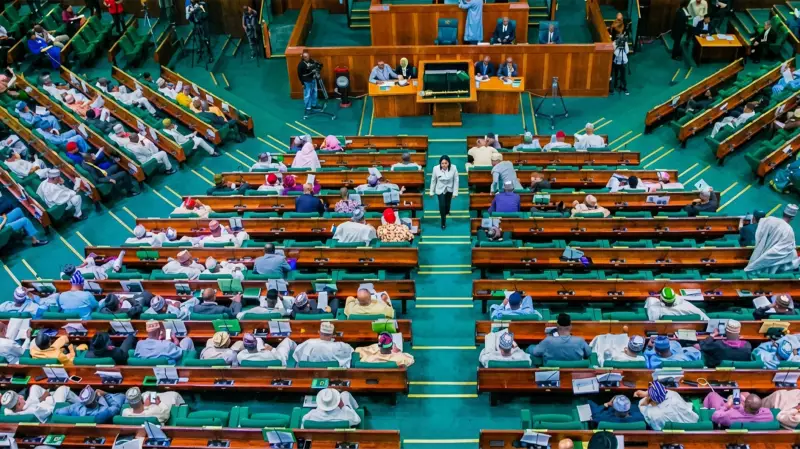
In a decisive move to address growing public concern, the House of Representatives has officially released the certified true copies (CTCs) of four major tax reform laws. This action comes directly in response to allegations of discrepancies and the circulation of unauthorised versions of the legislation recently signed by President Bola Ahmed Tinubu.
Addressing the Allegations of Discrepancies
The decision to release the documents was ordered by the presiding officers of the National Assembly, Speaker Tajudeen Abbas and Senate President Godswill Akpabio. House spokesman Akin Rotimi confirmed the development in a statement issued on Saturday, January 3rd. He explained that the move was prompted by reports of multiple and conflicting versions of the tax laws in the public domain.
The issue was first brought to light by Honourable Abdulsamad Dasuki during a plenary session. Dasuki raised a point of privilege, alleging that the versions of the tax laws gazetted and made available to the public did not match what was debated and approved by lawmakers. He asserted that this discrepancy constituted a breach of his legislative rights.
The Path of the Tax Legislation
The four contentious bills underwent months of rigorous legislative process. The House of Representatives passed them in February 2025 after extensive debates, public hearings, and a clause-by-clause consideration. They were later harmonised with the Senate's version before being sent to the President.
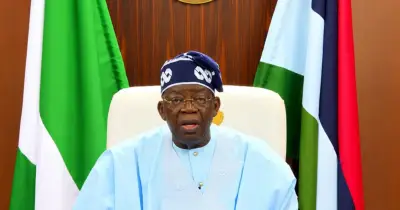
On 26 June 2025, President Bola Tinubu signed the following four bills into law:
- The Nigeria Tax Act, 2025
- The Nigeria Tax Administration Act, 2025
- The National Revenue Service (Establishment) Act, 2025
- The Joint Revenue Board (Establishment) Act, 2025
Since the signing, opposition parties and Civil Society Organisations have persistently called for an investigation into the alleged alterations.
Commitment to Transparency and Legislative Integrity
Following Dasuki's alert, Speaker Abbas directed an internal verification process, which led to the immediate public release of the certified documents. In his statement, Abbas strongly defended the integrity of the National Assembly's procedures.
"The National Assembly is an institution built on records, procedure, and institutional memory," Abbas was quoted as saying. "Every Bill, every amendment, and every Act follows a traceable constitutional and parliamentary pathway. Once a law is passed and assented to, its integrity is preserved through certification and custody by the legislature. There is no ambiguity about what constitutes the law."
The House emphasised that these Acts are central to Nigeria's tax reform framework, designed to modernise revenue administration, improve compliance, eliminate duplication, and enhance fiscal coordination nationwide.
To ensure accuracy and uniformity, the Clerk to the National Assembly has aligned the certified Acts with the Federal Government Printing Press. Hard copies have been produced for lawmakers and public reference.
The House affirmed that the Ad-Hoc Committee, chaired by Muktar Aliyu Betara, continues its work. Its mandate is to investigate the circumstances surrounding the circulation of the unauthorised versions and recommend measures to prevent a recurrence, thereby preserving the authenticity of parliamentary records.
Rotimi concluded by reiterating the House's commitment under Speaker Abbas to constitutionalism, the rule of law, transparency, and accountable governance. He stated that the House would continue to strengthen internal controls and protect the integrity of Nigeria's legislative process for the benefit of all Nigerians.