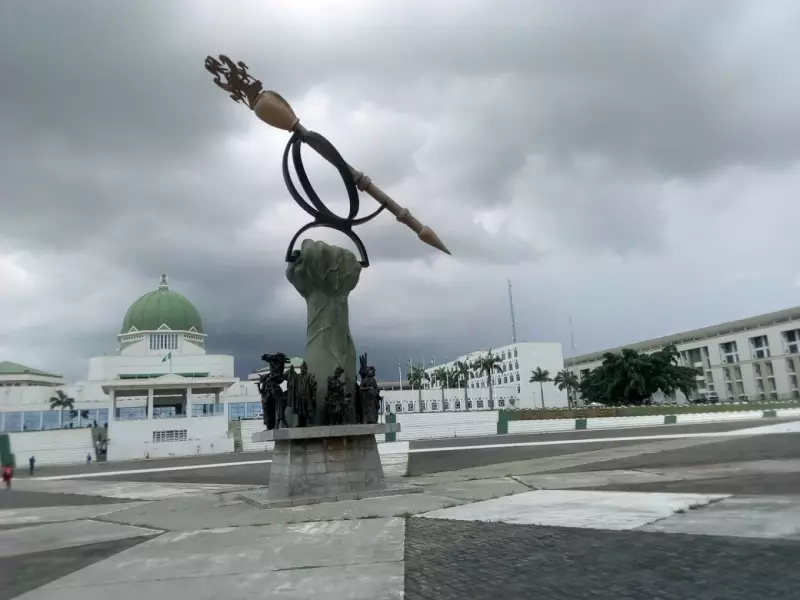
The National Assembly has announced plans to release certified copies of the recently enacted tax bills to address growing public concerns over alleged discrepancies between the versions passed by lawmakers and those published in the official gazette.
Assembly Responds to Public Concerns
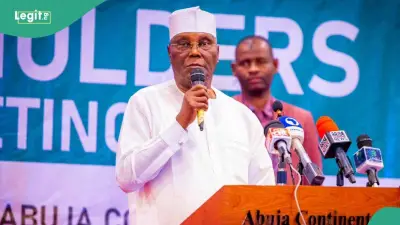
In a statement issued on Thursday, the Director of Information for the National Assembly, Bullah Bi-Allah, said the Clerk has been directed to make available the transmitted tax bills, including their certificate pages, for public verification. This move follows allegations raised by a member of the House of Representatives, Abdulsamad Dasuki, who claimed the gazetted versions of the laws differed from what was approved by the legislature.
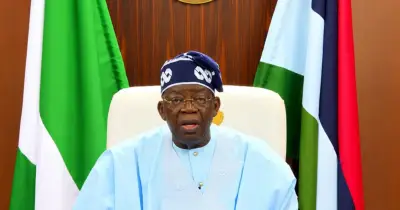
The four laws in question, signed by President Bola Tinubu on June 26, 2025, are the Nigeria Tax Act, the Nigerian Tax Administration Act, the National Revenue Service (Establishment) Act, and the Joint Revenue Board (Establishment) Act.
Bi-Allah noted that despite significant public interest, only a limited number of people had formally requested Certified True Copies (CTCs) of the harmonised bills, and all such requests have been processed. He added that the Clerk is working with the Federal Government Printing Press to ensure the publication of duly certified Acts, with gazettes expected to be ready.
To prevent future issues, the National Assembly will review its procedures. "Henceforth, all bills for presidential assent will be routed through presidential liaison officers," Bi-Allah stated. He also emphasized that no request for gazetting an Act will be entertained unless initiated by the Clerk or an authorized representative.
Ezekwesili Warns of Constitutional Threat
Former World Bank Vice President, Obiageli Ezekwesili, has strongly condemned the situation, describing the alleged gazetting of a wrong version of the Tax Reform Act as a grave threat to constitutional governance. In a public notice, she argued that the process suffers from a deficit of policy coherence and credibility.
"All actions so far taken by the executive and legislative branches regarding the gazetting of a wrong version... constitute a grave threat to constitutional governance and must be halted," Ezekwesili warned. She called on the government to stop, rescind, and reset the entire process transparently, starting from the public hearing stage in the legislature.
She expressed concern that the National Assembly's approach of a simple "re-gazetting" without a transparent inquiry into how the error occurred falls short of democratic standards.
CAN, Kachikwu Urge Compassion in Reforms
The Christian Association of Nigeria (CAN) has urged the Federal Government to exercise restraint and fairness in implementing fiscal and tax reforms. CAN President, Daniel Okoh, in a New Year message, warned that poorly timed economic decisions could worsen hardship for millions of Nigerians already under strain from rising costs and insecurity.
Similarly, former presidential candidate Dumebi Kachikwu cautioned against introducing new taxes in 2026, urging the government to place compassion and citizen welfare at the centre of its economic plans. He warned that additional levies could erode public trust and accelerate the decline of the middle class.
Budget Office Defends Process, Warns Against Speculation
The Budget Office of the Federation, under Director-General Tanimu Yakubu, has reaffirmed the integrity of the new tax laws. It cautioned against governance driven by speculation, stating that public confidence is eroded by the careless amplification of unverified claims.
"A nation cannot be governed by insinuation or sustained on circulating documents of uncertain origin," the Office stated. It welcomed the National Assembly's investigation into the allegations, describing institutional inquiry as the appropriate response.
Tax Expert Calls for Public Support
In a contrasting view, former President of the Chartered Institute of Taxation of Nigeria (CITN), Gladys Simplice, urged Nigerians to embrace the new tax regime. She attributed resistance to the reforms to wealthy individuals opposed to higher tax compliance.
Simplice described the reforms as long overdue and progressive, noting that individuals earning up to N300,000 annually are exempt, and small businesses with turnovers below N100 million will be protected from multiple taxation. "Taxes are what build nations. We cannot continue to complain about poor infrastructure and still resist the very instrument used to fix it," she argued.
The House of Representatives has constituted a seven-member committee to investigate the alleged inconsistencies and has ordered the re-gazetting of the tax laws, though the committee's report is still pending.