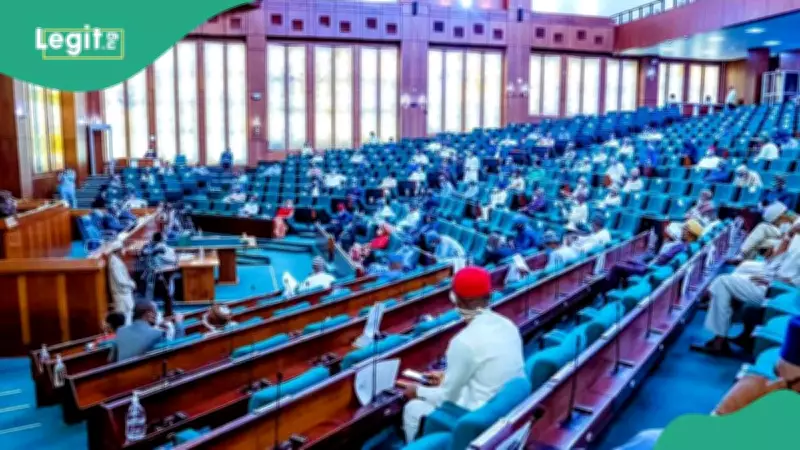
Nigeria's Longest-Serving Federal Lawmakers: Institutional Memory Spanning Decades
Nigeria's National Assembly has demonstrated remarkable continuity since the restoration of democratic governance in 1999, with numerous legislators maintaining uninterrupted parliamentary careers spanning more than two decades. These veteran lawmakers entered the federal legislature at the dawn of the Fourth Republic and have become permanent fixtures in either the Senate or the House of Representatives, creating an unprecedented level of institutional stability in Nigeria's parliamentary system.
Cross-Party Representation and Legislative Experience
The longest-serving legislators represent a diverse political spectrum, with affiliations spanning both major political parties—the All Progressives Congress (APC) and the Peoples Democratic Party (PDP)—as well as legacy parties that have since ceased operations. This cross-party representation highlights how parliamentary longevity transcends political affiliations in Nigeria's federal legislature.
Observers and political analysts note that these extended tenures have provided valuable institutional memory and deep familiarity with legislative processes, contributing to the development of Nigeria's parliamentary traditions. While critics argue that prolonged service can limit opportunities for fresh perspectives and new voices, supporters emphasize the stability and experience these veteran lawmakers bring to complex legislative matters.
Comprehensive List of Veteran Legislators
The following lawmakers rank among Nigeria's longest-serving federal legislators, with many having served continuously since 1999 or the early 2000s:
- Ahmad Lawan: First elected in 1999, Lawan has maintained continuous presence in the National Assembly since the Fourth Republic's inception, serving multiple terms in the Senate.
- Nicholas Mutu: Has represented Bomadi Patani Federal Constituency in Delta State in the House of Representatives since 1999.
- Ali Ndume: Entered the National Assembly in 2003 and has served continuously across both legislative chambers.
- Alhassan Doguwa: A veteran of the defunct Third Republic who returned in 2007 to represent Doguwa Tudun Wada Federal Constituency in Kano State.
- Mohammed Monguno: Began his federal legislative career during the Third Republic and later returned to represent Marte Monguno Nganzai Federal Constituency in Borno State.
- Khadijat Bukar Abba-Ibrahim: First elected in 2007, representing Damaturu Gujba Gulani Tarmuwa Federal Constituency in Yobe State.
- Enyinnaya Abaribe: Has represented Abia South Senatorial District in the Senate since 2007.
- Idris Wase: Has served in the House of Representatives since 2007, representing Wase Federal Constituency in Plateau State.
- Muktar Betara: Has represented Biu Bayo Shani Federal Constituency in Borno State since 2007.
- Wole Oke: Entered the House in 2003 and represents Obokun Oriade Federal Constituency in Osun State.
- Adamu Aliero: After serving as governor of Kebbi State, Aliero transitioned to the Senate in 2007.
- Adeola Olamilekan: Began his federal legislative career in 2011 and now represents Ogun West Senatorial District.
- Aminu Waziri Tambuwal: Served in the House from 2003 to 2015 before returning to the National Assembly as a senator.
- Danjuma Goje: Entered the Senate in 2011 after completing two terms as governor of Gombe State.
- Ibrahim Gobir: Has represented Sokoto East Senatorial District since 2011.
- Abbas Tajudeen: First elected in 2011 and currently serves as Speaker of the House of Representatives.
- James Abiodun Faleke: Has represented Ikeja Federal Constituency in Lagos State since 2011.
- Kingsley Chinda: A legal professional who has served in the House of Representatives since 2011, representing Obio Akpor Federal Constituency in Rivers State.
Parliamentary Continuity and Democratic Development
The sustained presence of these legislators across multiple parliamentary sessions represents a unique aspect of Nigeria's democratic evolution. Their collective experience spans significant periods of Nigeria's political history, including various administrations, constitutional amendments, and national crises.
This continuity provides several advantages to Nigeria's legislative processes, including:
- Preservation of institutional knowledge about parliamentary procedures and traditions
- Consistency in legislative oversight functions
- Historical perspective on long-term policy development
- Mentorship opportunities for newer legislators
However, the concentration of legislative experience among a relatively small group of long-serving lawmakers also raises questions about political renewal, generational transition, and the balance between experience and fresh perspectives in Nigeria's democratic institutions.
As Nigeria continues to develop its parliamentary democracy, the role of these veteran legislators will remain crucial in shaping legislative traditions while potentially creating space for discussions about term limits, political succession, and the infusion of new ideas into the National Assembly's operations.