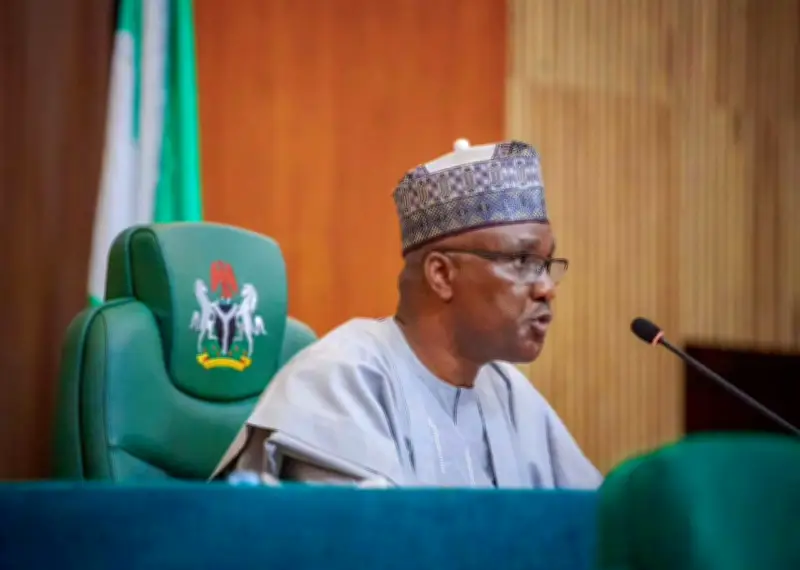
The Speaker of the House of Representatives, Abbas Tajudeen, has stated that Nigeria's escalating security challenges demand innovative legislative solutions, acknowledging that previous strategies have not fully resolved the nation's complex threats.
Opening of Public Hearing on Defence Bills
Mr Tajudeen made this remark on Monday while inaugurating a two-day public hearing on defence-related bills organized by the House Committee on Defence at the National Assembly Complex in Abuja. His comments came as the House began considering a package of defence reform bills aimed at bolstering military institutions, enhancing personnel welfare, and repositioning the Armed Forces to tackle emerging security threats.
“Let me state clearly. The security challenges we face today demand bold, fresh thinking. The old ways have not fully worked. We must be open to legislative innovations,” the Speaker said.
Scope of Proposed Legislation
The proposed legislation, he explained, is part of the 10th House's efforts to strengthen Nigeria's legal and institutional defence framework amid growing insecurity across various regions. According to Mr Tajudeen, the military remains under immense pressure as it confronts insurgency in the North-east, banditry and kidnapping in the North-west, farmer-herder conflicts in the North-central, and separatist agitations in the South-east.
He added that emerging threats such as maritime piracy in the Gulf of Guinea, cyber warfare, and the increasing links between organized crime and terrorism have further complicated the nation's security landscape. The Speaker noted that the bills before the committee are intended to modernize military administration, improve operational effectiveness, and create a more resilient and inclusive defence institution capable of responding to both traditional and emerging threats.
Key Bills Under Consideration
Among the measures under consideration is a bill seeking to repeal the Armed Forces Act and replace it with a proposed Nigerian Military Force Act aimed at overhauling military governance and administration. Lawmakers are also considering the Armed Forces Farms and Ranches Scheme Bill, which seeks to support national food security efforts while enhancing military engagement in conflict-affected agricultural communities.
Other proposals include a bill on gender representation in the Armed Forces designed to promote inclusiveness, as well as legislation establishing a Veterans' Federation of Nigeria to improve the welfare and representation of retired military personnel. Additional bills focus on military education, doctrine development, and healthcare services for serving personnel.
Call for Stakeholder Participation
Mr Tajudeen emphasized that the public hearing was intended to provide stakeholders with an opportunity to influence the proposed legislation through constructive engagement and practical recommendations. He urged serving and retired military personnel, civil society organizations, legal practitioners, veterans, gender advocates, and members of the public to participate actively in the process. The Speaker also assured stakeholders that submissions made during the hearing would be carefully reviewed and reflected where appropriate in the final reports.
Chairman's Remarks
Earlier, Chairman of the House Committee on Defence, Babajimi Benson (APC, Lagos), described the hearing as a critical stage in the legislative process, noting that defence laws directly affect national security, military readiness, and the protection of citizens. Mr Benson said the proposed legislation seeks to improve military professionalism, strengthen institutional capacity, and position the Armed Forces to respond more effectively to contemporary security threats. He emphasized the importance of public participation, arguing that broader stakeholder engagement would help produce laws that are practical, inclusive, and responsive to national needs.
Debate Over Veterans' Welfare Bill
One of the most debated proposals during the hearing was the bill seeking to establish the Veterans' Federation of Nigeria. Some stakeholders backed the proposal, arguing that it mirrors practices in countries such as the United States, United Kingdom, Canada, and Australia, where veterans' associations operate independently while government agencies oversee welfare programmes. However, other participants criticized aspects of the bill, contending that it gives disproportionate influence to senior military officers and does not adequately accommodate lower-ranking veterans.
A retired non-commissioned officer and legal practitioner, Sadiqe Nwabuezeh, called for a different approach, proposing the creation of a dedicated Ministry of Veterans Affairs headed by former service personnel. He argued that veterans should play a more prominent role in managing institutions established to protect their interests and insisted that representation should cut across all ranks within the military community.
Outlook
The public hearing is expected to produce recommendations that will guide the House Committee on Defence as it prepares the bills for further legislative action.