
With less than seven months to the 2027 general elections, a growing sense of uncertainty appears to be spreading across Nigeria's political landscape. While public dissatisfaction over economic hardship, insecurity, inflation, and unemployment remains widespread, the dominant question within political circles is no longer whether Nigerians are unhappy with the current state of affairs. Rather, it is whether the opposition possesses the organisation, unity, and political machinery necessary to convert public frustration into electoral victory.
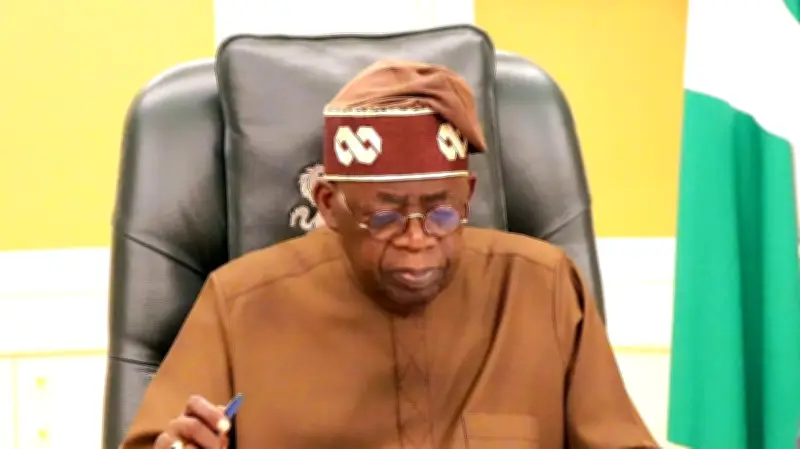
Ordinarily, difficult economic conditions provide fertile ground for opposition parties seeking to unseat incumbents. Yet, despite widespread complaints about the economy, President Bola Ahmed Tinubu and the ruling All Progressives Congress (APC) remain in a relatively comfortable position, largely because of the fragmented nature of the opposition. The reality is that elections in Nigeria are not won solely through public sentiment. They are won through a combination of structures, funding, mobilisation, coalition-building, and strategic political calculations. It is in these areas that the APC appears to enjoy significant advantages over its rivals.
Lessons from 2015: How APC Dismantled PDP's Dominance
Before 2015, the Peoples Democratic Party (PDP) appeared invincible. Having controlled the presidency for 16 years, the party maintained a nationwide network of governors, legislators, and local government structures. Many Nigerians, including a former National Chairman of the party, Vincent Ogbulafor, believed the PDP's dominance would continue indefinitely. However, the opposition accomplished what had previously seemed impossible. Rather than contesting separately, opposition leaders set aside personal ambitions and built a coalition around a common objective. The Congress for Progressive Change (CPC), Action Congress of Nigeria (ACN), All Nigeria Peoples Party (ANPP), a faction of the All Progressives Grand Alliance (APGA), and elements within the PDP merged to form the APC.
More importantly, key political actors made strategic sacrifices. Late President Muhammadu Buhari provided the North's massive voting base, while President Bola Tinubu offered the South-West's strongest political structure. Other influential politicians brought their regional strengths into the coalition. The result was historic: Buhari secured more than 15 million votes compared to the roughly 12 million votes obtained by then-President Goodluck Jonathan. For the first time in Nigeria's history, an incumbent president was defeated at the polls, largely due to the sacrifices made by APC leaders and their respect for the zoning arrangement—a factor many observers argue is absent among today's opposition elements.
The lesson from that election remains relevant today. The APC did not defeat the PDP merely because Nigerians wanted change. It won because it successfully united different political tendencies under one umbrella and built a formidable nationwide structure capable of translating voter sentiment into votes.
How APC Sustained Power in 2019 and 2023
Many expected the coalition that produced the APC to collapse after 2015. Instead, the party maintained sufficient internal cohesion to retain power in subsequent elections. In 2019, despite concerns over economic recession and security challenges, the APC retained power largely because the opposition remained divided and failed to present a compelling alternative coalition. For instance, former Vice President Atiku Abubakar and former Rivers State Governor Rotimi Amaechi, who had joined the APC merger under the aegis of the nPDP led by Kawu Baraje, later parted ways politically, with Atiku returning to the PDP while Amaechi remained in the APC.
The ruling APC also benefited from internal discipline. Tinubu, whom many believed harboured presidential ambitions, remained loyal to the Buhari project throughout Buhari's eight years in office. The zoning arrangement within the APC further strengthened internal stability. Following Buhari's two terms, influential party leaders and governors supported a power shift to the South. Although disagreements emerged, the party eventually rallied around Tinubu's candidacy. By contrast, the PDP's decision to field another northern presidential candidate in Atiku Abubakar after Buhari's eight-year presidency triggered internal rebellion. The G-5 governors openly resisted the party leadership, weakening the PDP's chances before the election.
The consequences became evident in 2023. While Tinubu secured approximately 8.8 million votes, Atiku polled about seven million votes, and Peter Obi secured more than six million votes. Combined, the opposition attracted significantly more votes than the APC candidate, but those votes were split among multiple contenders. For many analysts, the 2023 election demonstrated that fragmentation remains the opposition's greatest weakness.
Today, the APC's greatest strength extends beyond the presidency. The ruling party controls about 31 states, while even governors such as Alex Otti of Abia State (Labour Party) and Chukwuma Soludo of Anambra State (APGA) have, at different times, expressed support for some of President Tinubu's policies, fuelling speculation about broader political alignments ahead of 2027. The ruling party controls a vast majority of state governments and maintains dominance in the National Assembly. Through these structures, it enjoys influence across hundreds of local governments and thousands of electoral wards nationwide. Nigeria has 774 local government areas and approximately 8,800 electoral wards. Political influence at these levels often determines voter mobilisation, election-day logistics, and grassroots campaigning. Governors remain particularly important because they control extensive political networks within their states. Beyond state resources, governors influence party structures, local government leadership, and grassroots mobilisation efforts. The continued movement of political actors into the APC has further strengthened the ruling party's position ahead of 2027.
The Opposition's Leadership Challenge
If the APC's greatest advantage is structure, the opposition's greatest challenge appears to be leadership and consensus-building. Unlike the coalition builders of 2015, opposition leaders have struggled to subordinate personal ambitions to collective goals. The inability of major opposition figures to agree on a common direction is a major challenge when compared with what the APC achieved in 2015, 2019, and 2023. Every opposition bloc recognises the need for unity, yet disagreements continue over who should lead such a coalition. This appears to undermine the objectives of the National Summit of Opposition Political Party Leaders held on April 25, 2026, in Ibadan, hosted by Oyo State Governor Seyi Makinde and chaired by former President Olusegun Obasanjo. At the summit, prominent opposition figures agreed to work towards fielding a single consensus presidential candidate to challenge the ruling party in the 2027 elections. However, Atiku, Obi, Makinde, and other key actors currently operate from different political platforms.
This challenge has become particularly evident within the opposition alliance currently attempting to challenge the APC. Questions continue to emerge regarding the balance of power among key stakeholders, the distribution of positions, and the management of competing ambitions. While APC leaders demonstrated strategic patience between 2015 and 2023, opposition leaders have found it difficult to make similar sacrifices.
The Atiku Question
Former Vice President Atiku Abubakar remains one of Nigeria's most experienced politicians and perhaps the most consistent opposition challenger since 2007. However, his repeated presidential bids continue to generate debate within opposition circles. Some stakeholders believe Atiku's experience makes him the strongest challenger to President Tinubu. Others argue that the opposition requires a fresh face capable of attracting younger voters and rebuilding confidence among regions that feel politically marginalised. The Ohanaeze Ndigbo chieftain, Goddy Uwazurike, and former Imo State governorship aspirant, David Mbamara, had argued that Atiku's inability to make the kind of sacrifice Tinubu made for Buhari contributed to the opposition's challenges since 2019. The ongoing discussions regarding his potential running mate also reflect broader tensions within the opposition coalition. Reports of reservations from some political stakeholders suggest that consensus remains a work in progress. The challenge for Atiku is not merely winning a primary election; it is convincing various opposition blocs that their interests will be adequately protected within a broader coalition.
Peter Obi and the Search for a National Structure
No opposition figure arguably commands greater enthusiasm among young Nigerians than Peter Obi. His performance in the 2023 election transformed him into one of Nigeria's most influential opposition figures. Yet the recurring question remains whether enthusiasm alone can substitute for political structure. Obi's political journey through different platforms has enabled him to maintain relevance, but his former running mate, Yusuf Datti Baba-Ahmed, has argued that frequent political realignments may complicate efforts to build enduring party institutions. Datti specifically argued that Obi's defection from the Labour Party to the African Democratic Congress (ADC) was a political miscalculation, just as one of his prominent supporters, Gbadebo Rhodes-Vivour, declined to defect with him to the National Democratic Coalition (NDC). Supporters, however, insist that his appeal cuts across traditional political divides and that he remains one of the few opposition figures capable of energising large segments of the electorate. The challenge before Obi is converting popular support into a nationwide political machine capable of competing with the APC's entrenched structures.
Rabiu Kwankwaso and the Kano Factor
Another critical factor in the 2027 equation is the 2023 presidential candidate of the New Nigeria People's Party (NNPP) and former governor of Kano State, Rabiu Musa Kwankwaso. Kano remains one of Nigeria's most significant electoral battlegrounds due to its large voting population. Kwankwaso demonstrated his influence in the state during the 2023 election, when he secured a commanding victory. Should he align fully with a broader opposition coalition, the electoral implications could be substantial. However, questions remain regarding the durability of such alliances and whether competing ambitions can be effectively managed.
Seyi Makinde: A Rising but Untested Force
Governor Seyi Makinde remains one of the most visible opposition figures in the South-West. His political influence within Oyo State is considerable, and his profile has grown nationally in recent years. However, presidential elections are fundamentally different from state contests. National viability requires structures extending far beyond a governor's home state. Whether Makinde can successfully translate regional influence into nationwide electoral relevance remains one of the unanswered questions ahead of 2027.
Playing Politics with Economic Hardship over Structure
Ultimately, the most important question facing Nigeria's opposition is whether economic hardship can override political structures. Many Nigerians continue to grapple with rising living costs, inflation, insecurity, and declining purchasing power. Such realities naturally create political discontent. History, however, suggests that voter anger alone is insufficient to remove an incumbent government. For dissatisfaction to produce electoral change, opposition parties must provide credible alternatives, maintain unity, deploy effective grassroots structures, and protect their votes across thousands of polling units. At present, the APC appears to possess the stronger nationwide machinery, although this could be challenged if opposition parties forge a common front between now and January next year. Yet elections are dynamic events, and political fortunes can change rapidly. The months ahead will reveal whether the opposition can overcome its divisions, build a coherent coalition, and convince Nigerians that it offers a realistic alternative. If this fails, the APC's greatest asset in 2027 may not be incumbency, resources, or even political structures. It may simply be the inability of its opponents to unite against it.




