
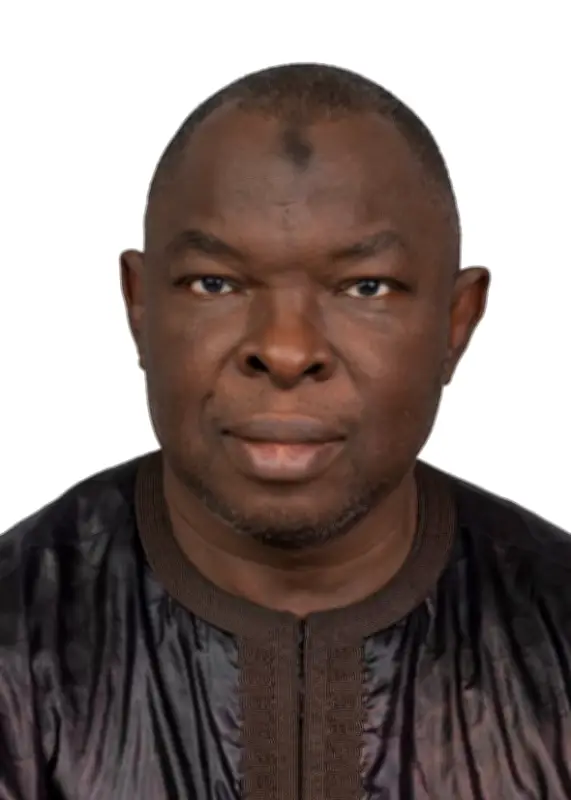
An analyst, Ahmed Aminu-Ramatu Yusuf, has argued that the African National Congress (ANC) and its leaders, not the popular masses, must be held responsible for the recurring Afrophobia and Negrophobia in South Africa. Writing in an opinion piece, Yusuf stated that the ANC's tolerance of groups like March and March (M&M), which direct hatred and violence at other Black Africans, stems from the party's deradicalisation and bourgeoisification since the end of apartheid.
The Role of ANC Leadership
Yusuf pointed out that if M&M had targeted white-owned monopoly companies like Gold Fields or Sibanye-Stillwater, the ANC would not have tolerated such actions. He cited the Marikana massacre on 16 August 2012, during Jacob Zuma's presidency, where 34 striking miners were killed for demanding better pay and conditions. More recently, in January 2025, under Cyril Ramaphosa, 246 illegal miners were rescued from an abandoned gold mine in Stilfontein, but at least 78 others died after police delayed rescue operations and cut off supplies for over a month. These incidents, Yusuf argued, demonstrate the ANC's failure to act against anti-Black violence.
The analyst linked the ANC's transformation to the assassination of Chris Hani in 1993 by far-right elements, the subsequent marginalisation of Winnie Madikizela-Mandela, and the expulsion of Julius Malema in 2012. These events, he said, removed radical voices and allowed the ANC to capitulate to white monopoly capitalist interests.
Economic Disparities and the Freedom Charter
Yusuf emphasised that the core of the problem lies in the abandonment of key clauses of the Freedom Charter. Paragraphs 4, 5, 8, 9, and 10, which address economic freedom, land redistribution, and social justice, have been ignored, while ritualistic attention is paid to democracy and human rights. The result is severe poverty among Black South Africans. According to Yusuf, poverty among Black South Africans stands at approximately 64.2 per cent, with about 29.6 million living below the upper-bound poverty line in 2025/2026. Of these, 48.8 per cent, or 10.8 million, live below the food poverty line. In contrast, the poverty rate for white South Africans is just 1.4 per cent.
Black South Africans comprise 82 per cent of the population (about 51.6 million) but account for 93.6 per cent of all poor people. White South Africans, making up 4.5 per cent (about 4.5 million), control over 70 per cent of the country's land and wealth. The unemployment rate for 2025 is 32.4 per cent, with Black South Africans facing rates of 38 to 40.2 per cent, while white unemployment is around 5.9 per cent. Black women suffer even more, with an unemployment rate of 40.2 per cent, and they head 42.3 to 43.4 per cent of households.
Impact on Pan-African Unity
Yusuf called for a pan-African response to Afrophobia, drawing parallels to the fight against apartheid. He quoted Owei Lakemfa, stating that Black South Africans are "our brothers and sisters, so when we correct them, it should be with love. It should be like a mother chiding her child." He warned that if left unchecked, Afrophobia could escalate into Europhobia, threatening European and American economic monopolies in South Africa. The sustainable solutions, he argued, lie in implementing the economic clauses of the Freedom Charter, decolonising the mindset of Black South Africans, rebuilding the Black family, and entrenching Ubuntu values.
The analyst noted that ANC's electoral decline mirrors the rise of Afrophobic violence. The party's seats in the National Assembly fell from 279 in 2004 to 264 in 2009, 249 in 2014, and 159 in 2024. Meanwhile, the Economic Freedom Fighters (EFF) emerged in 2013, and the uMkhonto we Sizwe (MK) Party was registered in September 2023. Afrophobic and xenophobic violence peaked in 1995, 1998, 2000, 2005-2006, 2008, 2015, 2016, 2019, 2021-2024, and 2026. Yusuf concluded that until the Freedom Charter's economic provisions are fully implemented, South Africa will remain a country where Black people govern but whites control the economy, perpetuating the cycle of Afrophobia.




