
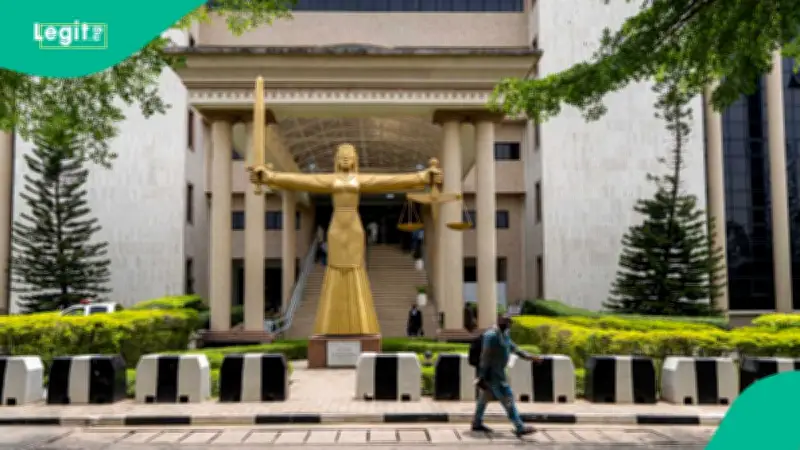
The recent deregistration of five political parties by a Federal High Court has sparked debate about the health of Nigeria's democracy ahead of the 2027 elections. Political analyst Oluwafemi Popoola argues that the move, even if overturned on appeal, reveals troubling signs of democratic erosion.
Democracy's Slow Death
Democracy rarely collapses with the theatrical flair of a coup d'état. That method has become rather unfashionable. There are no soldiers occupying radio stations or generals announcing that they have taken over in the national interest. Modern democracy dies in a more respectable manner. It is slowly suffocated by procedures, legal technicalities and carefully crafted judgments. And throughout the entire process, officials keep assuring citizens that the rule of law has never been healthier.
This was the warning offered by political scientists Steven Levitsky and Daniel Ziblatt in their 2018 book, How Democracies Die. Long before them, Ghana's first President, Kwame Nkrumah, had warned Africans about the dangers of concentrating political power in too few hands. History has vindicated both men. The graveyard of democracy is littered with countries where institutions that were created to protect freedom eventually became instruments for restricting it.
The Deregistration Judgment
That is why the recent judgment of a Federal High Court ordering the deregistration of the ADC, Action Peoples Party, Action Alliance, Accord Party and Zenith Labour Party deserves more attention than it has received. The judgment may eventually be overturned. Indeed, the Court of Appeal has already shown signs that it may not survive appellate scrutiny. But the implications of the initial ruling are too significant to ignore.
Interestingly, one of the loudest critics of the judgment is not even an opposition party. It is INEC itself. The electoral commission was reportedly so surprised by the judgment that it rushed to support the appeal and seek a stay of execution. More astonishing were revelations before the Court of Appeal that there was allegedly an existing order restraining the delivery of the judgment and that parties only became aware of the ruling through media reports and WhatsApp notifications. Yet somehow, the judgment arrived like an unexpected wedding guest nobody invited, but everybody had to accommodate. Even if one sets aside the legal technicalities, the optics are terrible for public confidence in the judiciary. The legal arguments will ultimately be settled by the courts. What interests me more are the political implications.
Trust Issues and Discomfort Around Judicial Decisions
I am not a lawyer. In fact, I never dreamed of becoming one. Watching recent developments in the judiciary, I sometimes feel sympathy for friends who spent seven years studying law only to discover that certain judgments require not legal interpretation but advanced courses in creative writing and speculative fiction.
One cannot help but recall the words of Dele Farotimi, who has often voiced his disillusionment with the legal profession. Farotimi once declared that he had long left behind what he considered an ignoble profession and had no interest in obtaining a fresh licence to practice. Whether one agrees with him or not, his remarks reflect a growing unease about the Nigerian judicial system. And when ordinary citizens struggle to understand the logic behind certain judicial outcomes, confidence in the justice system inevitably suffers.
A Divided and Distracted Opposition Before 2027
Whether or not this latest judgment survives appellate review, it has already forced opposition parties into a defensive posture. Rather than strategising, building alliances, mobilising supporters and developing policy alternatives for 2027, they are spending precious time and resources fighting for their existence. In effect, litigation becomes a distraction, a burden hanging around their necks when they should be finding their feet.
For months, I had concluded that Nigeria's opposition was fragmented, confused, and woefully unprepared for the challenge of confronting the APC in 2027. The opposition often behaves like a group of musicians attempting to perform an orchestra without first agreeing on the song. Personal ambitions outweigh collective strategy. Old grievances still linger while new alliances collapse before the ink dries. The painful lessons of 2023 have not been fully learnt. Instead of building bridges, many opposition figures appear determined to build separate kingdoms. But this latest attempt to shrink the political field raises an interesting contradiction.
APC's Strength and the Confidence Narrative
The ruling APC has never hidden its confidence about retaining power in 2027. Following the recent presidential primary election that delivered over 10 million votes to Tinubu, a friend had remarked that the figure was more than just an electoral outcome; it was a political message, a way of telling Nigerians that a formidable voting base is already firmly in place. The party has also repeatedly pointed to its growing control of state governments, boasting of having about 29 governors under its banner.
The Big Question: Why Shrink Political Competition?
But if the opposition is truly this weak, why the apparent anxiety? If the opposition is hopelessly divided, why the urgency to remove even more parties from the field? If victory in 2027 is already assured, why expend so much energy ensuring there are fewer competitors? These are not accusations. They are questions. After all, nobody loses sleep over an opponent they do not consider dangerous.
This is why the deregistration saga creates a curious impression. It suggests that somewhere within the political establishment there may be concerns that public dissatisfaction is deeper than official optimism admits. Could it be that economic hardship is creating political uncertainties beneath the surface? Could it be that the ruling party is worried that even a divided opposition might stumble into a coalition capable of becoming competitive? Could it be that despite public confidence, private polling tells a different story? I do not know. What I do know is that serious and confident governments rarely spend time rearranging the furniture in the opposition's living room.
The timing is equally troubling. Opposition parties should presently be engaged in coalition-building, policy development and voter mobilisation. Instead, they find themselves fighting legal battles over their existence. Whether or not the judgment ultimately stands becomes almost secondary. The distraction itself becomes part of the story.
Political energy is finite. Every hour spent defending party registration is an hour not spent preparing for elections. Of course, none of this automatically means the APC will lose in 2027. Far from it. In fact, the ruling party remains the clear favourite.
The opposition remains fragmented, and incumbency remains powerful. State resources also remain influential. Many Nigerians are simply exhausted. Citizens battling inflation, unemployment and rising living costs often have little energy left for political activism. Survival has become a full-time occupation. This widespread hopelessness may ultimately become the APC's greatest electoral asset.
Lessons from Other Democracies Under Pressure
History offers useful parallels. In Zimbabwe, ZANU-PF spent decades consolidating dominance while opposition parties struggled against institutional obstacles. In Russia, opposition groups frequently encountered legal and administrative hurdles that critics argued tilted the political field. In Hungary, democratic institutions gradually evolved in ways that strengthened incumbents while weakening competitors. The common thread is not the abolition of elections. The common thread is the gradual reduction of meaningful competition.
This is how democratic erosion often unfolds. Not through a single dramatic event but through a thousand small decisions that individually appear harmless but collectively alter the political landscape.
Final Warning: Shrinking Space and One-Party Risk
That is why Nigerians should worry less about the fate of five political parties and more about the broader principle involved. Democracy does not die overnight. It dies in stages. It dies when institutions lose public trust. It dies when court decisions appear to favour political interests over constitutional principles. It dies when opposition parties are forced into survival mode while incumbents focus on consolidating power. It dies when citizens become convinced that votes matter less than judicial manoeuvres.
The most important question is whether there are consequences for this kind of perceived judicial overreach.
As 2027 approaches, Nigerians should pay close attention. The issue is bigger than the ADC, Accord Party or any other affected platform. It concerns the future character of Nigerian democracy. Whether intentionally or otherwise, actions that shrink political space, distract opposition forces and create perceptions of institutional bias benefit those already in power. And when democracy begins to favour one side too heavily, the journey toward a de facto one-party state may already have begun.
I still believe the opposition's greatest enemy is its own disunity. But this episode also suggests that someone, somewhere, may not be entirely comfortable leaving political competition to chance. And if that is indeed the case, then perhaps the ruling party is more restless about 2027 than it publicly admits. The question Nigerians must continue to ask is simple: if victory is guaranteed, why leave no stone unturned to ensure there is hardly any competition left?




