
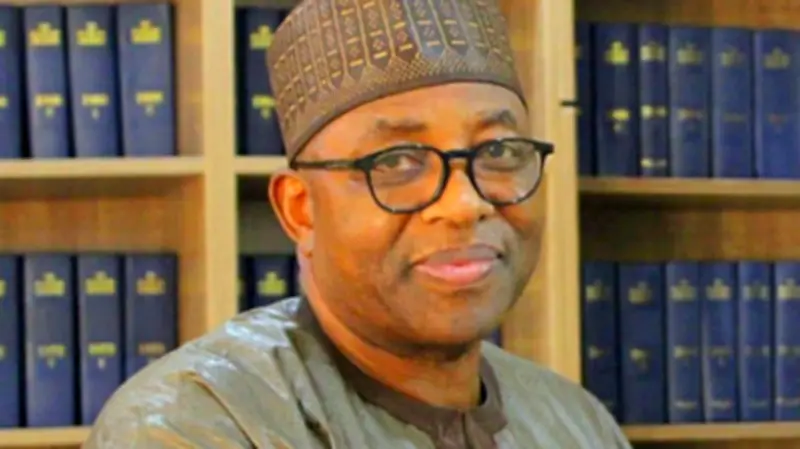
Party primaries for the selection of standard bearers that ought to have marked the beginning of a vibrant democratic contest in Bauchi State have instead exposed deep cracks within the political parties seeking to govern the state, RAUF OYEWOLE reports. Rather than producing candidates through transparent and competitive processes that inspire public confidence, the governorship primaries conducted by most parties in Bauchi State have generated accusations of imposition, manipulation, exclusion, and internal betrayal.
Concerns over voter choice
With less than eight months to the February 2027 governorship election, concerns are mounting that Bauchi voters may eventually be confronted with a ballot populated not necessarily by the most popular or broadly accepted aspirants, but by candidates who emerged from controversial internal arrangements and elite political calculations. The situation has triggered defections, threats of litigation, and growing voter disillusionment, raising fundamental questions about the quality of choices available to the electorate.
At the centre of the controversy is the perennial challenge of internal party democracy, a problem that has continued to undermine Nigeria’s electoral process. While elections are ultimately decided by voters, the real battle for power is often settled during party primaries. Consequently, when primaries are perceived as flawed, manipulated, or predetermined, voters are effectively denied the opportunity to choose from the strongest and most credible candidates. In Bauchi, many observers argue that this is precisely what has happened.
APC: A primary that deepened division
The All Progressives Congress (APC), expected to present the strongest challenge to Governor Bala Mohammed’s political structure, emerged from its primary more divided than united. The party eventually produced former governor Mohammed Abdullahi Abubakar (SAN) as its governorship candidate. However, rather than ending internal contestation, his emergence opened fresh wounds within the party. Abubakar defeated a field that included former NNPCL executive, Dr Bala Wunti, former Foreign Affairs Minister, Ambassador Yusuf Tuggar, and businessman Nura Manu Soro, while Senator Shehu Buba Umar withdrew before the race. Yet the process was dogged by allegations of manipulation and lack of transparency.
The first sign of trouble emerged when Senator Buba withdrew from the race barely 24 hours before the primary, accusing the party leadership of abandoning democratic principles and suggesting that the outcome had already been determined. Attempts to produce a consensus candidate equally failed after major aspirants rejected the arrangement and insisted on an open contest. The controversy surrounding Abubakar’s emergence was further amplified by perceptions among some stakeholders that powerful interests within the party had settled for him long before delegates voted.
For many APC members, the bigger concern is not merely how Abubakar emerged but whether he represents the strongest electoral option available to challenge the ruling establishment. The former governor left office in 2019 after losing his re-election bid to Bala Mohammed. Critics argue that his administration’s mixed record remains a political liability, while supporters insist that experience and lessons from his first tenure make him better prepared for a second chance.
The dispute has already taken a heavy toll on the party. Senator Buba defected to the Peoples Redemption Party (PRP), where he secured the governorship ticket. Several lawmakers who lost tickets also exited the APC, while party executives in some local government areas openly abandoned the party. The defections represent more than routine post-primary grievances; they reflect deeper dissatisfaction with a process many believe failed to produce a candidate capable of unifying the opposition.
PDP: Stability on the surface, questions beneath
Although the Peoples Democratic Party (PDP) appears relatively calmer than the APC, it is not entirely insulated from the challenges confronting the party nationally. The PDP enters the election cycle with the advantage of incumbency, held by Governor Bala Mohammed. However, uncertainty surrounding the party’s internal cohesion at the national level, lingering leadership disputes and questions over succession politics continue to generate concern among stakeholders.
While the PDP has managed to avoid the open rebellion witnessed in the APC, the party’s future strength may depend on how effectively it manages competing interests ahead of the election. The party’s candidate selection process has attracted less public controversy than the APC’s, but critics argue that the absence of visible conflict does not necessarily translate into broad-based acceptance among party members.
PRP emerges as a beneficiary
Perhaps the biggest beneficiary of the APC crisis has been the Peoples Redemption Party (PRP). The emergence of Senator Shehu Buba as the party’s governorship candidate has altered the political equation in Bauchi. Buba’s departure from the APC transformed what many initially viewed as a fringe platform into a potentially significant electoral force. His candidacy has attracted defectors from the APC and generated enthusiasm among supporters who believe the senator represents a fresh alternative to both the ruling establishment and former officeholders seeking political comebacks. The growing profile of the PRP has also heightened fears within the APC that anti-establishment votes may become fragmented, potentially reshaping the dynamics of the governorship race.
Beyond the APC, PDP and PRP, other parties have also positioned themselves as alternatives. The Allied People’s Movement (APM) has fielded a candidate, while the Nigeria Democratic Congress (NDC) is represented by Kashim Ibrahim. Both parties have sought to capitalise on voter dissatisfaction with the major political blocs. However, their ability to significantly influence the election may depend on whether they can convert public frustration into actual votes.
Adding another layer of uncertainty is the legal battle over the court judgment ordering the deregistration of several political parties, including the African Democratic Congress (ADC), which had begun to attract considerable national attention as a coalition platform. Should the legal issues remain unresolved before the election, some analysts fear that voters seeking alternatives outside the dominant parties could find their options significantly reduced.
When primaries produce winners but not consensus
The recurring crisis in Bauchi reflects a broader national problem in which party primaries often produce winners without consensus. In many instances, candidates emerge with official tickets but without the support of substantial sections of their parties. Such outcomes frequently lead to defections, litigation and voter apathy. The danger is that the electorate may eventually face a difficult choice between candidates whose emergence remains contested within their own political platforms.
For many Bauchi residents, the issue is no longer simply who wins the election but whether the parties have truly allowed their most acceptable, electable and popular aspirants to emerge. As campaigns gradually gather momentum, the central question remains whether the candidates on the ballot will reflect the genuine preferences of party members and voters or the outcome of elite political negotiations conducted behind closed doors. If the controversies surrounding the primaries are unresolved and aggrieved stakeholders remain alienated, Bauchi’s 2027 governorship election may become yet another example of how flawed candidate-selection processes can limit democratic choice long before voters cast their ballots.
Abubakar’s supporters defend his candidacy
But despite the criticism trailing his emergence, Abubakar’s supporters insist he remains the APC’s strongest contender. At the inauguration of a campaign office in Bauchi, one of his loyalists, Salisu Sabo (Salisiyya), appealed to residents to forgive the shortcomings of his previous administration and give him another opportunity to serve. Responding to critics who questioned his bid to return, Abubakar said his ambition was driven by a desire to complete unfinished tasks and improve the living conditions of the people.
“There are certain things that need to be done to uplift the living standards of the people of Bauchi State, and I have learned how best to do them. That is why I am contesting again,” he said, stressing that the Constitution permits him to seek a second term. However, opposition parties and disgruntled APC members have continued to weaponise his first tenure against him. The Bauchi State Publicity Secretary of the APM, Danlami Mohammed, described the former governor as a “walkover”, while NDC governorship candidate, Kashim Ibrahim, argued that voters would inevitably judge Abubakar by his record in office.
Within the APC, some aggrieved members maintain that his emergence was the product of an unfair process. Former party chieftain, Comrade Sabo Mohammed, alleged that the primary fractured the party and triggered defections by key stakeholders, including Senator Shehu Buba. Another member, Ibrahim Shehu, warned that perceptions of imposition and the growing exodus of party faithful could weaken the APC’s chances in 2027.
Calls for Wunti to contest
But in another development, the adherents of Wunti are not relenting in their calls for him to join the governorship race on another platform if the need arises. A stakeholder in Bauchi State, Aminu Bauchin Bauchi, has called on Wunti to contest the 2027 governorship election, citing his long-standing humanitarian interventions and contributions to the state’s socio-economic development. According to him, Wunti’s popularity among many residents transcends partisan politics and is rooted in his record of philanthropy, community service, and commitment to improving the welfare of ordinary citizens.
Aminu noted that through the Wunti Al-Khair Foundation, the former senior executive of the Nigerian National Petroleum Company Limited (NNPCL) has sponsored thousands of students through scholarship programmes, supported religious institutions, provided humanitarian assistance to vulnerable groups, empowered women and youths, and facilitated technology and vocational skills training across the state. He added that the foundation has also undertaken mentorship programmes to nurture future leaders and create opportunities for young people to become self-reliant.
According to him, the agitation for Wunti’s emergence as governor was inspired by what many residents perceive as his humility, accessibility, integrity, and accountability in public and private life. “This is more than politics. It is about a man who has consistently touched lives and invested in people without occupying an elective position. Many people believe that if he could do so much as a private citizen, he could do even more with the mandate of the people,” Aminu said.
The challenge before Abubakar, analysts say, is not only to convince voters that he deserves a second chance, but also to heal divisions within the APC and rebuild confidence among members who remain dissatisfied with the conduct of the primaries.




