
The 51-year-old Economic Community of West African States (ECOWAS) is facing sharp criticism for its recent meeting in Lungi, Sierra Leone, where heads of state issued a communique that many view as disconnected from the region's realities. Observers argue that the bloc continues to overlook serious democratic and security challenges while making empty promises.
A meeting of contradictions
On 19 July, a dozen West African leaders convened in Lungi and released a statement expressing satisfaction with "the steady progress made in democratic consolidation and political governance, as well as the relative stability and resilience of the region, amidst increasing geopolitical and geostrategic pressures." Yet, the region is experiencing significant democratic backsliding. Guinea-Bissau is under direct military rule following a self-coup in November 2025. Guinea's junta leader, General Mamadi Doumbouya, only recently shed his military uniform for civilian attire without a free electoral mandate. Presidents Alassane Ouattara of Côte d'Ivoire and Faure Gnassingbé of Togo have subverted constitutional term limits, with Gnassingbé having been in power since 2005.
Security crisis ignored
In the same communique, the leaders expressed "deep concern over the continued deterioration of the security situation across the region, particularly in the Sahel and the Lake Chad Basin, characterized by attacks, kidnapping and disruptive operations by Terrorist Armed Groups." This contradiction highlights the gap between their rhetoric and reality. While they claim consolidation of peace, the region is plagued by terrorism and banditry. The leaders did, however, consider a roadmap for activating a Counter-Terrorism Brigade, a positive step that remains to be implemented.
Guinea-Bissau's sham transition
The situation in Guinea-Bissau is a stark example of ECOWAS's failure. Following the November 2025 presidential election, opposition candidate Fernando Dias da Costa defeated then-President Umaro Mokhtar Sissoco Embaló. Instead of allowing the transition, Embaló declared a coup against himself and handed power to his presidential guard chief, General Horta N'Tam. The military seized ballot papers and destroyed servers. ECOWAS remained silent. In Lungi, the leaders urged "transparency and inclusivity" in Guinea-Bissau's "political transition," including a constitutional referendum in August 2026 and general elections in December 2026. However, opposition leader Domingos Simões Pereira, head of the PAIGC, was arrested immediately after the coup, later placed under house arrest, and then returned to prison on 10 July 2026 on charges of plotting coups against the government he helped overthrow. Critics question how free elections can be held under such conditions.
Questionable pipeline project
ECOWAS leaders endorsed the Inter-Governmental Agreement on the African Atlantic Gas Pipeline (AAGP), also known as the Nigeria-Morocco Gas Pipeline (NMGP). The project aims to transport 30 billion cubic metres of natural gas annually from Nigeria to Morocco and onward to Europe, covering 6,000 to 6,900 kilometres through 14 countries. However, the pipeline passes through the Sahrawi Arab Democratic Republic (Western Sahara) without its consent, a violation of AU principles. Critics note that the alternative Trans-Saharan Gas Pipeline (TSGP) to Algeria is only 4,128 kilometres, passes through three countries, and costs $13 billion, compared to $25 billion for the Moroccan route. Algeria also has an existing pipeline to Europe. Nigerian Vice President Kashim Shettima, who led the Nigerian delegation, is urged to reconsider the economic implications.
Empty promises and a dozing organization
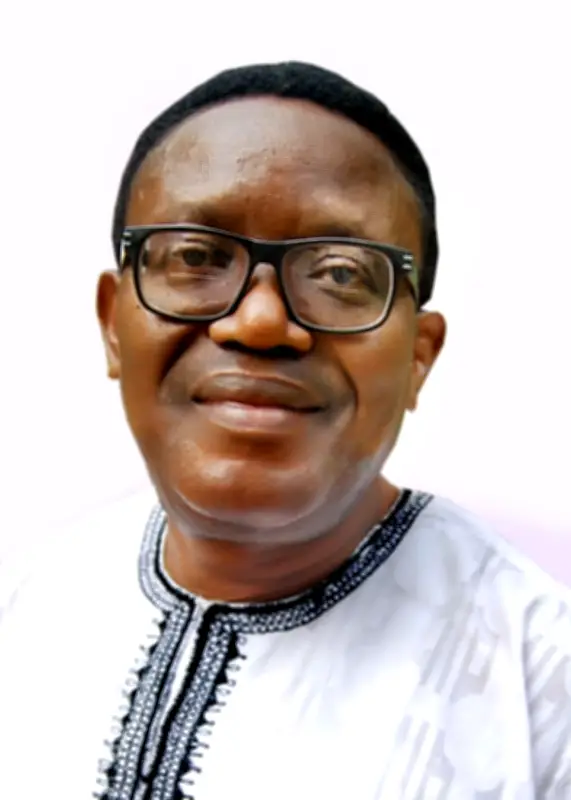
ECOWAS also reiterated its promise of a single currency, the ECO, to be launched in 2027, a pledge that has been repeated for 25 years. Additionally, it promised to reduce airfares among member states, but little was said about building railways or a coastal transport system, despite 11 of 15 ECOWAS countries being coastal. Owei Lakemfa, a former secretary general of African workers, described ECOWAS as "dozing" and disconnected from the realities of West African citizens. The bloc's failure to address democratic erosion, security threats, and economic integration undermines its credibility.




