
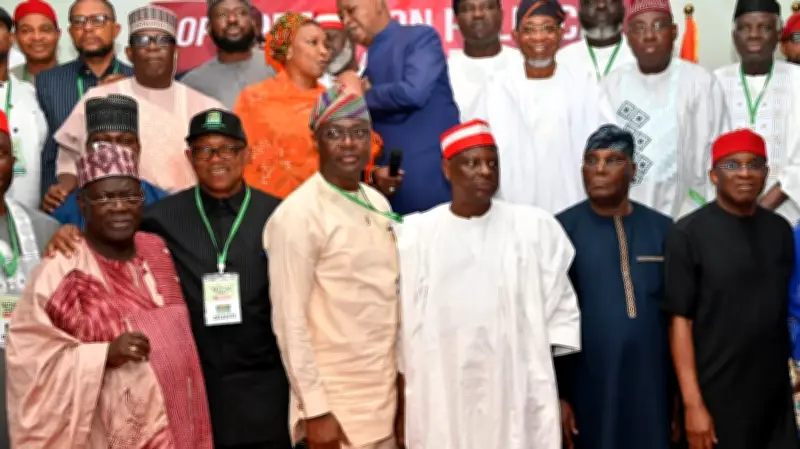
Imagine that the opposition parties decide to boycott the forthcoming elections scheduled for next year. How would such a boycott affect the country and our democracy? And is a boycott truly the best option? Countries like Cameroon and Tanzania have recently experienced election boycotts by the opposition, but these have not significantly altered the overall perception of the election results. In 2000, Côte d'Ivoire witnessed a massive opposition boycott that resulted in a voter turnout of only 37.4 percent. Similar situations occurred in The Gambia's parliamentary election in 2002, Guinea in 2003, and the Ivorian presidential election in 2020.
The Rise of Election Boycotts
The electoral boycott has become a common tool for political opposition parties, especially since the end of the Cold War. With the emergence of new democracies in Eastern Europe, Latin America, and Africa, the increase in contested elections has also brought a rise in decisions to boycott. In 1989, only four percent of all elections worldwide were boycotted, but by 2002, that number had risen to 15 percent. Between 1995 and 2004, an average of nearly ten elections per year were boycotted.
Zimbabwe: A Case Study
In Zimbabwe, the opposition to President Robert Mugabe fractured over boycott discussions in 2005. That year, the opposition Movement for Democratic Change (MDC) lost 16 seats in the parliamentary elections, partly because dithering over a possible boycott kept MDC registration numbers low. Following this setback, MDC leader Morgan Tsvangirai made the fateful decision to boycott the elections for the newly created Senate, claiming that this body would be a rubber stamp for Mugabe. Unsurprisingly, this created tension within the MDC, as a sizable faction believed that choosing not to participate would be a critical error. The party splintered, Tsvangirai lost his mandate, and the ruling ZANU-PF party captured 49 of 66 Senate seats against the fractured opposition.
Tsvangirai managed to patch things up by choosing to participate in the 2008 elections, resulting in near-parity in seats between ZANU-PF and the MDC. However, he undercut himself in the presidential election. In the first round, Tsvangirai actually outpaced Mugabe, but the government claimed he fell short of the 50 percent threshold needed to avoid a runoff. In protest, Tsvangirai decided to boycott the runoff, allowing Mugabe to triumph handily, turning victory into setback. While the eventual power-sharing deal gave the MDC an unprecedented stake in the government, Tsvangirai's boycott allowed Mugabe to retain the top governmental position.
When Boycotts Can Be Effective
Given the logistical preparations needed for elections, opposition parties must be encouraged to participate as early as possible to avoid missing registration windows or harming their electoral chances. Too often, opposition parties decide to participate too late to achieve full effect. The threat of a boycott can pay dividends, but the opposition must still participate to receive the full benefits. Choosing to sit out is almost always a losing proposition.
First, if elections receive significant attention from the international community, a boycott can be effective. The opposition's threat of an election boycott, when it attracts international attention, increases international pressure on the incumbent, forcing the ruler or ruling party to make concessions. A striking example is South Africa's 1994 election, when Mangosuthu Buthelezi, president of the Freedom Party, decided to boycott the election and denounce the process as unfree and unfair, leading to increased international pressure on Nelson Mandela. Consequently, the threat of boycott led to the abolition of the single vote system and amendments to the constitution regarding local self-government.
Second, if boycotts are part of the opposition's street protest campaign, they can yield results. If the opposition enjoys strong domestic popular support and a boycott is part of a broader campaign involving street protests and other activities, it can be effective. An example is the 1996 election in Bangladesh, where the opposition Awami League launched massive protests along with a boycott two days before election day. The general opposition's boycott and ongoing street protests eventually pushed the government to hold a new election, which the opposition faction won.
The Nigerian Context: 'Boycott the Boycottables'
The slogan 'Boycott the boycottables' was first introduced to Nigeria's political vocabulary by Chief Mazi Mbonu Ojike (1912–1956). The slogan was a rallying cry for nationalism at that time. In practice, Ojike generated greater enthusiasm for Nigerian traditional clothes through his 'boycott' methods, which involved preferring traditional attire over English-style clothing. Chief Ojike did not introduce the slogan for people to boycott elections.
Chief Ojike was born in 1912 in Akeme, Arochukwu, in southeastern Nigeria. He attended Arochukwu Primary School, finishing in 1926, and then took up a teaching appointment with a mission. He returned to college in 1929 to train as a teacher at the Church Missionary Society (CMS) Training College in Waka. A brilliant student, he won the 1931 college annual prize—a book titled 'Aggrey of Africa,' the biography of the renowned Ghanaian educationist whose ideas of Pan-Africanism left a lasting influence on the young Ojike.
After leaving college in 1931, Ojike resumed teaching at the Central School in Abagana. In 1933, he resigned to join the staff of Dennis Memorial Grammar School in Onitsha, becoming one of the few African teachers on the staff. His involvement in politics began in 1936 when he organized a successful teachers' salary strike after teachers were granted an increase that excluded junior members of the profession. He resigned from teaching in mission schools in 1938 in preference for private schools. That same year, he met Dr. Nnamdi Azikiwe, with whom he established a long personal and political relationship.
Chief Ojike left for the United States in 1938 to continue his education at Lincoln University. His stay there sharpened his political ideology, as he came together with other African students like Dr. Kwame Nkrumah. In 1941, they formed the African Students Association of America and Canada to campaign against colonialism in Africa and injustices against the Black race in general. Chief Ojike was elected its first president.
His return to Nigeria marked an active involvement in nationalist politics spearheaded by Dr. Nnamdi Azikiwe, who had founded the National Council of Nigerian Citizens (NCNC) and whose newspaper, the West African Pilot, had become the vocal organ of the campaign for independence. Chief Ojike joined the NCNC and contributed articles to the Pilot. In 1949, he was fined 40 pounds on a charge of sedition because of an article in which he criticized the colonial government for the shooting of 21 miners during a labor dispute at the Udi Coal Mines near Enugu. In 1953, he was a member of the NCNC delegation to the London Constitutional Conference, which paved the way for Nigeria's independence in October 1960. The following year, he won an election on the platform of the NCNC to the Eastern Region House of Assembly, becoming the region's Minister of Finance, a position he held until early 1956. Mazi Ojike Mbonu died in 1956. Today, there is an Ojike Memorial Medical Centre at Arondizuogu, Imo State.
To be continued tomorrow.
Teniola, a former Director in the Presidency, wrote from Lagos.




