
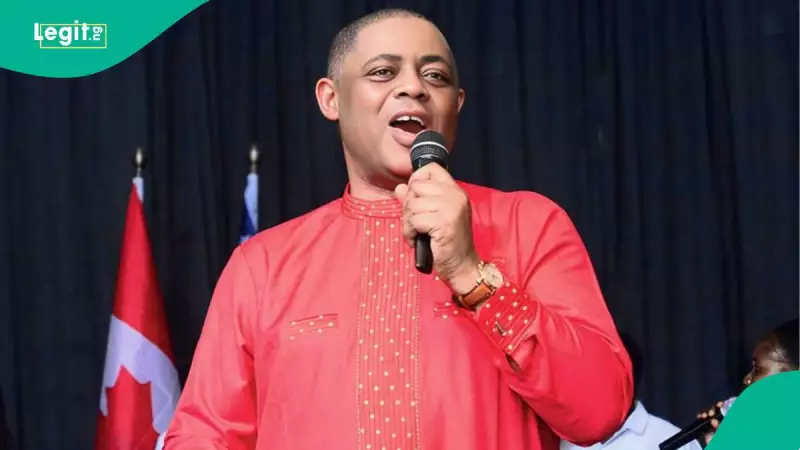
More than six decades after a civil war that tested Nigeria's unity, the nation faces a critical choice: to pursue healing through truth or to allow divisive narratives to fuel ethnic hatred. A recent opinion piece attributed to former minister Femi Fani-Kayode, which presented a heavily ethnicised version of the January 15, 1966 military coup, has sparked a necessary debate on historical accuracy and national cohesion.
Deconstructing the Ethnic Narrative of the 1966 Coup
In an article titled "A Morning of Carnage" published in Daily Trust on January 15, 2026, Fani-Kayode advanced a perspective that places singular ethnic blame for the coup. Governance advocate Kalu Okoronkwo has rigorously challenged this view, arguing it is a dangerous oversimplification. Okoronkwo emphasizes that military coups are conspiracies of individuals, not ethnic plebiscites. No ethnic group is consulted for such actions, and imposing collective guilt on an entire people based on the origin of some officers fundamentally misreads both military operations and the Nigerian state.
Critical to this rebuttal are insights from former Head of State, General Ibrahim Badamasi Babangida. In his autobiography, A Journey in Service, Babangida provides an insider's account that complicates the simplistic ethnic label. He notes that the acknowledged coup leader, Major Chukwuma Kaduna Nzeogwu, was Igbo by name but was born and raised in Kaduna, culturally Northern, and fluent in Hausa. This detail alone shatters crude ethnic categorisation.
While Babangida acknowledged the coup took on an "unmistakable ethnic coloration" in perception and outcome, he carefully did not equate this with ethnic intent. His account situates the events within a fractured military and a polarised young nation, thereby challenging the careless label of an "Igbo coup."
Omissions, Inconsistencies, and the Political Objective
Okoronkwo further critiques Fani-Kayode's reliance on childhood memories from the age of six, presented as eyewitness testimony without corroborating evidence. The narrative also contains glaring inconsistencies, such as claiming the plotters intended to execute all arrestees while admitting his own father was abducted and released unharmed.
More significantly, Fani-Kayode's account omits crucial facts that weaken the ethnic thesis. He fails to acknowledge the decisive role of Igbo officers who moved to contain the coup. Major-General Johnson Aguiyi-Ironsi acted in Lagos to suppress the mutiny, while Colonel Chukwuemeka Odumegwu Ojukwu worked to stabilise the North and ensure the plotters' arrest.
Perhaps the most damaging omission to the ethnic motive argument is the coup's stated political objective: the release of Yoruba leader Chief Obafemi Awolowo from prison and his installation as Prime Minister. No proclamation sought an Igbo leader, inviting deeper questions about who benefited from shaping the post-coup narrative and why perception hardened into dogma.
The Path Forward: A National Forum for Truth and Reconciliation
Why does the simplistic ethnic label persist? Okoronkwo argues it serves politics more than truth, offering emotional simplicity and a way to mobilise resentment. The cost has been enormous, feeding reprisals, legitimising mass violence, and entrenching generational mistrust.
The article draws lessons from other nations like South Africa, Rwanda, and Northern Ireland, which learned that healing begins with honest reckoning. For Nigeria, the proposed Forum for National Reconciliation and Restoration is presented not as optional but as a national necessity. It is envisioned as a moral space to separate myth from fact, distinguish individual actions from collective identity, and build a future on documented history and shared humanity.
Silence in the face of falsehood is complicity, Okoronkwo concludes. Nigeria's unresolved grief from 1966, the counter-coup, and the civil war continues to poison politics and inter-ethnic relations. A structured national dialogue is presented as the only way to transition from accusation to understanding, from inherited hatred to deliberate healing, allowing the nation to finally step into the light of a shared future.




