
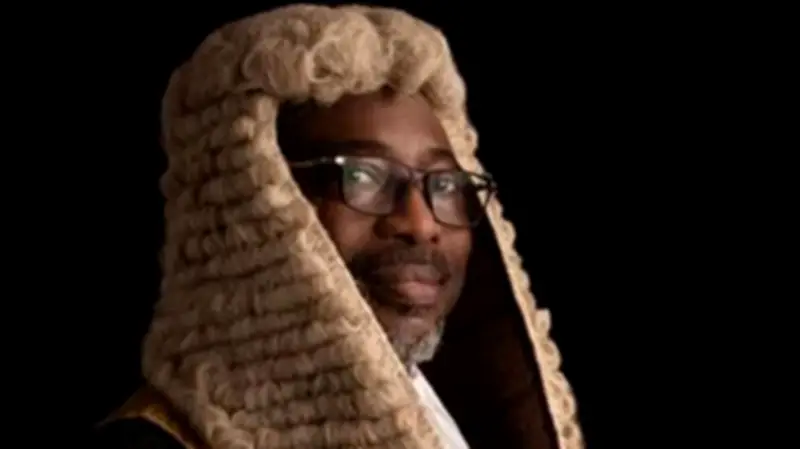
The Attorney-General of Lagos State, Mr Lawal Pedro (SAN), along with the state’s Chief Coroner and the presiding Coroner for the Lagos Coroner’s District, have challenged a suit seeking to halt the ongoing inquest into the death of master Nkanu Adichie-Esege, son of celebrated author Chimamanda Ngozi Adichie.
The respondents urged the court to dismiss the application in its entirety, describing it as an attempt to circumvent established legal procedures.
In a preliminary objection dated June 5, 2026, filed in response to a judicial review application instituted by Eurapharma Care Services Nigeria Limited, operators of a hospital in Victoria Island where the child reportedly died on January 7, 2026, the respondents argued that the suit is incompetent and premature.
Eurapharma had earlier secured an interim order from the Lagos State High Court sitting in Osborne, Ikoyi, presided over by Justice A.O. Opesanwo, temporarily staying proceedings in the coroner’s inquest pending the determination of its substantive application.
In the suit, the hospital is seeking orders of certiorari and prohibition to quash decisions of the Coroner’s Court and restrain further proceedings in the inquest.
However, in their objection, the respondents comprising the Coroner, Chief Coroner and Attorney-General, argued that the suit constitutes an abuse of court process.
In a joint written address, they contended that the applicant failed to establish any legal basis for invoking the supervisory jurisdiction of the High Court through judicial review.
They maintained that under Nigerian law, the remedy of certiorari is only available where a lower tribunal or authority has acted without jurisdiction or exceeded its statutory powers.
Citing provisions of the Coroners System Law of Lagos State, the respondents argued that the Coroner possesses exclusive authority to investigate suspicious deaths within the relevant jurisdiction, and that the decision to proceed with the inquest falls squarely within those powers.
They further submitted that Section 21 of the law empowers a coroner to conduct an inquest even in situations where the body of the deceased is unavailable or has been destroyed.
On that basis, they rejected the hospital’s argument that the alleged cremation of the deceased’s remains deprived the Coroner of jurisdiction.
The respondents also argued that issues surrounding the alleged cremation and the absence of an autopsy report had not been formally presented before the Coroner’s Court, making the judicial review application speculative.
According to them, the hospital is effectively inviting the High Court to intervene in matters on which the Coroner has not yet made any determination.
“The applicant seeks to invite this Honourable Court into a realm of speculation by asking it to intervene in issues yet to be considered by the Coroner,” the respondents submitted.
They also dismissed claims that the Coroner’s directive requiring the hospital to call witnesses first amounted to a breach of fair hearing.
Relying on judicial authorities, including Gyang v Commissioner of Police and Yusuf v State, they argued that fair hearing is satisfied where parties are given adequate opportunity to present their case, and that no such denial had been demonstrated.
Consequently, the respondents urged the court to dismiss the application in its entirety, describing it as an attempt to circumvent established legal procedures governing investigations into suspicious deaths.
They further maintained that the suit was filed prematurely, as the Coroner’s Court had yet to conclude its proceedings or make substantive findings.
Justice Opesanwo subsequently adjourned the matter until September 28, 2026, for the hearing of all preliminary objections.




