
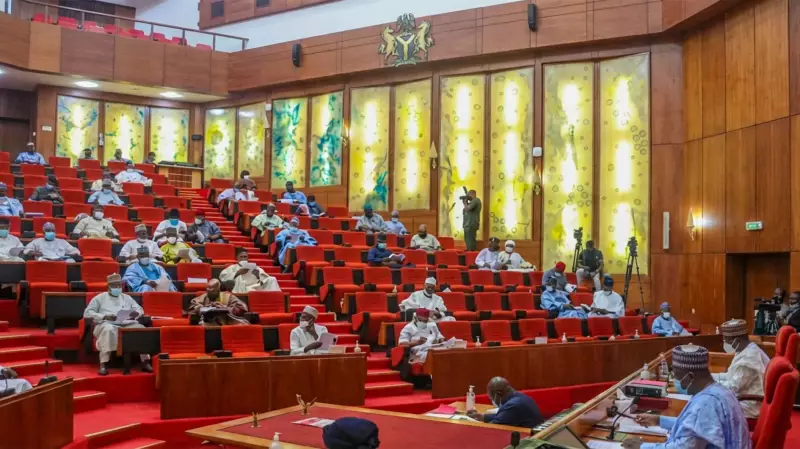
A relentless wave of political defections is dramatically reshaping Nigeria's 10th National Assembly, sparking widespread concern about the health of the nation's democracy. With governors, senators, and House of Representatives members abandoning opposition parties in droves, the ruling All Progressives Congress (APC) is consolidating a formidable majority, leaving many citizens feeling betrayed and questioning the motives behind the mass exodus.
The Scale of the Political Exodus
The numbers paint a stark picture of the shifting political allegiances. Since the 2023 general elections, at least five sitting governors, 20 senators, and over 70 members of the House of Representatives have defected from opposition parties. The APC has been the primary beneficiary of this realignment, a trend that reached a new peak on Tuesday, December 23, 2025.
On that day, two senators from Rivers State, Allwell Onyesoh (Rivers East) and Barinada Mpigi (Rivers South-East), alongside six House of Representatives members from the same state, formally crossed from the Peoples Democratic Party (PDP) to the APC. The Senate even suspended its rules to allow APC National Secretary, Ajibola Basiru, and other party executives to witness the event in the chamber, highlighting its significance.
This move further cemented the APC's dominance in the Senate, increasing its tally to 78 seats and securing a commanding majority. It followed the high-profile alignment of Rivers State Governor, Siminalayi Fubara, with the ruling party.
Governors Lead the Defection Charge
The most consequential shifts have occurred at the state level. Since 2023, four other PDP governors have defected to the APC and the Accord Party. They include:
- Sheriff Oborevwori of Delta State (April 2025), who moved with his predecessor, commissioners, lawmakers, and the entire state PDP structure.
- Akwa Ibom Governor Umo Eno (June 2025), citing "extensive consultations."
- Enugu State Governor Peter Mbah (October 2025), claiming the need to align with the federal government for development.
- Bayelsa Governor Douye Diri (October 2025), blaming the PDP's "terminal decline."
The wave continued with Osun State Governor Ademola Adeleke joining the Accord Party. Strong indications suggest Plateau State Governor Caleb Mutfwang will defect to the APC, while Taraba State Governor Agbu Kefas is expected to make a formal switch in January 2026. Typically, when a governor defects, they take a majority of their state assembly members with them.
Eroding Opposition and Legislative Instability
The composition of the National Assembly has been fundamentally altered. At the inauguration of the 10th Assembly, the Senate had 59 APC seats, 36 for PDP, eight for Labour Party (LP), and a handful for smaller parties. By December 23, 2025, the APC had surged to 79 seats, while the PDP plummeted to 22 and the LP to just three.
The House of Representatives tells an even more dramatic story. Initially, the opposition collectively held 182 seats against the APC's 175. Sustained defections have now reduced the opposition to well below 110 seats, while the APC commands over 250.
This numerical swelling of one party carries serious implications. Critics warn it undermines legislative balance, weakens oversight, and erodes institutional memory. Committee work suffers, policy priorities shift abruptly, and experienced lawmakers are sidelined. A clear example is Senator Ahmed Wadada, Chairman of the Senate Public Accounts Committee, who risks losing his position after defecting from the SDP to the APC, as Senate rules require this key oversight committee to be chaired by an opposition member.
Public Backlash and Calls for Reform
The defections have triggered a palpable sense of betrayal among the electorate. Constituents are voicing their anger directly to their representatives. Lishilinimle Gideon, a constituent of Peter Akpanke who defected in Cross River State, called it a betrayal of trust, warning that voting strength would be used against him in 2027.
Similarly, Papiito Mofe from Delta State's Ethiope East/West constituency publicly questioned his representative, Erhiatake Ibori-Suenu, asking how she could justify transferring a mandate given under one party to another explicitly rejected by voters at the polls.
Civil society organisations and political analysts are raising alarms. Ezenwa Nwagwu of the Peering Advocacy and Advancement Centre in Africa (PAACA) is advocating for a constitutional amendment to end the trend. His proposal states that a legislator who defects shall automatically forfeit their seat, with exceptions only for expulsion or party merger.
Dr. Bello Ishaq, spokesperson for the Peoples Redemption Party (PRP), argues the defection wave is driven by the APC's fear of an electoral backlash in 2027 due to poor performance on issues like fuel subsidy removal, rising costs, and insecurity. He accuses the ruling party of employing undemocratic tactics to entrench a one-party system.
Former PDP National Publicity Secretary, Debo Ologunagba, insists governance should be judged by policy outcomes, not political converts. "The 2027 election will not be about defections," he stated. "It will be about policies and scorecards."
As the 10th Assembly continues its work, the fundamental question remains: will this consolidation of power lead to more effective, people-oriented legislation, or does it mark a dangerous drift towards a one-party state where accountability diminishes? The answer may well be delivered by an increasingly politically conscious electorate in the 2027 general elections.




