
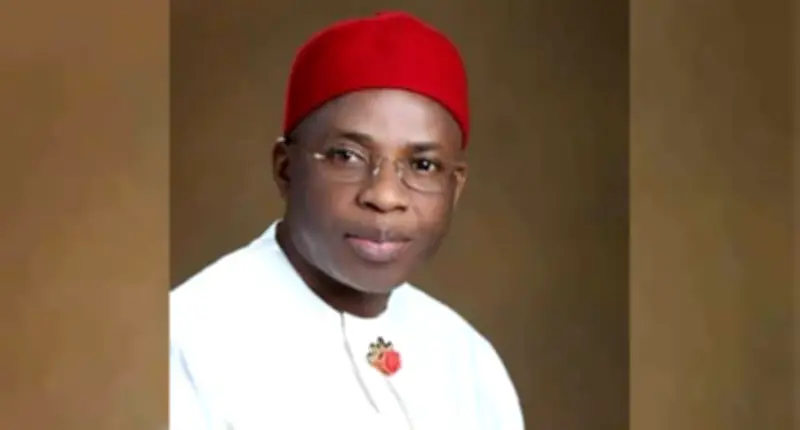
As the conversation around the future leadership of Imo State gathers momentum, many have chosen to frame the debate around zones, sentiments and political calculations. But perhaps we are asking the wrong question. The question before Imo is not merely where the next governor should come from. The question is: What path best guarantees stability, continuity, justice and progress for our state? When viewed from that perspective, the conversation inevitably returns to Okigwe Zone and, in particular, to Dr. Ikedi Ohakim.
History Matters
History matters. Not because we should live in the past, but because a people who ignore history often repeat avoidable mistakes. The truth is that Okigwe's tenure in Government House was interrupted. Whether one agrees or disagrees with the politics of 2011, the fact remains that the rotation that many now passionately defend was disrupted at that point. Today, some speak of equity while refusing to acknowledge the very injustice that created the present debate. True equity cannot begin where history is convenient. True equity begins where truth is acknowledged. That truth is simple: a political imbalance occurred, and many Imolites believe it deserves thoughtful consideration.
Beyond Zoning: Capacity and Continuity
But this conversation is bigger than zoning. It is also about capacity. Governor Hope Uzodimma has invested enormous political capital in rebuilding Imo State. Roads have been constructed. Institutions have been strengthened. Investor confidence has improved. The state is gradually recovering from years of instability and uncertainty. The next challenge is preservation. Every governor who genuinely loves his state hopes that the foundations he lays will not be dismantled by his successor. No serious builder wants to watch years of work abandoned because of political rivalry. That is why succession is not merely about who comes next. It is about who can preserve, consolidate and expand.
Ikedi Ohakim's Unique Contribution
This is where Dr. Ikedi Ohakim enters the conversation. Unlike many aspirants whose appeal is built largely on ambition, Ohakim brings something increasingly rare in Nigerian politics: institutional memory. He understands governance. He understands policy. He understands the consequences of discontinuity. Most importantly, he understands that development is a relay race, not a wrestling match. Over the years, he has demonstrated an uncommon willingness to support successive administrations, including the present government. He has never presented himself as an enemy of progress simply because another person occupies office. That disposition is not accidental. It reflects a mindset. A belief that governance should be cumulative. A belief that every administration should build on the achievements of its predecessor rather than spend years destroying and restarting.
The Cost of Discontinuity
Imo desperately needs that philosophy. The state has paid a heavy price for political discontinuity. Projects abandoned. Policies reversed. Development delayed. Momentum lost. The future cannot be another cycle of demolition and reconstruction. The future must be consolidation. And if consolidation is the goal, then experience becomes an asset, not a liability.
A Vision Ahead of Its Time
Those who know Dr. Ohakim closely often describe him as a man ahead of his time. The refinery vision that many mocked is today validated by the reality of refining activities in Imo State. The health insurance concept that was ridiculed has become an accepted component of modern governance. The road maintenance framework of IRROMA remains one of the most innovative institutional ideas ever introduced in the state. Even the 10,000 jobs initiative, once dismissed by critics, has found renewed relevance through recent judicial developments. Time has a way of vindicating vision. Perhaps that is why conversations about Ohakim refuse to disappear. Not because of nostalgia. But because many Imolites are beginning to ask a practical question: If some of those ideas were right then, what else did we fail to appreciate?
The Path Forward
As Imo approaches another important political transition, the state must resist the temptation to reduce the debate to slogans. This is not simply about Okigwe. It is about justice. It is about continuity. It is about preserving the gains of today while preparing for the opportunities of tomorrow. And if those principles guide our thinking, then perhaps the path forward is not as complicated as some would have us believe. Sometimes, the future of a state is best secured not by choosing the loudest voice, but by choosing the safest hands. That is the conversation Imo should be having.




