
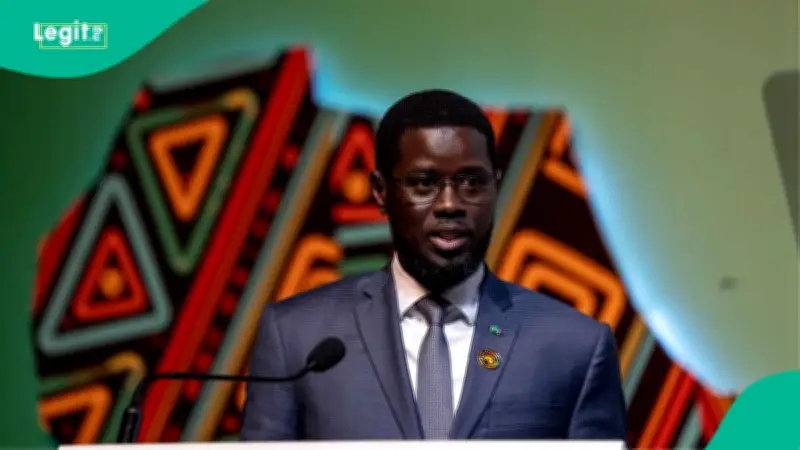
Senegal's President Bassirou Diomaye Faye formally launched his new political party, the Republican Patriots, on Saturday, cementing a split from former ally Ousmane Sonko that had been widening for months. The move ends their partnership under the Pastef banner (Patriotes Africains du Sénégal pour le Travail, l'Éthique et la Fraternité) and sets the stage for a fierce power struggle in a country already grappling with a severe debt crisis.
Formal Launch of the Republican Patriots
According to the Associated Press, the launch of the Republican Patriots marks the official dissolution of the political alliance that brought Faye and Sonko to power in 2024. The two men had run together on a platform of anti-corruption, job creation, and securing greater revenue from Senegal's oil, gas, and mineral resources. However, disagreements over policy and governance led to a growing rift.
Defections from Pastef accelerated in the weeks leading up to the launch. Several regional leaders and members of Pastef's youth wing abandoned the party to align with Faye. Additionally, a number of figures from the opposition Alliance for the Republic joined the new movement, strengthening Faye's political base.
Break from Ousmane Sonko
The relationship between Faye and Sonko deteriorated over core policy issues, particularly how Senegal should handle negotiations with the International Monetary Fund (IMF) for a loan programme as the country's debt burden deepened. Faye dismissed Sonko as prime minister earlier in 2026, but Sonko's Pastef retained its commanding majority in parliament, and Sonko was subsequently elected president of the National Assembly.
In May 2026, Faye appointed a new prime minister, Ahmadou Al Aminou Lo, and a fresh Cabinet was assembled the following month. Notably, no Pastef ministers were included after Sonko announced his party would not participate in the government. This effectively created a divided government, with the presidency controlled by Faye's new party and the legislative branch dominated by Sonko's Pastef.
Debt Crisis Compromises Campaign Promises
Faye and Sonko's 2024 campaign promises have become increasingly difficult to honour after it emerged that the previous administration had concealed billions of dollars in borrowing. The hidden debt left Senegal's finances in far worse condition than publicly acknowledged, complicating efforts to deliver on pledges to generate employment for young Senegalese, stamp out corruption, and secure a greater share of revenue from natural resources.
The debt crisis has strained the government's ability to fund social programmes and infrastructure projects. Negotiations with the IMF are ongoing, but the political rift between Faye and Sonko adds uncertainty to the country's economic recovery. Analysts expect that the rivalry will intensify as both leaders seek to position themselves for upcoming elections.
Political Implications and Future Elections
The formation of the Republican Patriots sets the stage for a direct confrontation between Faye and Sonko. This rivalry is expected to play out first in local elections in 2027 and then in the campaign for the 2029 presidential race. With both leaders commanding significant political followings, Senegal's political landscape is likely to become more polarized.
In a related development, Senegal's foreign ministry announced that President Faye has endorsed former President Macky Sall's bid to become the next United Nations secretary-general. After a meeting with Sall on Friday, Faye directed his government to fully mobilize support for the former leader, declaring that the campaign is now Senegal's candidacy in the service of Africa.
The endorsement underscores Faye's efforts to consolidate his own political standing while maintaining continuity in foreign policy. However, domestic challenges remain pressing as the debt crisis and political fragmentation threaten to undermine stability.




