
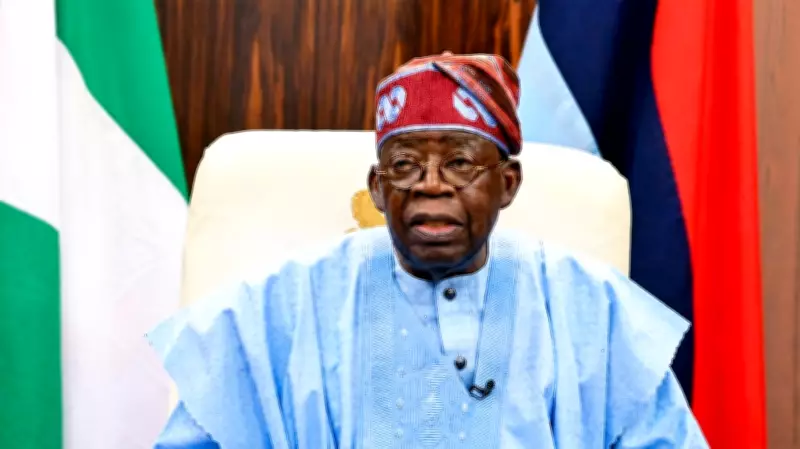
Northern Elites Must Awaken Before Tinubu's Leadership Leaves Them Behind
This is a crucial moment to address the powers that be, particularly the elites in northern Nigeria who seem unaware of the current times in the country and the world. It appears that northern leaders do not fully comprehend the character and influence of President Ahmed Bola Tinubu, who has recently received a notable honor from the British Empire. The significance and grandeur of the state visit and the vibrant reception given to Nigeria's leader by British authorities may not be fully appreciated by these elites, a point we will revisit later.
Let me clarify from the outset: I maintain strong relationships with many significant members of the northern elite. My closest friends and allies in journalism hail from the North. For instance, a resourceful journalist and media entrepreneur from the North East brought me to Abuja 38 years ago when he established the premier newspaper in the capital. I have written extensively about Mallam Bukar Zarma, former Editor of New Nigerian, who founded the first newspaper in Abuja in 1988. The editorial management board of Abuja Newsday was predominantly composed of Christians from the North Central and Southern regions, reflecting a diverse and inclusive era.
Throughout my nearly four decades of journalistic work, I have relied on more dependable friends of northern extraction. When my life story is documented, it will highlight numerous notable northern friends who have shaped my career as reliable sources and pillars of support. Importantly, my wife is from the North Central region, further solidifying my stake in the North. I recall that Bala Mohammed, the Governor of Bauchi State, used to refer to me as 'our in-law' during his tenure as FCT Minister, as my wife served as Solicitor-General of the FCT at the time.
A History of Speaking Truth to Power
During the heat of the June 12 crisis in 1994, I authored an article in The Guardian titled 'The Trouble With The Northern Press,' challenging the northern elite to set aside pride, vanity, and hypocrisy to embrace genuine media entrepreneurship. Unfortunately, the Abacha regime shut down that edition of the newspaper on the same day it was published. However, the spirit of the article was not buried; it was culled and republished by The Nigerian Tribune and Sentinel magazine in Kaduna, which recast the headline to 'Why Newspapers Fail in The North.'
The controversial reactions to this piece were so intense that Sentinel's management had to halt publication. Yet, the testimony remains that the North has not been the same in the media industry since that wake-up call. Today, we have Abuja-based Daily Trust, one of the most credible and influential newspapers in Nigeria, published by the respected Mallam Kabiru Yusuf, who also contributed to The Guardian's foundation. Other notable publications include Leadership, Blueprint, and People's Daily, along with numerous online newspapers founded by northern journalists.
Thus, I am no stranger to speaking truth to power in the North. There have been other remarkable articles and keynotes by northern writers on the region's current troubles, which I plan to review soon. As a stakeholder, I have examined the seeds of our perilous times and observed ominous signs, prompting this friendly warning to the influential northern elites to rise from their dangerous slumber before it is too late.
The Perils of Complacency
If the power and business elites in the North remain complacent, the artful leadership of President Tinubu, which they may not fully understand, will surprise them and ultimately leave them behind. They risk being labeled by followers of Alvin Toffler as 'the Illiterate of the 21st century' who cannot learn, unlearn, and relearn. This is a political era where sophisticated framing and narratives, similar to the 2015 model that demonized President Jonathan's administration, could deceive the people again.
Despite reports of life-threatening insecurity originating in the North, we often hear only empty statements and keynotes from places like Kaduna and Sokoto, full of sound and fury but signifying nothing. When will the nation witness concrete measures and enough-is-enough action plans from northern leaders in Abuja, the 19 northern State Houses, Assemblies, and Community Town Halls? When will there be condemnation of the enormous state funds used for ransom payments, as preached by Sheik Gumi?
Are northern leaders at all levels aware that the current administration is merely tagging along for political reasons? When will there be elite consensus in the North on developing a Marshall Plan to address multi-dimensional poverty and the lack of reforms in the education sector? What happened to the substantial seed fund approved by the Jonathan administration for nomadic education to tackle the al-majiri reproach in core northern states?
The Need for Elite Consensus
Let us be clear: a country or region without elite consensus on development strategy often finds itself stuck in a cycle of uncertainty and stagnation. Without a unified vision, policymakers struggle to implement effective reforms, and investors hesitate to commit resources. This lack of consensus leads to policy inconsistency, where frequent changes in government priorities create an unpredictable environment, discouraging long-term investment and hindering economic growth.
Institutional weakness becomes dominant in the polity when elites are divided, often failing to strengthen institutions, leading to corruption, inefficiency, and poor governance. Missed opportunities arise as a shared agenda is lacking, causing economic diversification and innovation to be overlooked, leaving the region reliant on a few industries. Nigeria has faced similar challenges post-independence, with elite misalignment contributing to economic difficulties.
In Nigeria's complex federation, where the North once thrived on agriculture, the lack of elite consensus has inflicted more damage on the political economy. The consequences are glaring: economic instability fueled by uncertainty deters investment, social inequality results from uneven distribution of growth benefits, and global marginalization makes it hard to attract foreign investment and compete internationally.
Pathways to Renewal
Dialogue and inclusivity are essential. The North must encourage dialogue among political, business, and civil society leaders beyond occasional lamentations in Kaduna, where northern leaders often agonize instead of organize. Strengthening institutions of governance is crucial, rather than rushing to secure lucrative federal jobs in Abuja. As former U.S. Speaker of the House Thomas Phillip 'Tip' O'Neill said, 'all politics is local.' Northern elites need to stay in their states to build robust institutions for consistent policy implementation and engage in long-term planning focused on sustainable development goals beyond political cycles.
Northern Nigeria's challenges are complex and multifaceted. The lack of elite consensus on ending insecurity has contributed to abject poverty, insecurity, and limited access to education. Key issues include higher poverty rates compared to other regions, significant security challenges like Boko Haram insurgency and banditry disrupting economic activities, and limited access to quality education resulting in high illiteracy rates hindering development.
Northern leaders, many of whom send their children to expensive schools abroad, cannot blame leaders in Abuja at this time. They must take responsibility for the lack of consensus on funding education for their own people. Building consensus on development priorities is urgent to address these challenges. Investing in education and vocational training can empower youth and improve economic prospects, while addressing insecurity and promoting economic opportunities can reduce poverty and enhance stability.
Facing Inconvenient Truths
Let us confront some inconvenient truths. The northern elite's commitment to Islamic principles is understandable, but the pursuit of Sharia law, which some seek to spread to other regions, has been linked to insecurity. Focusing on quality education and economic development might be more effective in addressing poverty and instability. Investing in education can empower youth and reduce the appeal of extremist ideologies.
Another inconvenient truth is the excessive obsession with political power and office among northern elites. Shifting focus from political power to education and economic development could help tackle the region's challenges. We will continue next week with more facts on how and why the Tinubu administration, which has strategically begun implementing the finesse of federalism, may leave the northern elites behind sooner than later if they continue to look to Abuja for solutions without addressing the life-threatening challenges in their region.




