
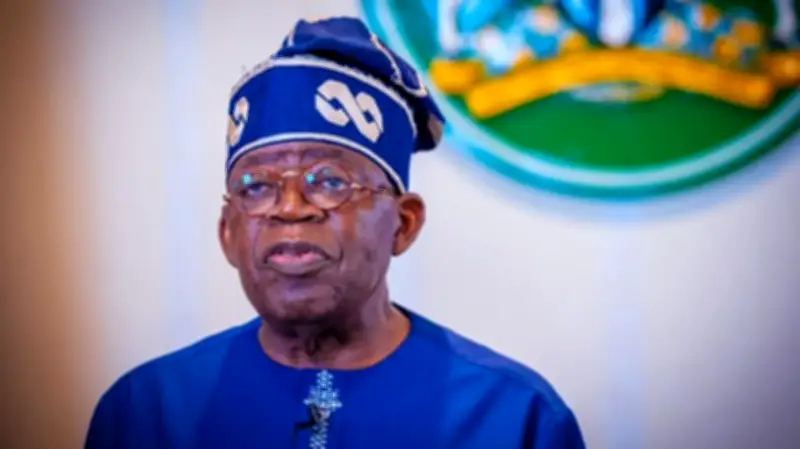
Three years after taking office, President Bola Tinubu has fundamentally altered Nigeria's economic trajectory through far-reaching reforms that have come at a significant social cost. As the administration enters the second half of its tenure, the central political question is whether Nigerians will ultimately reward the pain of reform with renewed trust at the ballot box.
A Political Brief for the Future
When President Bola Ahmed Tinubu addressed the nation on the third anniversary of his administration, the speech was more than a routine account of government achievements. It was, in many respects, a political brief for the future. Beneath the familiar language of policy achievements, economic recovery and national renewal lay a broader objective: to persuade Nigerians that the sacrifices of the past three years were necessary and that better days lie ahead.
At the heart of the address was an argument that has become the defining theme of the Tinubu presidency: that difficult reforms were unavoidable, temporary hardship was inevitable, and long-term prosperity can only emerge through short-term sacrifice. That proposition now sits at the centre of Nigeria's political discourse and may ultimately determine the outcome of the next presidential election.
Critical Juncture
Three years after assuming office, Tinubu finds himself at a critical juncture. He has succeeded in implementing some of the most ambitious and politically risky economic reforms undertaken by any Nigerian leader in recent decades. Yet he must still convince millions of citizens that the pain associated with those reforms is producing tangible benefits. The success or failure of that effort could define both his legacy and his political future.
From the moment he declared that “fuel subsidy is gone” during his inaugural address on May 29, 2023, Tinubu signalled a willingness to challenge entrenched orthodoxies. The removal of petrol subsidy and the subsequent liberalisation of the foreign exchange market represented a sharp departure from policies successive administrations had hesitated to fully dismantle despite acknowledging their distortive effects on the economy.
Economic Rationale and Consequences
Economists had long argued that fuel subsidy drained public finances, encouraged inefficiency and diverted resources from critical sectors. Similar concerns surrounded the multiple exchange-rate regime, which critics said fostered arbitrage, discouraged investment and weakened transparency. Tinubu's decision to confront both issues simultaneously was bold and unprecedented. It was also politically costly.
The immediate consequences were predictable. Fuel prices surged. Transportation costs rose sharply. Inflation accelerated. The naira depreciated significantly. Household purchasing power declined, and millions of Nigerians found themselves grappling with a steep increase in the cost of living. For many citizens, the reforms quickly became synonymous with hardship.
Yet the administration insists the measures were necessary to rescue the economy from a looming fiscal crisis. Government officials point to improvements in public revenue, increased allocations to states, renewed investor interest, improved foreign exchange liquidity and stronger macroeconomic fundamentals as evidence that the difficult choices are beginning to yield results. Indeed, several economic indicators suggest a degree of stabilisation after years of structural strain.
The Disconnect Between Data and Perception
But politics often operates differently from economics. Economic reforms may be validated by data, yet political legitimacy is usually determined by public perception. For millions of Nigerians struggling to cope with rising living costs, macroeconomic gains remain abstract. What matters more are the prices of food, transportation, electricity and housing, as well as access to employment and opportunities for social mobility. This disconnect between economic indicators and lived experience represents perhaps the greatest challenge confronting the Tinubu administration.
The President's anniversary speech reflected an acute awareness of this reality. Throughout the address, he sought to frame current difficulties as part of a necessary transition from an unsustainable past to a more stable future. Repeated references to inherited structural problems and decades of policy distortions were designed not merely to explain government decisions but also to shape public understanding of them.
Politically, the strategy serves an important purpose. It allows the administration to present itself as a government correcting historical mistakes rather than creating new ones. It also positions current hardship as evidence of reform rather than failure. The message is straightforward: Nigerians are being asked to endure temporary discomfort in exchange for future prosperity. Whether citizens accept that argument remains uncertain.
Political Strength Amidst Fragmented Opposition
While economic reforms dominate public discourse, the President enters the second half of his tenure from a position of considerable political strength. Within the ruling All Progressives Congress (APC), his authority appears largely unchallenged. The party remains firmly aligned behind him, while governors and key stakeholders continue to rally around the administration.
The opposition, meanwhile, remains fragmented. The Peoples Democratic Party (PDP) continues to wrestle with internal divisions and questions of leadership. The Labour Party has struggled to maintain organisational cohesion after its impressive performance in the 2023 elections. Other political platforms lack the national structure necessary to present a serious challenge. As a result, Tinubu currently faces no unified opposition capable of effectively capitalising on public dissatisfaction.
This political reality has strengthened the administration's position. Historically, incumbents often benefit when opponents fail to provide a credible alternative. Elections are not decided solely by assessments of government performance; they are also influenced by perceptions of who is best positioned to govern. For now, the absence of a coherent opposition has reduced immediate political pressure on the President.
However, opposition weakness should not be mistaken for public approval. Economic hardship remains widespread, and dissatisfaction persists across many segments of society. The fact that such frustrations have not yet crystallised into a formidable political movement reflects more on the state of the opposition than on the absence of public grievances. The administration is therefore operating within a window of opportunity. The coming months will likely determine whether economic improvements become visible enough to alter public sentiment before the next election cycle gathers momentum.
National Cohesion and Youth Appeal
Another important dimension of the President's anniversary speech was its emphasis on national cohesion. Tinubu appealed to Nigerians to reject divisions based on ethnicity, religion and region while reaffirming his commitment to inclusive governance. This was a politically significant intervention. Since the 2023 election, questions of representation and inclusivity have remained prominent in national conversations. Federal appointments, infrastructure projects, security deployments and resource allocation have frequently been examined through regional and ethnic lenses.
The administration has consistently rejected allegations of favouritism, insisting that governance decisions are guided by national priorities rather than sectional interests. Nevertheless, perception remains a powerful force in politics. As preparations for 2027 gradually begin to take shape, the President will need to sustain support across Nigeria's diverse political and regional constituencies. Any perception of exclusion could complicate efforts to build a broad national coalition.
Perhaps no constituency will prove more important than Nigeria's youth population. Young Nigerians constitute the country's largest demographic bloc and remain among those most affected by unemployment, inflation and economic uncertainty. The President's direct appeal to young people during his anniversary address reflected an understanding of their political significance. Government initiatives such as student loans, digital innovation programmes, entrepreneurship schemes and skills acquisition projects are intended to demonstrate responsiveness to youth concerns. Yet many young Nigerians remain sceptical. For them, success is measured not by policy announcements but by access to jobs, economic opportunities and a realistic pathway to a better future. The administration's ability to convert economic reforms into visible improvements in employment and living standards may therefore be decisive.
The Road to 2027
Though the 2027 presidential election remains on the horizon, the political contest over Tinubu's record has already commenced. Tinubu's anniversary speech therefore can be viewed as the opening phase of a broader effort to define the narrative that will shape public opinion in the years ahead. The President is effectively asking Nigerians to stay the course. His argument is that difficult reforms have laid the foundation for sustainable growth and that abandoning them would risk reversing progress already achieved.
Supporters will point to infrastructure investments, improved public revenues, fiscal reforms and signs of economic stabilisation. Critics will continue to highlight inflation, insecurity, unemployment and declining purchasing power. The contest between these narratives is likely to dominate Nigeria's political conversation as 2027 approaches.
At the midpoint of his first term, Tinubu's presidency stands at a consequential crossroads. The period of laying foundations is gradually giving way to the period of delivering measurable outcomes. The President can reasonably argue that he inherited profound economic challenges. He can point to bold decisions and difficult reforms designed to address them. But in politics, intentions rarely matter as much as results. For millions of Nigerians, the central question is no longer whether reform was necessary. It is whether reform will improve their lives. That question remains unanswered.
What is clear, however, is that Bola Tinubu has staked his presidency on one of the most consequential political wagers in Nigeria's democratic history: that citizens will ultimately reward short-term pain if it produces long-term gain. Three years into his term, that wager is both his greatest political asset and his largest risk. The road to 2027 may ultimately be determined by whether Nigerians decide the gamble was worth it.




