
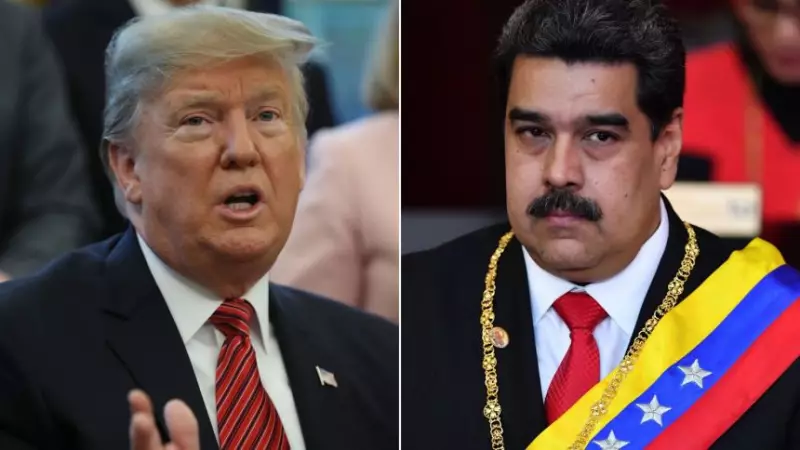
The dramatic events of early January 2026 in Venezuela serve as a stark global warning. On January 3, 2026, United States forces, acting on orders from President Donald Trump, captured Venezuelan President Nicolás Maduro and his wife. This abrupt end to over a decade of authoritarian rule was not a sudden event, but the final act in a prolonged tragedy of institutional failure, economic collapse, and broken public trust.
From Charismatic Populism to Catastrophic Failure
My personal observations, beginning with a visit in 2013, reveal the roots of this collapse. I travelled during the tenure of Senator Felix Oboro as Nigeria’s Ambassador. His Deputy Chief of Mission, Ambassador Ajayi—whom I knew from his time as Acting Nigerian Ambassador to Ukraine in 2003/2004—guided me through Caracas.
The legacy of Hugo Chávez was still palpable. He had forged deep symbolic bonds with marginalized communities, including the Afro-descendant population in the Barlovento region I toured. Many insisted Chávez had African blood, an identity he embraced. His populism delivered tangible relief, like a transformative policy granting citizenship to immigrants with expired papers.
I met a Nigerian man, Chidinma, who had lived in fear for a decade. He called Chávez “God-sent,” for restoring his dignity. This highlighted the central paradox: Chávez’s policies provided real recognition for the excluded while simultaneously hollowing out the state's institutions.
The Unraveling: Oil, Repression, and a Broken Contract
The state’s promise of prosperity, funded solely by oil, shattered when global prices crashed in the mid-2010s. The government chose denial over reform. The consequences were devastating:
- Hyperinflation erased savings.
- Food and medicine shortages became routine.
- By 2024, over 80% of Venezuelans lived in poverty.
- An estimated 7.7 million citizens fled, creating a massive refugee crisis.
Facing discontent, the Maduro regime responded with brutal repression. The 2018 and 2024 elections were hollow rituals. In 2017 alone, 125 protesters were killed. The judiciary, packed with loyalists since 2004, became a tool for regime survival. The state transformed from a guardian into a predator.
Africa's Warning Signs: Echoes of Institutional Decay
Venezuela’s collapse is a blueprint for modern state failure, offering urgent lessons for Africa where similar patterns are visible.
Equatorial Guinea epitomizes the kleptocratic state, where vast oil wealth benefits only a narrow elite while the majority live in extreme poverty. Institutions are hollow shells.
Cameroon’s Anglophone crisis reflects a failure of inclusive governance. The violent repression of peaceful protests fractured state legitimacy, fueling insurgency.
Uganda illustrates the “curse of liberation,” with liberators entrenching power indefinitely. The weaponization of justice and erosion of term limits mirror Venezuela’s judicial capture.
Similarly, Eritrea’s siege-state model and Congo-Brazzaville’s dynastic rule show how institutional paralysis undermines national resilience.
Nigeria at a Crossroads: Crisis, Choice, and Reform
Nigeria stands at a pivotal moment. It retains democratic traditions but suffers a deep crisis of trust. The #EndSARS protests of 2020 exposed a broken social contract, where security forces became predators. This alienation fuels the “Japa” exodus, mirroring Venezuela’s pre-collapse brain drain.
The 2026 tax and economic reforms represent a potential reset. However, reform without legitimacy is perilous. Taxation without visible service delivery risks accelerating social fracture. The Lagos governance model, which links tax revenue to tangible public goods, offers a possible national pathway to rebuilding trust.
Conclusion: The Imperative to Rebuild Trust
Venezuela’s story proves state failure is a choice, born of institutional neglect and broken promises. Legitimacy cannot be replaced by force or propaganda. For Nigeria and Africa, resilience requires a renewed social contract built on:
- Independent Institutions: Courts and civil services must serve the law, not rulers.
- Inclusive Governance: Decentralized power reduces conflict and improves service delivery.
- Citizen Accountability: A vibrant civil society is essential for repair.
- Investment in Public Goods: Performance, not rhetoric, earns public trust.
A state endures not because it is feared, but because it is trusted. Stability is the presence of justice. When citizens believe in the contract, they obey willingly. When they do not, collapse becomes inevitable. Legitimacy must be earned—continuously.
• Prof. Steve Azaiki is Co-Chairman, National Think Tank Nigeria and Coordinator, Africa Policy Research Consortium (APRC)




