
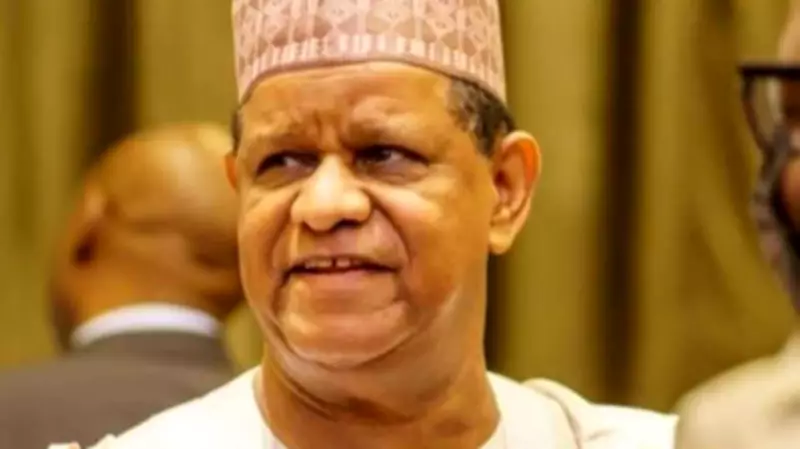
Nigeria's democratic journey has produced many politicians, campaigners, and rhetoricians, but far fewer individuals whose lives demonstrate sustained competence in administration, finance, institution-building, and national cohesion anchored on strong character and integrity before seeking political power. This is especially true in a nation burdened by insecurity, economic fragility, elite distrust, and institutional decay. Therefore, the question before Nigerians is no longer simply who can win elections, but also who can govern effectively.
It is within this context that the candidacy of Mohammed Hayatu-Deen deserves serious national reflection. His profile presents something increasingly rare in Nigerian politics: a technocratic statesman with demonstrable executive experience across the public sector, private enterprise, development institutions, national policy platforms, and the global space. Whether one agrees with his prescriptions or not, it is difficult to dismiss the depth of preparation reflected in his record.
Competence Over Populism
The central argument for Mohammed Hayatu-Deen's suitability for the presidency is not built around ethnic populism, religious mobilisation, or emotional grandstanding. It rests on competence, exposure, discipline, institution-building, and patriotism. At a time when Nigeria struggles under the weight of policy inconsistency, fiscal instability, weak governance structures, and declining public trust, Hayatu-Deen represents a generation of leaders shaped by unique capabilities in economic management, governance, and administration rather than agitation.
His career trajectory suggests familiarity with the difficult mechanics of managing complex systems spanning a broad spectrum of sectors, something the Nigerian state desperately requires. His emergence from the old Northern intellectual tradition is particularly significant. Raised in a family rooted in education and public service, educated at institutions such as Ahmadu Bello University, and refined through elite global executive programs including Harvard Business School and INSEAD, Hayatu-Deen embodies a blend of Nigerian grounding and international exposure. This matters because modern governance increasingly requires leaders who understand both local realities and global economic systems.
Early Executive Responsibility
More importantly, his record shows executive responsibility from an unusually young age. Becoming Group Managing Director of the New Nigeria Development Company at 30 and overseeing over 140 subsidiary entities was not ceremonial leadership. It required strong leadership skills, strategic planning expertise, hard work, discipline, and the ability to coordinate the operations of a behemoth institution operating in multifaceted sectors of the economy. Likewise, his transformation of a distressed government savings institution into the successful FSB International Bank remains one of the more compelling turnaround stories in the history of Nigerian public enterprise management.
Nigeria today does not merely need political charisma. It also needs managerial acumen. The tragedy of the Nigerian state is that politics has often overshadowed governance. Electoral success has too frequently become disconnected from administrative competence. Yet the demands of modern statecraft demand deft management, the energy and dynamism to embark on robust reforms in such areas as the economy, human development, security architecture, digital transformation, and internal economic diplomacy. They require systems thinkers.
Structured Policy Thinking
Hayatu-Deen's manifesto reflects this orientation. Across governance, economic diversification, industrialisation, MSME development, education reform, digital innovation, healthcare restructuring, and security integration, there is evidence of structured policy thinking rather than improvised populism. Particularly noteworthy is his emphasis on governance culture. In a country where corruption has become both systemic and normalised, his repeated focus on transparency, meritocracy, e-governance, decentralisation, and institutional accountability suggests awareness that Nigeria's greatest crisis may not simply be a lack of resources, but failure of systems.
His proposal for constitutional review through public referendum also indicates a willingness to confront foundational governance questions many politicians avoid. Nigeria's structural debates on federalism, devolution, citizenship, and institutional balance can no longer be postponed indefinitely behind elite convenience.
Economic Orientation
Equally compelling is his economic orientation. Unlike purely ideological politicians, Hayatu-Deen appears grounded in practical economics. His emphasis on agriculture, industrial clusters, export-led manufacturing, power generation, MSME financing, digital innovation, and infrastructure development reflects a broad understanding of how nations industrialise. His recognition that unemployment fuels insecurity is particularly important. Nigeria cannot sustainably defeat insecurity while millions of young people remain economically stranded. His industrial vision also resonates with an important but neglected reality: Nigeria cannot consume its way into prosperity. It must produce.
The repeated references to textile manufacturing, automobile clusters, agro-processing, solid minerals, and export competitiveness suggest a production-oriented development framework rather than dependency economics.
Addressing Criticisms
Critics may reasonably argue that technocratic brilliance does not automatically translate into political success. Nigeria's presidency is not merely an economic office; it is a deeply political institution requiring coalition management, political stamina, electoral machinery, and grassroots mobilisation. Managing a bank is not the same as managing a fractured federation of over 200 million people. That criticism may be fair. However, it is noteworthy that Hayatu-Deen is no stranger to politics, as he competed vigorously for the Presidential ticket of the PDP in the 2022 primaries of the party.
However, Nigeria may equally need to ask whether its historical preference for conventional politicians has produced the outcomes citizens desire. The country's persistent crises teetering on the brink of anarchy increasingly raise the argument that technical competence and institutional experience should matter more in leadership selection.
Pan-Nigerian Outlook
Another significant dimension of Hayatu-Deen's profile is his apparent pan-Nigerian outlook. In an era where identity politics threatens national cohesion, his emphasis on unity, bridge-building, and detribalised leadership carries weight. Nigeria's survival may ultimately depend on leaders who can transcend ethnic anxieties while still respecting cultural diversity. His proposed security framework also reflects strategic breadth. Rather than viewing insecurity solely through the application of kinetic force, he incorporates economics, psychology, diplomacy, border management, intelligence systems, and social reorientation. Whether fully implementable or not, it reflects a multidimensional understanding of modern conflict.
A Symbol of Serious Leadership
Yet perhaps the strongest argument for Mohammed Hayatu-Deen is symbolic. He represents the possibility that Nigerian leadership can once again be associated with foresight, intellect, discipline, preparation, and seriousness. In many ways, he evokes an older tradition of public-minded Nigerian elite leadership, one shaped by education, policy engagement, institution-building, and national vision rather than performative populism.
Nigeria's challenge today is not a lack of potential. It is a lack of organised competence at scale. The country, especially at this pivotal moment, requires leaders who have deep-seated knowledge of applied economics and financial engineering as a basis for dealing with the challenges of poverty, unemployment, and the cost-of-living crisis. A leader with a demonstrable record of promoting social cohesion, peace and stability, and justice. Leaders who can engage global capital without surrendering national interest. Leaders capable of restoring trust in public institutions.
Whether Mohammed Hayatu-Deen ultimately fulfils all these expectations is for Nigerians to judge. Democracy permits scrutiny, disagreement, and electoral choice. But judged on pedigree, exposure, executive experience, policy depth, and institutional understanding, there is a serious case that he possesses many of the attributes expected of a modern Nigerian president. And perhaps that is the larger conversation Nigeria must now have: should leadership continue to revolve around political survival alone, or should competence, preparation, and proven capacity once again become central to the national leadership equation?
Obi is a lecturer, journalist, and researcher based in Abuja.




