
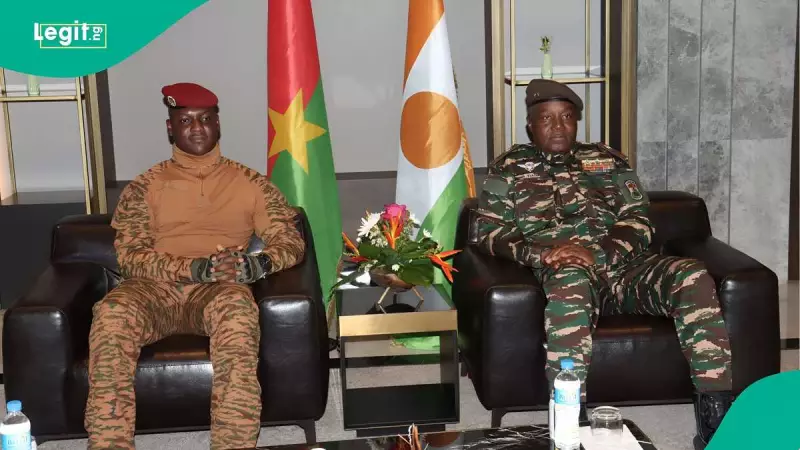
The political landscape of Africa is undergoing a quiet but dangerous transformation, driven by recent military alliances in the Sahel region. This shift, marked by alarming indifference from the broader continent, threatens to undermine decades of democratic progress and Pan-African ideals.
The Normalization of the Abnormal
Across Africa, military takeovers are increasingly being rationalized as necessary corrections rather than condemned as democratic aberrations. This troubling trend has been accelerated by the formation of the Alliance of Sahel States (AES) in 2023, a security pact between Mali, Burkina Faso, and Niger. Instead of sparking a sustained and vigorous continental debate, the alliance's creation was met with fragmented commentary and a concerning silence.
This normalization process represents a profound moral confusion. The foundational vision of Pan-Africanism, championed by leaders like Kwame Nkrumah and Julius Nyerere, was anchored in dignity, popular sovereignty, and collective responsibility—principles fundamentally at odds with governance seized by force.
Understanding the Appeal, Rejecting the Solution
It is not difficult to comprehend the frustration that fuels public sympathy for military interventions in some quarters. Democratic failures have been stark in many parts of the continent, with elections often producing leaders detached from citizens' realities, presiding over corruption, inequality, and shrinking opportunities.
However, understanding this frustration must not translate into an endorsement of force. Military regimes promise order but deliver fear; they offer discipline but abolish accountability. Africa's own history provides a consistent lesson: governance by the gun hollows out the state. The experiences of Nigeria's long military rule, Ghana's coups in the 1970s, and Liberia's descent from a coup into civil war all testify to this destructive pattern.
The High Cost of Silence and a Call to Action
The practical results of the Sahel alliances have been bleak. Despite being framed as a pact against terrorism and foreign interference, the Sahel remains one of the world's most violent regions, accounting for over 40% of global terrorism-related deaths. Large territories in Mali and Burkina Faso are outside state control, economic hardship has deepened, and diplomatic isolation has grown.
This crisis forces a critical question about the future of African integration. A Pan-Africanism that unites juntas without empowering citizens is not liberation—it is elite solidarity in uniform. The fracture of regional bodies like ECOWAS weakens Africa's collective capacity, its markets, security frameworks, and democratic norms.
The path forward requires breaking the silence with principled engagement, not hysteria. Africa does not need more strongmen; it needs stronger institutions. It does not need louder guns; it needs braver citizens. The youth, in particular, stand at a crossroads, choosing between reforming broken democratic systems and normalizing governance without consent.
As underscored by examples like Eddie Jarwolo's principled activism in Liberia, democracy demands vigilance, participation, and courage. The instability of the Sahel is a continental warning. If Pan-Africanism is to retain its meaning, it must stand firmly on the side of the people, not the gun. The continent's future depends on generations committed to law, justice, and accountable leadership.




