
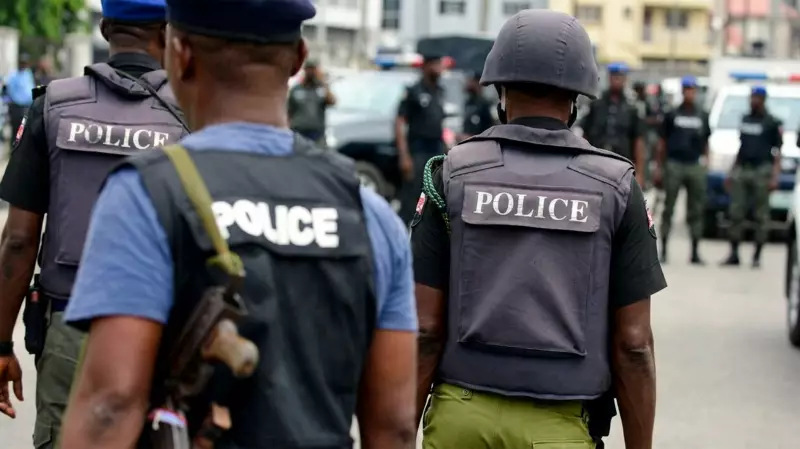
The ongoing debate about establishing state police in Nigeria is often dismissed as a risky political experiment. However, for the South-East region, this is far from an abstract discussion. It represents a critical constitutional and security imperative born from the glaring failures of the current centralised system.
The South-East Paradox: Heavy Militarisation, Persistent Insecurity
A stark contradiction defines security in Nigeria's South-East. The region is one of the most heavily militarised zones in peacetime Nigeria, dotted with checkpoints and patrolled by joint security task forces. Despite this overwhelming presence, communities remain plagued by kidnappings, targeted killings, and rampant criminality.
This situation reveals a fundamental flaw: the problem is not a lack of force, but the misapplication of force. The centralised Nigeria Police Force (NPF), operating from a distance, often treats local insecurity as an ideological issue rather than a policing challenge. This approach securitises legitimate grievances and erodes the community trust essential for effective, intelligence-led policing.
Constitutional Crisis: Governors as Chief Security Officers Without Power
The 1999 Constitution of Nigeria (as amended) creates an untenable situation. While it designates state governors as Chief Security Officers, Section 215 places the Nigeria Police Force firmly under federal command, with the Inspector-General reporting to the President. Governors can issue directives, but enforcement relies on federal discretion.
This constitutional fiction has dire consequences in the South-East. Governors are held accountable for security failures they lack the structural power to prevent. Meanwhile, federal forces, unfamiliar with local terrain, language, and social dynamics, struggle to police effectively. This imbalance fosters a cycle of central irresponsibility and peripheral helplessness, directly contradicting Section 14(2)(b), which states that "the security and welfare of the people shall be the primary purpose of government."
The Case for a Reformed State Police System
The security challenges in the South-East are uniquely local. They involve fragmented criminal networks, kidnappings linked to specific forest corridors, youth alienation, and intelligence breakdowns due to cultural distance. A centrally controlled police force is ill-equipped to address these nuanced realities.
Opponents fear state police could repeat the abuses of the First Republic. However, the answer lies in robust constitutional safeguards, not in preserving a broken model. A well-designed system would include:
- Independent State Police Service Commissions to prevent executive abuse.
- Federal minimum standards for recruitment, training, and arms control.
- Strong judicial oversight and enforceable rights protections.
- Clear thresholds for federal intervention only in cases of systemic failure.
Such a system aligns authority with responsibility, a core principle of good governance. It would domesticate security, making police a civic service rather than being perceived as an instrument of distant authority. The current vacuum has already led to the dangerous rise of unregulated vigilante groups; formal, accountable decentralisation is the safer alternative.
President Bola Tinubu's call for a legislative review of state police provisions is a significant acknowledgment that the existing security architecture is failing. For the South-East, where mistrust and militarisation feed insecurity, this is a pivotal constitutional moment. The path to securing the region is built on lawful, local, and accountable policing, not more checkpoints. State police is not a step toward separatism, but a strategic recommitment to true federalism and national unity.




