
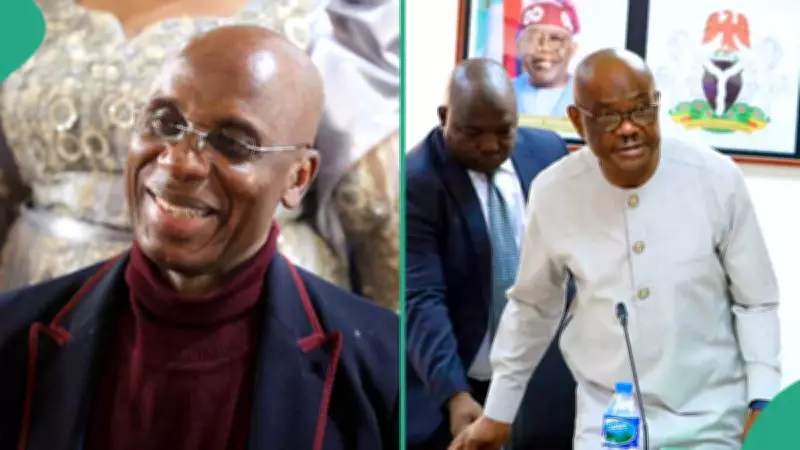
Wike Criticizes Amaechi Over Protest Involvement in Fresh Political Clash
Rivers State politics has experienced another dramatic development as Federal Capital Territory Minister Nyesom Wike launched a scathing verbal attack against former Transportation Minister Rotimi Amaechi. The political tension between these two prominent figures has resurfaced following recent protest activities in the nation's capital.
Background of Political Rivalry
The conflict between Wike and Amaechi dates back to the 2015 general elections when Amaechi, then serving as Rivers State governor, defected from the Peoples Democratic Party to join the All Progressives Congress. Despite Amaechi's position and influence, Wike successfully defeated the APC candidate in the 2015 governorship election to become Rivers State governor, succeeding his political rival.
This historical context adds significant weight to the current exchange between the two politicians, who have maintained a contentious relationship for over a decade. Their rivalry represents one of the most persistent political conflicts in Nigerian politics, with both figures maintaining substantial influence in Rivers State and national affairs.
Wike's Specific Criticisms
In a recently circulated video, Minister Wike specifically criticized Amaechi for his involvement in recent protest activities against the ruling APC government and President Bola Tinubu. The FCT minister questioned Amaechi's claim that he visited protest grounds with his son, who is reportedly a medical doctor.
"The medical doctor was at the protest ground without any medical equipment nor ambulance," Wike asserted in his public remarks. He further questioned the credibility of opposition leaders who criticize the government after being out of power for only two years, noting that Amaechi served in the administration of former President Muhammadu Buhari for eight years.
Public Reactions to the Exchange
The latest verbal exchange between the two political heavyweights has generated significant public discussion across Nigeria. Various citizens have expressed their opinions on social media platforms and other public forums regarding the ongoing conflict.
One commentator named Gloria criticized Amaechi directly, stating: "This was exactly what I said. We remember everything Amaechi said when Atiku challenged Buhari. Now he actually wants a fair election because he is no longer benefiting, only when they are kicked out of office."
Another respondent named Anyaele Ugochukwu defended Amaechi's position: "Wike can never play full opposition like Amaechi. That's why he flows with the current system even when his ideology is far different from his current mandate."
Additional commentary questioned the broader implications of the exchange, with one observer noting: "Isn't the provision of ambulances at strategic locations in a city like Abuja part of your mandate? What a shameless admission of failure and incompetence."
Broader Political Context
The conflict occurs within the larger context of Nigerian political realignments and opposition activities. Amaechi's participation in protest activities represents a significant development given his previous position as a key figure in the APC government under President Buhari.
This exchange follows recent reports that Senator Adams Oshiomhole also criticized Amaechi during a public event, recalling contentious periods during the former minister's tenure overseeing the Nigerian Ports Authority. These multiple criticisms suggest Amaechi faces increasing political pressure from former allies and opponents alike.
The political dynamics in Rivers State continue to evolve, with both Wike and Amaechi maintaining substantial influence despite their current positions outside the state's direct governance. Their ongoing conflict reflects deeper divisions within Nigerian politics that extend beyond personal rivalries to encompass ideological differences and competing visions for national development.
As the political landscape continues to shift ahead of future electoral cycles, the relationship between these two prominent figures will likely remain a significant factor in Rivers State politics and broader national political calculations. The intensity of their exchange suggests that their rivalry remains active and potentially influential in shaping political developments in the coming months and years.




