
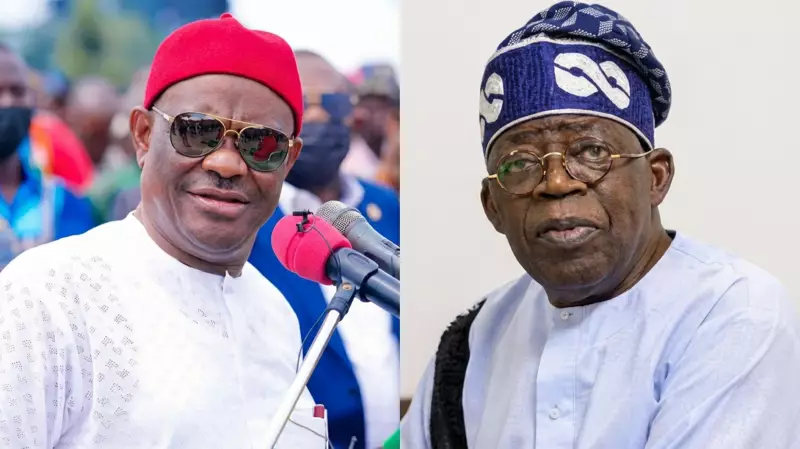
In the turbulent landscape of Nigerian politics, one figure stands out as a seemingly untouchable force: Nyesom Wike. The former Governor of Rivers State and current Minister of the Federal Capital Territory has cultivated an aura of invincibility that leaves allies and opponents alike in awe and frustration. His journey from a regional power broker to a central figure in President Bola Tinubu's administration reveals a political genius operating with unprecedented influence.
The Unconventional Criteria for Political Genius
The author argues that if Nigeria's media landscape were more developed, Wike would undoubtedly have been named 'Man of the Year' for his monumental impact on 2025's events. This perspective borrows from TIME magazine's controversial but consistent criterion for its Person of the Year: 'the individual who, for good or for ill, exerted the greatest influence on the year's events.' Just as TIME recognized figures like Adolf Hitler in 1938 and Ayatollah Khomeini in 1980 for their impact rather than their virtue, Wike's effect on Nigeria's political trajectory is undeniable, regardless of moral judgments.
Wike's political arsenal is formidable. He is described as brilliant, foxy, resourceful, bold, resilient, and recklessly restless. His loyalty, while fierce, is carefully directed toward his causes and principals. This combination has earned him consideration as a 'Political Tactician of the Decade' and the 'Lion of the Tribe of Ikwerre.'
The Anatomy of Wike's Untouchable Status
Wike's power stems from multiple, interlocking sources. His garrulous nature and verbal judo have become legendary, disarming critics and controlling narratives. More substantially, his track record of dismantling opposition and his perceived ability to navigate the judiciary for favorable outcomes have cemented his reputation. The ongoing political intimidation of Rivers State Governor, Siminalayi Fubara, serves as a prime case study of Wike's modus operandi.
In Abuja, his grip is equally strong. His control over road construction and land administration has sparked whispers of him being a modern-day land baron. Despite this, insiders at the Presidential Villa confirm that President Tinubu consistently defends him, telling petitioners: 'Leave him alone. He is working. He is an achiever. Can't you see the roads in Abuja?' This presidential shield is a cornerstone of his untouchability.
Even the National Assembly, constitutionally empowered to oversee the FCT, has never summoned him for questioning. This includes failing to probe the controversial renovation of the International Conference Centre, originally built in 1990 for N240 million but renovated in 2025 for a staggering N39 billion, or allegations of land allocation to himself and family.
The 2027 Project and the Rivers State Gambit
Wike's current actions are widely interpreted as part of 'Project 2027'—a grand strategy to secure a landslide victory for the ruling APC in the next general elections. He is believed to have deployed significant resources to weaken opposition ranks. This makes the APC's recent criticism of him curiously contradictory, as he was the same genius who orchestrated the defection of five PDP governors in 2023 to undermine Atiku Abubakar and ensure Tinubu's victory.
The current crisis in Rivers State, where Wike is openly opposing Governor Fubara's re-election and his loyalists in the State Assembly have begun impeachment proceedings, is a calculated risk. As a supreme intelligence on Niger Delta politics, Wike understands his value. His influence in the oil-rich region, backed by the loyalty of many militant leaders, makes Rivers State a territory he can make 'ungovernable.' This leverage ensures that removing him from the cabinet is politically perilous for the President's 2027 ambitions.
Wike has also strategically consolidated support within another critical institution: the judiciary. Long before his ministerial appointment, he had ingeniously taken care of the 'welfare and security' of judicial officers. As minister, he has focused on building retirement estates for them, deftly assisting the President in consolidating their support, even while facing criticism for not addressing the welfare of FCT civil servants.
Mastering the Media and the Final Analysis
Wike's media strategy is non-traditional and financially potent. He does not bribe editors; instead, he buys entire newspaper pages and lengthy television airtime—sometimes up to six hours—to directly advertise his projects and control his message. This massive spending of public funds, often without audit, allows him to manage critical coverage effectively. Many media houses avoid publishing public interest editorials that could offend him, fearing the loss of robust income from the FCT ministry.
In conclusion, Nyesom Wike represents a unique phenomenon in Nigerian politics: a dangerous but untouchable genius. His value to 'Project 2027' is deemed so high that President Tinubu is unlikely to yield to pressure from within the APC to remove him. Wike knows his worth, confident that forcing him out would be as difficult as 'forcing a stream to flow uphill.' For now, the hurricane that is Wike continues to dominate the political weather, a testament to his unparalleled tactical acumen and understanding of power in Africa's most populous nation.




