
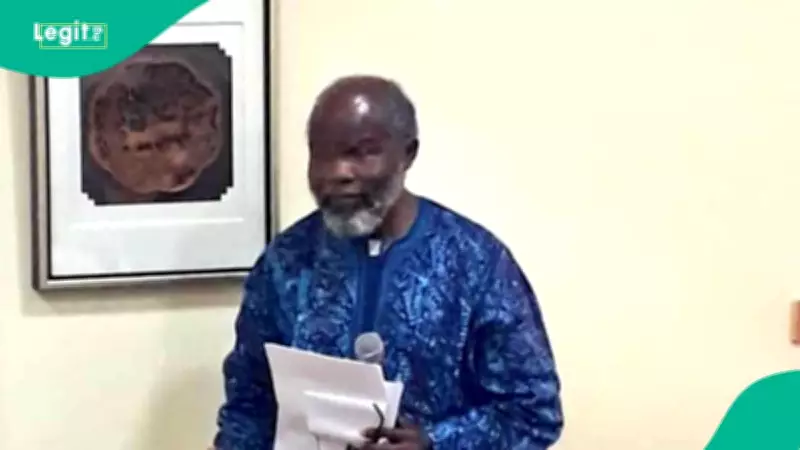
A coalition of governance experts, academics, and public figures has called for a fundamental shift in Nigeria's democratic culture, arguing that the country's governance challenges stem not only from leadership shortcomings but also from weak citizenship, poor civic engagement, and declining institutional values. The call was made during the 2nd International Conference on Followership Studies, a virtual gathering hosted by retired army officer and governance reform advocate General Ishola Williams on Friday, May 29.
The conference, organized by PANAFSTRAG in collaboration with Empowered Newswire and moderated by veteran journalist and former presidential aide Laolu Akande, brought together scholars, policymakers, and civic actors to examine the role of citizens in promoting accountability and democratic governance.
Akande Speaks on Accountability and Civic Responsibility
Opening the conference, Akande dedicated the event to the late Aminu Kano, describing him as a symbol of citizen-centered political engagement and principled followership. He said democratic outcomes depend not only on leaders but also on the actions and choices of citizens, stressing the need to place followership at the center of governance discussions.
The conference, themed "The Demand Side of Accountability," featured contributions from Dr. Prince Charles Dickson of the Tattaaunawa Roundtable Initiative, Prof. Nimi Wariboko of Boston University, Prof. Aminu Gusau, former EFCC Coordinating Director of Organisational Support, Rep. Abdussamad Dasuki, Dr. Sam Amadi, and Dr. Bode Olugore, among other speakers. Discussions focused on voter behavior, civic responsibility, institutional integrity, youth participation, leadership ethics, and the factors shaping Nigeria's democratic future ahead of the 2027 general elections.
Citizens Have a Role in Governance Outcomes - Dickson
In his keynote address, Dickson described followership as an often-overlooked source of political influence, arguing that governance outcomes are shaped by the quality and consciousness of citizens. He warned that public silence, indifference, and passive acceptance can contribute to governance failures, urging citizens to move beyond online criticism and engage consistently in civic activities.
Gusau echoed the argument, saying governance quality is closely linked to the nature of followership within society. He distinguished between active, informed citizenship and passive followership, which he said can weaken accountability and enable poor governance. Drawing on examples from different countries, he argued that citizen behavior plays a significant role in determining political outcomes.
Dasuki emphasized the need to prepare younger Nigerians for active participation in public affairs and reiterated his support for greater youth inclusion in governance discussions.
Governance Crisis Requires Institutional Reforms - Amadi
Dr. Sam Amadi argued that Nigeria's governance challenges cannot be viewed solely as a leadership problem. According to him, the crisis is also rooted in institutional weaknesses and citizenship failures. He called for political restructuring, stronger protection of human rights, and economic reforms capable of producing a more independent and accountable citizenry.
Olugore highlighted the importance of direct engagement between citizens and government through structured feedback mechanisms. He said sustained civic participation could help improve public accountability and encourage better leadership outcomes.
The conference also devoted significant attention to youth participation ahead of the 2027 elections, with participants warning that voter apathy, declining civic trust, barriers to voter registration, and exclusion of rural communities could undermine democratic progress. Speakers stressed that accountability should extend beyond election periods and become part of everyday civic practice.
Citizens Urged to Participate Ethically and Reject Corruption
During a session on political ethics, Destiny Alele urged citizens to remain informed and actively engaged in governance processes. She argued that politics affects every aspect of society and called on voters to reject practices such as vote buying and other forms of corruption.
General Williams Raises Concerns Over Institutional Purpose
In his extensive interventions, General Williams argued that many of Nigeria's governance challenges stem from what he described as a loss of purpose across public institutions. According to him, public service has become increasingly disconnected from accountability and national development objectives, weakening institutional performance and reducing incentives for effective service delivery. Williams also criticized the evolution of political parties, arguing that they have become less connected to grassroots participation and more dependent on elite interests and financial influence.
He said stronger citizen involvement in political processes would help rebuild accountability and improve governance outcomes. The retired military officer further linked governance weaknesses to broader public safety concerns, arguing that insecurity, public safety, and institutional effectiveness are closely connected. He raised concerns about the country's security architecture and called for reforms that would strengthen accountability and improve the effectiveness of public institutions.
Followership as a Democratic Force - Prof. Wariboko
In a lecture on followership, Prof. Nimi Wariboko defined the concept as the collective ability of citizens to guide, support, challenge, and replace leaders in pursuit of shared national goals. He identified patriotism, empathy, equality, and justice as key values of responsible followership and advocated the inclusion of followership studies in educational curricula. Wariboko also stressed the importance of civic education, communication skills, and social activism in developing responsible citizenship, adding that ethical behavior is shaped both by family upbringing and formal institutions.
Call for Balanced Democratic Reform
The conference concluded with a broad consensus that sustainable democratic reform in Nigeria requires attention to both leadership and followership. Participants agreed that stronger institutions, ethical citizenship, and sustained public engagement are essential for improving accountability and strengthening democratic governance ahead of the 2027 elections.




