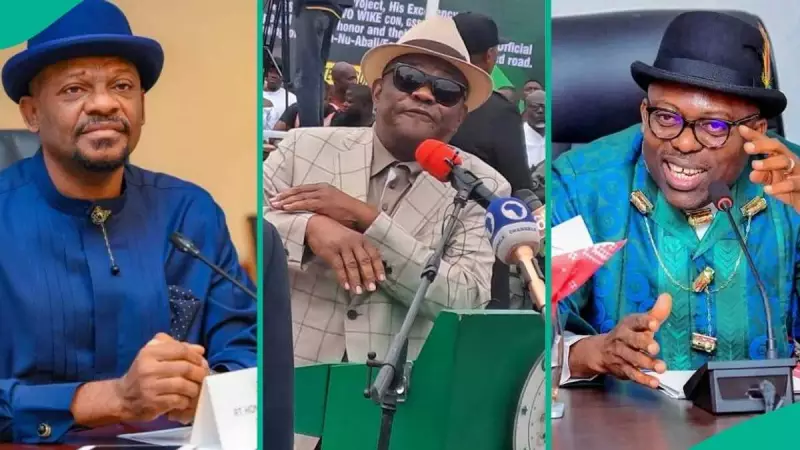
The political temperature in Rivers State has soared to a new high as the State House of Assembly, on Thursday, January 8, 2026, initiated a fresh impeachment process against Governor Siminalayi Fubara and his deputy, Professor Ngozi Odu.
Lawmakers served the executive officials with a seven-day ultimatum to respond to a litany of accusations, marking the third such attempt to remove the governor since his administration began in 2023. This latest move signals a severe and renewed breakdown in the political relationship between the executive and legislative arms, set against the backdrop of the ongoing feud between Governor Fubara and his predecessor, the current Minister of the Federal Capital Territory, Nyesom Wike.
The Eight-Point Allegation Sheet
In the documents accompanying the impeachment notice, the Assembly outlined eight specific allegations, which they described as serious constitutional and financial breaches. The core of the accusations paints a picture of an executive arm operating in defiance of legislative oversight and due process.
The lawmakers have accused Governor Fubara of reckless and unconstitutional expenditure of public funds. They allege a pattern of misappropriating government resources without seeking or obtaining the necessary approval from the State Assembly, which holds the power of the purse.
Obstruction and Constitutional Violations
Beyond finances, the Assembly claims the governor has actively hindered its constitutional duties. The allegations state that executive actions have been deliberately designed to frustrate legislative activities and undermine the authority and independence of the legislative house.
A significant charge is the illegality of appointments. The Assembly alleges that Governor Fubara made several key appointments without submitting the nominees for the mandatory screening and confirmation process as required by the Constitution, thereby bypassing a critical check on executive power.
Financial Strangulation of the Legislature
Perhaps the most direct allegations concern the financial autonomy of the legislature. Lawmakers claim the governor has withheld salaries and operational funds meant for members of the House of Assembly. This financial blockade is also said to extend to the salaries of the Clerk of the House, Emeka Amadi, and other legislative officials.
Furthermore, the Assembly accuses the governor of refusing to implement constitutional provisions that guarantee financial autonomy for both the legislature and the judiciary. They also allege that funds earmarked for the Rivers State House of Assembly Service Commission were withheld, crippling the commission's operations.
Political Fallout and External Reactions
As of the time of reporting, neither Governor Fubara nor his deputy had issued an official response to the grave allegations. Political observers note that the coming days will be critical in determining whether this impeachment attempt will proceed unlike the previous ones, which were halted following presidential intervention.
The crisis has drawn reactions from beyond the state's borders. Ajibola Basiru, the national secretary of the All Progressives Congress (APC), has publicly criticized Minister Nyesom Wike, urging him to resign and focus on the politics of Rivers State. Basiru expressed unwavering support for Governor Fubara, highlighting how the deepening rift between the governor and the FCT minister continues to dominate national headlines as the 2027 elections approach.
This impeachment proceeding is not just a legal process but a dramatic manifestation of the intense power struggle within one of Nigeria's most politically volatile states, with implications that resonate at the highest levels of federal politics.