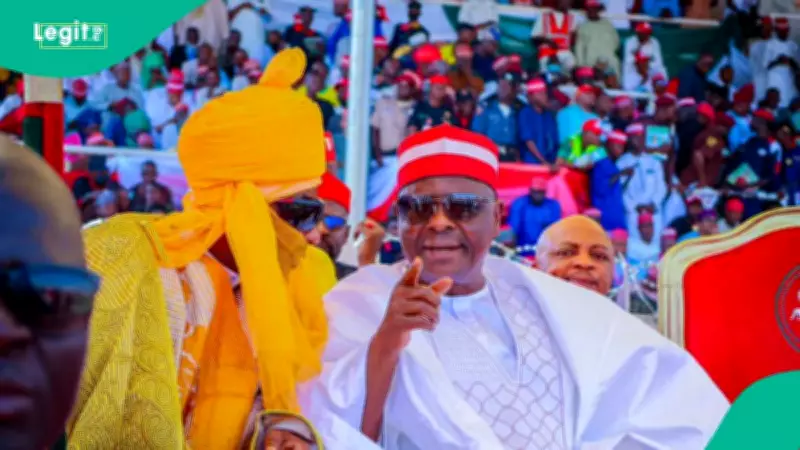
As the 2027 presidential election in Nigeria approaches, Senator Rabiu Musa Kwankwaso remains a pivotal figure in the opposition landscape. Recent analysis by Vanguard highlights that the former Kano State governor commands an organized political movement with robust grassroots mobilization capacity, a resource many other politicians lack. The Kwankwasiyya movement, deeply rooted in Kano and parts of the northwest, continues to enhance Kwankwaso’s relevance in national politics.
Two Key Forces Behind Kwankwaso
The first force is an organized political movement. Kwankwaso’s Kwankwasiyya network is not merely a collection of supporters but a structured entity capable of coordinating campaigns, driving voter turnout, and maintaining political momentum across northern states. The second force is loyal grassroots networks. These networks enable Kwankwaso to shape local coordination and influence electoral outcomes in key regions, making him an indispensable ally for any opposition coalition seeking to challenge President Bola Tinubu’s dominance.
No opposition pathway to the presidency is viable without meaningful influence in the northwest, and few politicians can match Kwankwaso’s ability to mobilize support there. This explains why virtually every major opposition coalition has sought his partnership, including Peter Obi’s camp, which views him as a valuable asset. However, some political stakeholders view the Obi-Kwankwaso alliance with skepticism, citing lingering ethnic sensitivities and doubts about Obi’s proposed one-term arrangement.
Opposition Alliances Reshape the Race
Emerging opposition alliances are reshaping the 2027 election battle, testing President Tinubu’s dominance across key voting blocs. Among Obidients—passionate supporters of Peter Obi—the alliance with Kwankwaso has generated fresh enthusiasm, especially as they shift support to the Nigeria Democratic Congress (NDC). Obi and Kwankwaso, who placed third and fourth in the 2023 election, initially joined forces with former Vice President Atiku Abubakar under an African Democratic Congress (ADC)-led alliance. However, in early May, both leaders moved to the NDC, citing relentless litigation orchestrated by the ruling APC.
Speaking after the move, Kwankwaso called for a more disciplined, loyal, and focused opposition, urging an end to recurring crises within Nigeria’s opposition space. He also dismissed claims that he is working for President Tinubu, calling such assertions “foolish” in a video interview with Global TV Nigeria.
The Kwankwasiyya movement’s grassroots strength remains a critical factor in the opposition’s strategy, as northern electoral arithmetic is central to any realistic presidential bid. With the 2027 race intensifying, Kwankwaso’s influence is expected to play a decisive role in shaping the outcome.