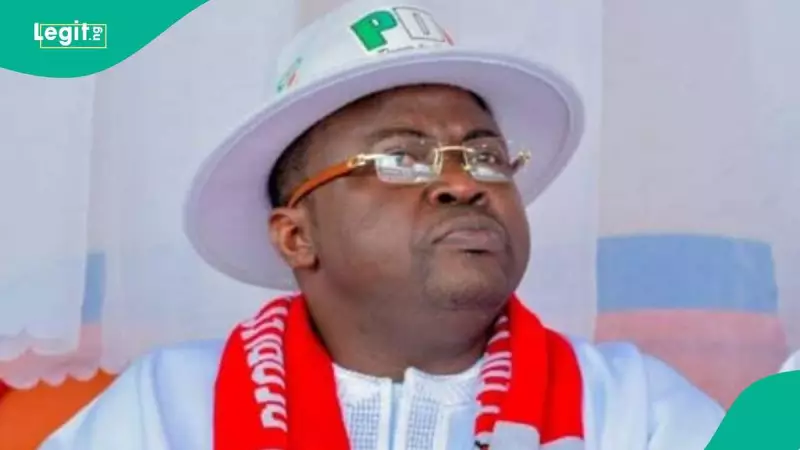
In a significant political development that could reshape the landscape of Ogun State politics, Ambassador Olufemi Ajadi, a prominent youth advocate and influential figure in Nigeria's emerging political scene, has declared that his movement will play a decisive role in determining the outcome of the 2027 general elections.
The Rise of a Political Force
Speaking with journalists on Monday, November 24, after extensive consultations with political stakeholders across the South-West region, Ambassador Ajadi clarified that while he may not personally contest for any position in Ogun State, the Ajadi Movement has evolved into a formidable political structure with statewide acceptance.
The movement, which began as a youth-driven civic advocacy platform, has rapidly transformed into a broad political network with coordinators established across all local government areas in Ogun State and active supporters spread throughout Nigeria. This remarkable growth reflects the movement's emphasis on civic mobilization, community empowerment, and welfare-focused politics, which has resonated with thousands of young Nigerians frustrated by traditional political patterns.
A Message to Political Leaders
Ambassador Ajadi's statement carried a clear and uncompromising message to political leaders: "I may not contest in Ogun State, but the Ajadi Movement will take the centre of the party that will take victory of leadership come 2027, take it or leave it."
This bold declaration underscores the movement's confidence in its political influence and organizational strength. According to political analysts, the Ajadi Movement represents one of the most organized grassroots blocs in Ogun State, with additional presence across parts of Northern Nigeria and the South-East region. This widespread network gives the movement significant capacity to swing electoral victory toward any major political platform it ultimately supports.
Principles Over Personal Ambition
Ajadi emphasized that the movement's priority extends beyond personal political ambitions, focusing instead on ensuring that credible leadership emerges in 2027. He revealed that discussions are ongoing among leaders and pillars of the movement nationwide, but the final decision on which party to support will depend on clear criteria.
The movement will align with political platforms that demonstrate genuine commitment to youth inclusion, economic reform, and transparent governance. Ajadi firmly stated, "We are not selling our mandate to the highest bidder," reinforcing the movement's principled approach to political engagement.
He also urged Nigerian youths to remain politically aware and resist being used as instruments of violence or manipulation by established political interests. This call to action reflects the movement's foundational commitment to transforming political participation among young Nigerians.
Beyond Ogun State: National Political Significance
Ambassador Ajadi's growing political influence extends beyond Ogun State boundaries. He has been actively involved in nationwide dialogues focusing on youth empowerment, restructuring, and national unity. His increasing visibility in political conversations, particularly in Oyo State, has led analysts to speculate about potential roles in federal politics or even a gubernatorial contest in his father's home state during the 2027 elections.
Ajadi's political journey includes serving as the governorship candidate for the New Nigeria Peoples Party (NNPP) during the 2023 general elections, before his recent defection to the Peoples Democratic Party (PDP). This transition between parties demonstrates his evolving political strategy and search for platforms that align with his movement's core values.
The Ajadi Movement's emergence as a potential kingmaker in Ogun State politics represents a significant shift in Nigeria's political dynamics, where grassroots organizations increasingly challenge traditional party structures and demand greater accountability from political leaders.