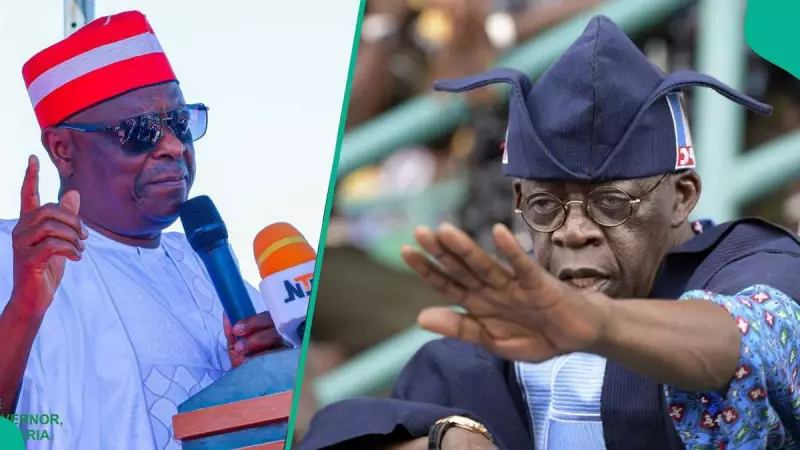
In a bold address with significant implications for the upcoming electoral cycle, former Kano State Governor and leader of the Kwankwasiyya movement, Senator Rabiu Musa Kwankwaso, has issued a stern warning about the consequences of political treachery. Speaking ahead of the 2027 general elections, Kwankwaso emphasized that betrayal in politics is not good and carries heavy repercussions, particularly in a climate of public dissatisfaction.
A Stinging Rebuke of Betrayal and Failed Governance
Kwankwaso's comments, made against a backdrop of shifting political alliances, contained a pointed critique of the ruling All Progressives Congress (APC). He linked the culture of betrayal directly to the party's perceived governance failures, notably the persistent insecurity and economic hardship plaguing the nation. He argued that such failures have caused the party to lose public sympathy.
"Life is like that; one loses, another gets," Kwankwaso stated, reflecting on the nature of political contests. "Of course, he entered a system that has no exit point. First, we know that betrayal is not good. Everybody knows how that party is losing the sympathy of the people, especially with regards to insecurity and the economy."
Kano's Unique Political Culture: Resistant to Monetary Inducements
A central pillar of Kwankwaso's message was the assertion that politics in Kano State operates by a different set of rules. He passionately defended the political consciousness of the Kano electorate, declaring that their votes cannot be purchased with money bags or material gifts.
"Kano politics in Nigeria is different," he asserted. "If not in Kano, where is it that one will meet you with a money bag and go into a meeting with you that they will give you things?" This statement positions Kano as a bastion of principle-driven politics, in stark contrast to practices he implies are common elsewhere.
"I Have No Price Tag": Kwankwaso Declares Himself Unbuyable
Directly challenging the cynical notion that every politician has a price, Senator Kwankwaso presented himself as the exception. He made a definitive declaration about his own integrity in the political marketplace.
"People used to say in Nigeria that everyone has a price tag," he noted. "If you are looking for who has no price tag, come to Rabiu Kwankwaso." He further explained that if financial gain were his motivation, he would have placed a value on himself long ago, and stressed that no one could approach him with the intention of buying his loyalty.
Caution for 2027: Short-Term Gains Lead to Long-Term Pain
Looking forward to the 2027 elections, the former senator extended his warning beyond fellow politicians to the electorate. He cautioned voters against prioritizing short-term inducements, which he said come at the cost of prolonged suffering.
"You will spend four years suffering and one day they will come and give you peanuts, and then you spend another four years," he remarked, painting a vivid picture of a cyclical pattern of poor governance. Kwankwaso urged all political actors to uphold principles and focus on the long-term interests of Nigerians, arguing that leadership built on betrayal and inducement cannot deliver meaningful development.
This warning from a key political figure like Kwankwaso, delivered on January 7, 2026, is seen as a significant marker in the early build-up to the 2027 elections. It highlights existing tensions within and between parties and sets a narrative of principle versus opportunism that is likely to shape political discourse in the coming months, especially in the politically crucial region of Kano.