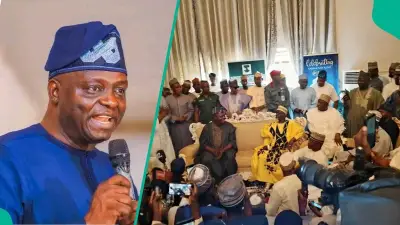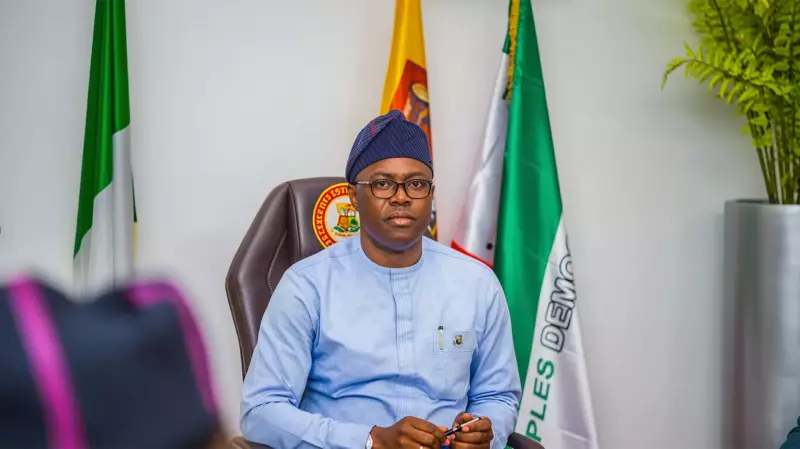
With the 2027 general elections on the horizon, opposition political parties in Nigeria are being urged to finalise their strategies immediately or risk severe electoral consequences. Oyo State Governor, Seyi Makinde, has sounded a clear warning that late planning and internal disunity could lead to catastrophic losses against the ruling All Progressives Congress (APC).
Internal Crises Threaten Opposition Participation
The urgency of this warning is highlighted by ongoing crises within the main opposition party, the Peoples Democratic Party (PDP). A stark example is the upcoming Ekiti State governorship election scheduled for July 20, 2026. The PDP candidate, Wole Oluyede, who emerged from a primary held on November 9, 2025, was conspicuously absent from the list of candidates released by the Independent National Electoral Commission (INEC) on December 29, 2025.
INEC sources attribute this omission to the deep-seated crisis within the PDP, which has spawned two factions and a flurry of legal battles. This internal warfare is not confined to Ekiti. In Osun State, Governor Ademola Adeleke, fearing the PDP might be excluded from the ballot entirely, made a dramatic exit from the party on December 1, 2025. He subsequently secured the governorship ticket of the Accord Party (AP) for the election slated for August 8, 2026.
Reports suggest Adeleke contemplated joining the APC but faced significant hurdles, including unresolved conflicts with former state officials and doubts about his loyalty from the party's established power brokers in Osun. His move to the Accord Party was swift, occurring less than 24 hours before the primaries deadline, but it was immediately challenged by a claim of a parallel primary, leaving his candidacy in a precarious position until INEC's final list is published.
The G-5 Legacy and Makinde's Frustration
Governor Makinde has pointed a direct finger at the Federal Capital Territory Minister, Nyesom Wike, as the architect of the PDP's current woes. Makinde alleges that Wike promised to "hold down the PDP" for President Bola Tinubu in the 2027 elections. While Wike denies making such a promise, he admits that he, Makinde, and three other former governors—Samuel Ortom, Okeziak Ikpeazu, and Ifeanyi Ugwuanyi—visited President Tinubu after the 2023 polls.
This group, famously known as the G-5, actively worked against the PDP's presidential candidate in 2023 after Wike failed to secure the party's ticket. Makinde now appears to regret this alliance, fearing Nigeria is sliding towards a one-party state. The PDP's influence has shrunk from controlling 12 states in 2023 to just about four by 2025.
Makinde's public outburst reflects a growing panic. Now in his second term, his future political ambitions, whether for the presidency or the Senate, are threatened by the possible collapse of his party. Wike has dismissed Makinde's concerns as mere "frustration," but the damage is evident. Former Ekiti Governor Ayo Fayose has further fuelled the fire by alleging that N50 billion was promised for repairs after the January 2024 Ibadan explosions, insinuating it was a political tool to secure Oyo State for Tinubu in 2027. Makinde confirmed receiving only N30 billion, which he placed in a special account, raising more questions than answers.
A Call for Unity and Strategic Sense
The article contrasts the current opposition's weakness with President Tinubu's own history as a resilient opposition leader in the South-west, who built a strong regional base that eventually formed the APC's backbone. It criticises today's PDP governors for being "cowardly and fawning," easily entrapped by increased federal allocations and losing the defiant spirit once exemplified by leaders like Bukola Saraki and Rotimi Amaechi in the Nigeria Governors' Forum.
There is a glimmer of hope for a unified opposition front with the formal adoption of the African Democratic Congress (ADC) by major figures like former Vice President Atiku Abubakar, Peter Obi, Nasir El-Rufai, and Rotimi Amaechi in July 2025. However, the success of this coalition hinges on its ability to suppress individual selfish ambitions, particularly the "inordinate desire of everybody wanting to be president."
The central message is unequivocal: 2026 is the year for the opposition to embrace common sense and early, strategic planning. They will be facing President Bola Tinubu, an incumbent with all the powers of the state, not just a candidate. To minimise casualties in 2027, they must wake up, unite, and craft a coherent plan before it is too late.