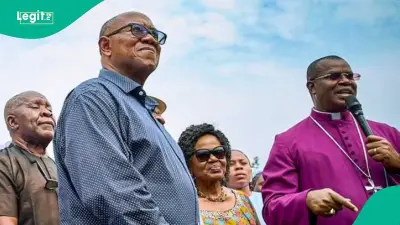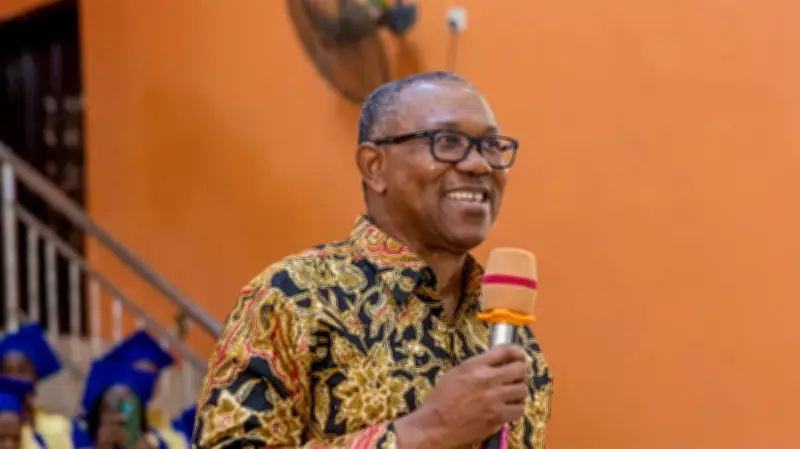
The reported and confirmed vow by the presidential candidate of the NDC, Mr. Peter Obi, to serve only one term if elected president in 2027 raises profound political and moral questions from the South East and wider Igbo perspective. Beyond the applause from his zealous followers lies a troubling issue that many Igbo are afraid to ask openly. On whose behalf did Peter Obi enter into a one-term presidency pact for the South East? When did Ndigbo collectively agree that, after decades of exclusion from the sanctum of central executive power in Nigeria, our long-awaited opportunity should come with a self-imposed expiry date of just four years?
Historical Context of Igbo Exclusion
Since Nigeria’s independence in 1960, no Igbo man has occupied the office of Executive President of Nigeria, or whatever other title it may have borne, except during the brief military interregnum of Major General JTU Aguiyi-Ironsi, which lasted barely six months. Every other geopolitical zone in Nigeria has produced military or civilian leaders who either served for extended periods or sought to retain power for as long as the constitutional and political arrangements of their time permitted. The North has had multiple opportunities. The North East, which had the first shot under Prime Minister Abubakar Tafawa Balewa, held power from the 1959 federal elections until the January 15, 1966 coup. Balewa sought and won a second mandate in 1964 and remained in office until the coup. The North West has occupied the office the longest, for a combined total of about 22 years (General Murtala Mohammed, President Shehu Shagari, General Muhammadu Buhari, General Sani Abacha, President Umaru Musa Yar’Adua, and President Buhari), while the North Central has held power for the second-longest period, a combined total of about 17 years and 11 months (General Yakubu Gowon, General Ibrahim Babangida, and General Abdulsalami Abubakar). The South West has had its turn too, occupying power for a combined total of about 14 years and seven months (General Olusegun Obasanjo, President Obasanjo, and President Bola Tinubu), although still counting under Tinubu. (I have deliberately omitted the three-month interim administration of Ernest Shonekan under military oversight, which severely undermined his exercise of full executive authority and control of the machinery of state). The South-South, through President Jonathan, completed President Yar’Adua’s first term following his unfortunate demise and secured a fresh full four-year term, making a total of about five years and three months. He still went on to seek another full term thereafter.
Why Should the Southeast Settle for Less?
But when it supposedly comes to the South East’s turn, suddenly we are being told that four years is enough. Why? Is the South East deserving only of symbolic occupancy of Aso Rock rather than full participation in power and its attendant benefits like every other zone? Are we merely seeking ceremonial validation rather than real political consolidation and national relevance? These are uncomfortable questions, but they must be asked. A presidency is not won merely for personal glory or emotional satisfaction. Political power, especially in a deeply divided country like Nigeria, is also about long-term strategic positioning for one’s region and people. Every region that attained durable influence in Nigeria did so through sustained participation in the national power structure, alliance-building, institutional control, and continuity – advantages that an extended occupancy of the presidency confers and reinforces.
Who Authorized This Pact?
So again, on whose authority is Peter Obi entering into a political pact limiting the South East to one term? Did the governors authorise it? Did our elected federal, state, and council representatives endorse it? Did Ohanaeze and the traditional authorities authorize it? Did the business and political elite of the South East, or any strategic think tank within the region, deliberate and conclude that after over 50 years of waiting, the region should settle for half a loaf? Even more puzzling is the political impatience driving this purported arrangement. The quest for the presidency is a marathon, not a sprint. It requires strategic thinking, careful analysis of political and electoral trends, long-term calculations, coalition-building, and, at times, the resilience to fail, regroup, and try again until the conditions for success are ripe. Politics is also about timing, negotiation, and integration into the mainstream. Rather than the desperate pursuit of a wilfully truncated presidency, would it not make more strategic sense for the South East to reintegrate itself into broader national coalitions, rebuild trust across regions, and either follow the path recently taken by the South West by securing the vice presidency under a strong coalition as a stepping stone to a full constitutional presidential tenure, or seek the presidency outright after achieving sufficient alignment within a winning national coalition? What exactly is the hurry?
The Danger of a One-Term Presidency
The long-standing aspiration for an Igbo presidency, dating back to Zik’s quest ahead of the Second Republic in the late 1970s, cannot and should not be reduced to the personal ambition of one individual. The project is far bigger than any single man. To suggest that without Peter Obi, the Igbo nation lacks other competent, credible, accomplished, and qualified sons or daughters capable of mounting a successful presidential bid is not only false but also highly insulting to the immense human capital of the South East. After a four-year Obi presidency, how many more decades would the South East have to wait before another realistic opportunity emerges? Nigeria’s rotational power dynamics are brutal and unforgiving, most especially to the weak and not sufficiently strong. Once such a zone is deemed to have “taken its turn,” the political establishments quickly move on to the next region. Does anyone honestly believe that after four years, the rest of Nigeria would return power to the South East in the foreseeable future? Politics is ultimately driven more by interests, strategy, and hard calculations than by emotions, sentiments, moral outrage, or self-righteous angst.
Strategic and Governance Concerns
This is why many thoughtful people in the South East are beginning to see the one-term promise as a dangerous political concession rather than an act of humility. It unintentionally cheapens the South East’s long struggle for inclusion by suggesting that Ndigbo should be satisfied with merely touching power briefly rather than exercising it fully like every other region. No other major region in Nigeria would willingly negotiate itself into a shortened tenure before even entering office. The South West did not do so. The North certainly would never do so. Even the South-South, which allegedly did so, reneged when reality dawned. Why then should the South East be the one to volunteer for diminished political value? The tragedy is that many supporters celebrate emotionally without thinking strategically. They see the symbolism of a Nigerian president of Igbo extraction but ignore the long-term implications. Political history will never be kind to regions that negotiate from beggarly desperation rather than strength. Beyond the regional implications, the proposal itself also raises serious governance concerns. A president is not elected merely to occupy office briefly and depart with applause. Serious governance requires continuity, long-term planning, institutional consolidation, and the political strength to sustain reforms beyond initial resistance. Virtually every major reform in Nigeria’s history, from banking consolidation to telecoms liberalisation and infrastructure expansion, required sustained political authority over time. A president who enters office already announcing his departure immediately weakens his bargaining power, reduces his leverage, and turns himself into a lame duck from day one. A fixed one-term presidency of four years also invites an immediate succession battle the moment the administration begins. Instead of focusing on governance, political actors would become consumed by calculations about who succeeds the incumbent president after four years. Governors, ministers, lawmakers, and party power brokers would spend more time building 2031 alliances than solving Nigeria’s problems. The presidency would effectively become transitional from inception.
Reputational Risks for the Igbo Brand
The South East must therefore decide whether it wants symbolic participation or real political integration and influence. There is a massive difference between briefly occupying power and truly consolidating power. When I raised this issue recently in a WhatsApp group populated by individuals I regard as reasonably well-informed and politically aware, I expected a robust debate on the wisdom or otherwise of such a commitment. To my utter surprise, apart from the usual umbrage from those who claim to love the Igbo more than the rest of us, a significant number of responses from Obi’s supporters followed a similar line of reasoning. “When we get to the bridge, we will cross it,” they all seemed to say. They argued that Obi should not necessarily be bound by an agreement he voluntarily entered into, with some even describing it as an astute political strategy. Others suggested that stellar performance in office would automatically render the one-term pact politically untenable and compel Nigerians to demand that he continue beyond four years. While such arguments may appear pragmatic on the surface, they expose an even more troubling danger; namely a failure to appreciate the reputational damage such a scenario could inflict on the Igbo political brand. How does an ethnic group that must win the support of larger voting blocs in its quest for power build trust and durable political alliances if it is perceived as entering into agreements it never intended to honour ab initio? Politics, although often treacherous, runs heavily on credibility, trust, and the sanctity of commitments. If the South East secures broad national support on the strength of a one-term understanding and subsequently seeks to repudiate it, many Nigerians may view it as bad faith, deception and betrayal of trust. The consequences could extend far beyond Peter Obi as an individual, reinforcing negative stereotypes, deepening existing suspicions, and making future negotiations involving the region considerably more difficult. As the Igbo say, when a finger dips into palm oil, it soils the others. A people struggling for greater inclusion in the national power structure can hardly afford to acquire a reputation for treating solemn political commitments as disposable once power has been attained. The burden of perception in politics is often collective, and the actions of one prominent figure can shape how an entire region is perceived by others for generations.
Nwomeh wrote from Enugu State.