The Obi-Kwankwaso Movement, known as the OK Movement, is gradually reshaping the political landscape of Nigeria's Southeast region as the 2027 elections approach. Lawrence Njoku reports on this emerging force.
Initially, the All Progressives Congress (APC) appeared poised for a smooth victory in the Southeast, having made inroads in the region. However, the defection of former Labour Party (LP) presidential candidate Peter Obi and former New Nigeria People's Party (NNPP) candidate Rabiu Kwankwaso to the Nigeria Democratic Congress (NDC) has altered the equation. Their move has given birth to the OK Movement, which is now challenging the region's power dynamics.
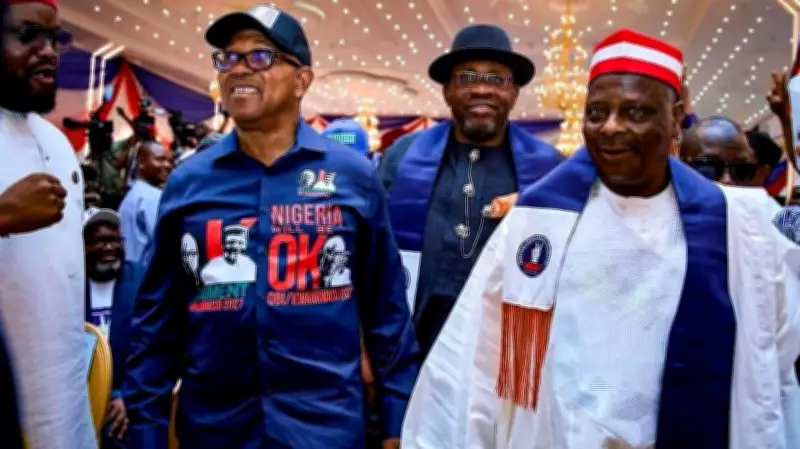
Across the Southeast, supporters display two fingers aloft and images of Obi and Kwankwaso, with slogans such as "Enugu is OK" and "Imo is OK" gaining traction. Both politicians are household names since the 2023 general election. Obi, a former Anambra State governor, came second in the presidential race, while Kwankwaso, a former Kano State governor, placed fourth. Analysts believe their failure to unite against the APC contributed to their losses.
In preparation for 2027, Obi and Kwankwaso have agreed to work together on the NDC platform. They initially joined the African Democratic Congress (ADC) but moved to the NDC after leadership crises threatened their ambitions. Since their arrival, the NDC has experienced a surge in popularity and vigor in the Southeast, attracting politicians eager to register and contest for tickets.
The APC, which controls Enugu, Imo, and Ebonyi states, had boasted of its electoral prospects due to President Bola Tinubu's achievements and opposition infighting. Now, it must contend with the NDC for votes. However, the influx of new members has also caused internal strife within the NDC. In Enugu, the state working committee has threatened legal action over delays in inaugurating elected leaders. In Abia, prominent figures like Senator Enyinnaya Abaribe have left due to overcrowding. Similar contests for party offices are occurring in Ebonyi and Imo.
Despite these challenges, the OK Movement remains a powerful draw. Support platforms are emerging across the region, aiming to deliver Obi and Kwankwaso in 2027. Ogochukwu Onyema, a senatorial aspirant for Enugu West, expressed confidence in the movement's impact. "Southeast is OK. We have done it before even without preparation and we will do it again. The OK Movement will achieve maximal input in the region," he said.
The movement's summit in Enugu issued a communique committing to "practically championing" inclusiveness and equal opportunity. It emphasized that an Obi-Kwankwaso administration would prioritize transparency, accountability, and prudent resource management, focusing on production-driven policies, quality education, healthcare, and human capital development. The movement directed coordinators to begin aggressive grassroots mobilization under the NDC across the Southeast.
The Obi-Kwankwaso Village Boys, led by former APGA Chairman Maxi Okwu and Rev. Christopher Okechukwu, aim to ensure Obi and Kwankwaso win in 2027. They urge all eligible Southeast citizens to vote massively, supporting a Christian-Muslim ticket that respects Nigeria's diversity.
Many hope the OK Movement will replicate the 2023 Obi wave, but analysts caution that facing incumbents determined to retain power will be an uphill battle. Whether the movement translates into electoral victory remains to be seen.