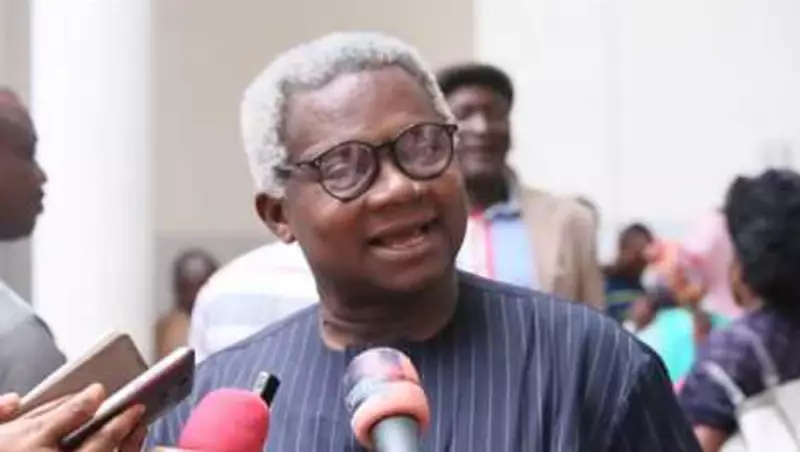
A prominent figure in the ruling All Progressives Congress (APC), Osita Okechukwu, has issued a stark warning, stating that the African Democratic Congress (ADC) is in danger of violating Nigeria's established rotational presidency convention. He attributes this risk to the growing influence of former Vice President Atiku Abubakar within the opposition party.
Okechukwu Points Finger at Atiku for Political Instability
Okechukwu, a founding member of the APC and former Director-General of the Voice of Nigeria (VON), directly blamed Atiku Abubakar for what he described as a foundational breach of the rotational principle. He was reacting to Atiku's own recent warning that Nigeria's democracy faces an existential threat from the current administration.
Okechukwu advised the former Vice President to "dig deeper," asserting that a honest review would show Nigeria's democratic challenges stemmed from the alleged violation of rotation during the 2023 presidential election. He accused Atiku of disregarding both the unwritten convention and Section 7 of the Peoples Democratic Party (PDP) Constitution, actions he claims significantly destabilised the main opposition party.
"Atiku is regrettably one of the foremost culprits of 'unforced error' that gravely cannibalised the PDP," Okechukwu stated. He further argued that Atiku could not inherit the late President Muhammadu Buhari's estimated 12 million northern votes, as many in the region still strongly support rotation as essential for sustaining democratic rule.
ADC Clarifies Membership Drive, Denies Saraki Placeholder Claims
In a separate development, the ADC moved swiftly to discredit fraudulent online activities. The party's National Publicity Secretary, Bolaji Abdullahi, clarified that the ADC has not launched any official membership registration link and urged the public to disregard any circulating links or websites claiming otherwise.
In a statement, the party warned that its official registration and verification platform would be announced through verified channels in due course. It strongly cautioned members and supporters against sharing personal information or making payments through unverified platforms, describing the current links as fraudulent and urging security agencies to intervene.
Abdullahi also used the opportunity to dismiss persistent speculation about his role in the party. He firmly denied insinuations that he was merely holding a position as a placeholder for former Senate President Bukola Saraki. He described those pushing such narratives as either misguided or deliberately spreading falsehoods.
"My decision to join ADC and my position in the party were strictly personal and on merit," Abdullahi told The Guardian in Abuja. He revealed that he had not sought Saraki's opinion nor spoken to him in a long time, even before the 2023 general elections. This statement comes amid intense speculation about Saraki's political future following stalled reconciliation efforts in the PDP.
Fallout and Political Implications
The dual statements from Okechukwu and the ADC highlight the ongoing turbulence within Nigeria's opposition landscape. Okechukwu's comments frame the internal crisis of the PDP as a cautionary tale for the ADC, suggesting that accommodating figures like Atiku could lead to a similar fate by alienating sections of the country committed to power rotation.
Meanwhile, ADC's proactive disclaimers on membership registration and the denial of being a proxy for Saraki indicate the party's attempt to assert its independence and build a distinct identity ahead of future electoral contests. The party is clearly working to avoid the pitfalls of being perceived as an annex of established political figures from other parties.
The convergence of these narratives underscores the delicate balance opposition parties must strike between welcoming defectors and maintaining core principles, all while safeguarding their internal processes from bad faith actors.