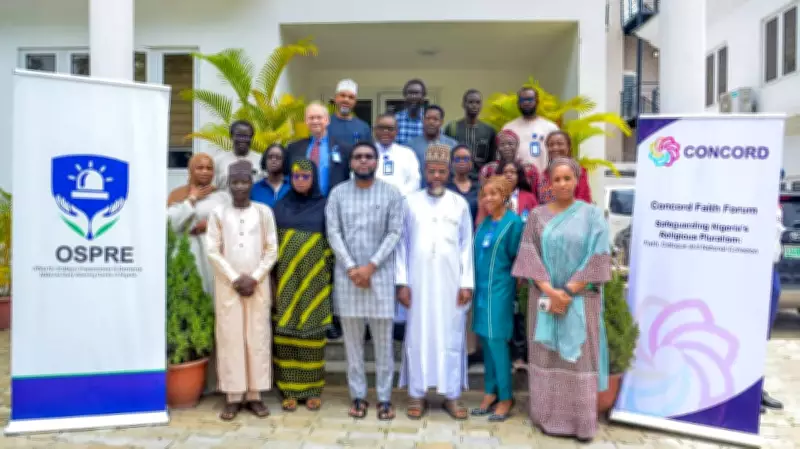
The Office for Strategic Preparedness and Resilience (OSPRE), in collaboration with the peacebuilding organization CONCORD, convened a high-level interfaith dialogue on Friday in Abuja. The event brought together faith leaders, civil society actors, and policy experts to promote religious pluralism and national cohesion in Nigeria.
Theme and Participants
The roundtable, themed "Safeguarding Nigeria's Religious Pluralism: Faith, Dialogue and National Cohesion," gathered imams, priests, peacebuilders, community organizers, and governance stakeholders. They examined strategies to counter divisive narratives and strengthen grassroots peace partnerships.
Keynote Remarks
Chris Ngwodo, Director-General of OSPRE, called for a unified national response to insecurity, especially in rural areas affected by violence. He emphasized that lasting peace requires addressing root causes such as gaps in justice, governance, and development. "Sustainable peace and resilience require inclusive approaches that recognize the multidimensional nature of violence and prioritize the protection and empowerment of local communities," Ngwodo stated.
Fatima Madaki, Director of Integrative Missions and Dialogue at CONCORD, highlighted the crucial role of faith and civic leaders in countering misinformation that deepens mistrust. She noted, "Nigeria's strength has always rested in its diversity and ability, despite challenges, to coexist, collaborate, and build shared communities across faiths and identities." She added, "At a time when misinformation spreads rapidly across social media, faith leaders and civic actors have an even greater responsibility to promote calm, justice, empathy, truth, and national unity."
Commitments and Outcomes
Both OSPRE and CONCORD reaffirmed their commitment to sustained interfaith dialogue, stronger civic partnerships, and collaborative peacebuilding initiatives. Participants agreed that Nigeria's security challenges are complex, involving sectarian tensions, ethnic disputes, organized crime, and resource-based conflicts. They emphasized the need for responsive local governance, stronger protection for vulnerable communities, and sustained investments in social cohesion initiatives.
Participating Organizations
The dialogue attracted representatives from the Islamic Education Trust, Catholic Secretariat of Nigeria, Interfaith Dialogue Forum for Peace, Kukah Centre, Neem Foundation, HumAngle Foundation, Centre for Civilians in Conflict, and the Centre for Peace Studies and Conflict Management.