The Peoples Democratic Party (PDP) has strongly reacted to a major decision by Nigeria's electoral body concerning its internal leadership dispute, firmly stating that no factions exist within the opposition party.
INEC Rejects Recognition of Turaki-Led NWC
On Tuesday, December 23, 2025, the Independent National Electoral Commission (INEC) formally rejected a request to recognise the PDP's National Working Committee (NWC) led by Kabiru Turaki, a Senior Advocate of Nigeria (SAN). The electoral umpire cited multiple conflicting court judgments as the basis for its decision.
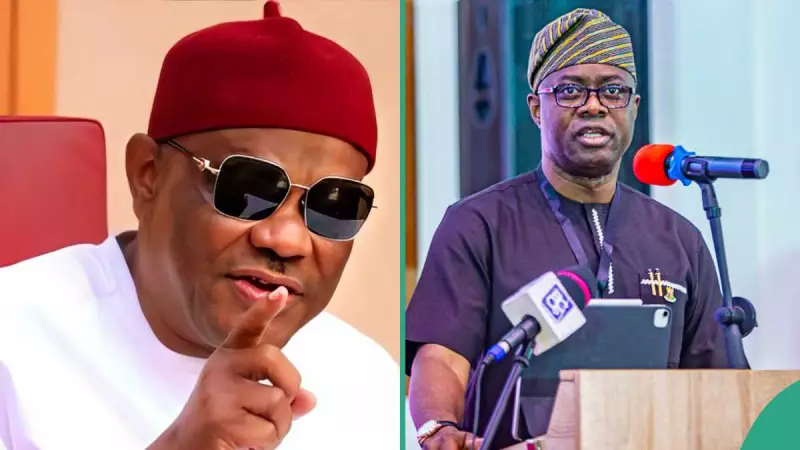
This NWC, which has the backing of Oyo State Governor Seyi Makinde and Bauchi State Governor Bala Mohammed, emerged from a national convention held in Ibadan, Oyo State, in November 2025. The convention was preceded by legal battles, with some courts attempting to halt it and others permitting it to proceed.
PDP's Forceful Rebuttal and 'No Faction' Claim
In a swift response, the PDP, through its national spokesperson Ini Ememobong, issued a statement faulting INEC's position. The party argued that INEC is barred from interfering in the internal affairs of political parties, referencing a recent Supreme Court judgment involving the Social Democratic Party (SDP).
The PDP's statement was unequivocal: "The truth remains that there is no faction in the PDP as all the legitimate organs and the administrative structure of the Party are under the control of Kabiru Tanimu Turaki SAN." The party reminded INEC that its primary constitutional duty is to Nigerians and the protection of democracy.
To bolster its claim of unity, the PDP listed key party organs that have reportedly acknowledged Turaki's leadership in the past month. These include the Board of Trustees, the Governors Forum, State Chairmen, and caucuses from the Senate and House of Representatives, alongside former governors and ministers.
The Roots of the Conflict and Parallel Structure
The current crisis stems from the deep division within the party, primarily between factions loyal to the Minister of the Federal Capital Territory (FCT), Nyesom Wike, and those backing Governor Seyi Makinde.
Following the Ibadan convention, the Wike-led group established a parallel NWC, Board of Trustees (BoT), and National Executive Committee (NEC). It was the Makinde-backed faction, through its lawyers, that subsequently petitioned INEC to recognise Turaki as the legitimate national chairman—a request now denied by the commission.
In its statement, the PDP dismissed the Wike-aligned group as merely a "committee of friends" and not a valid faction, emphasising that democracy is based on majority rule.
As the 2027 general elections approach, this internal wrangling presents a significant challenge for Nigeria's main opposition party. Some political analysts, like Omotayo Yusuf, suggest that this open confrontation could be a necessary step for the PDP to finally address its deep-seated issues and rebuild a stronger, more cohesive structure.