In a significant political realignment, two senators representing Rivers State have officially left the Peoples Democratic Party (PDP) for the ruling All Progressives Congress (APC). The move signals deepening fractures within the main opposition party in one of Nigeria's key oil-rich states.
Senate President Announces Defection
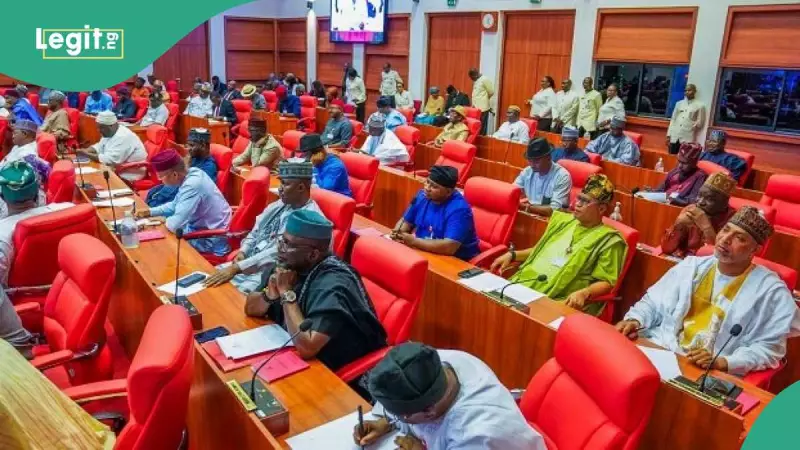
The formal announcement was made on the floor of the Nigerian Senate. The Senate President, Godswill Akpabio, informed the chamber of the senators' cross-carpeting during plenary on Tuesday, December 23, 2025. This procedural step confirms their change of political affiliation at the national legislative level.
Who Are The Defecting Senators?
The lawmakers switching parties are Senator Onyesoh Alwell, who represents the Rivers East Senatorial District, and Senator Barry Mpigi, representing the Rivers South East Senatorial District. Both legislators were elected under the platform of the PDP but have now taken their membership to the APC.
In explaining their decision, the defectors pointed to serious problems within their former party. They stated that their move was "informed by deep and unresolved internal divisions within the PDP." This reason highlights the ongoing crisis and factionalization plaguing the opposition party at both national and state levels.
The Wike Connection and Political Implications
Political observers note that the two senators are considered staunch loyalists of the former Rivers State Governor and current Minister of the Federal Capital Territory (FCT), Nyesom Wike. This defection is widely interpreted as part of the continuing political fallout and alignment stemming from Wike's much-publicized rift with the national leadership of the PDP.
The movement of these federal lawmakers to the APC strengthens the ruling party's foothold in Rivers State, a region traditionally seen as a PDP stronghold. It also potentially weakens the PDP's cohesion and influence in the National Assembly, affecting its ability to present a unified opposition.
This development is expected to have considerable repercussions for the political landscape in Rivers State ahead of future elections. It underscores the fluid nature of Nigerian politics, where allegiances can shift based on internal party dynamics and the influence of powerful political figures.