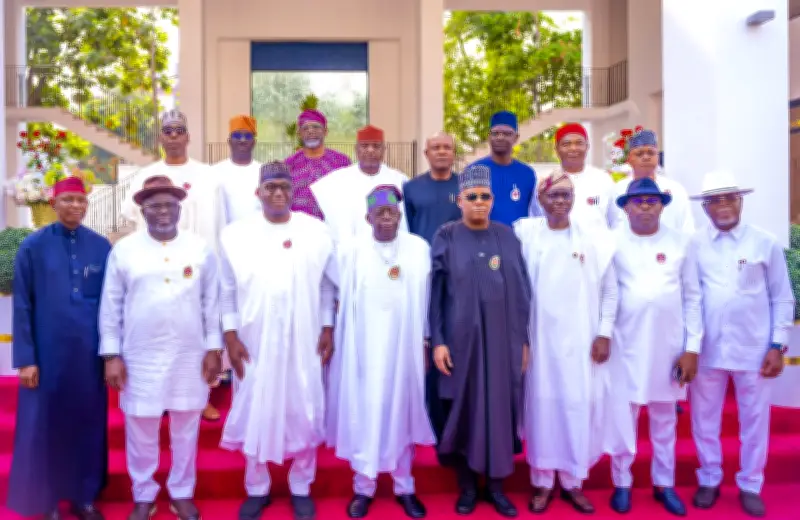
The state police constitutional amendment bill, transmitted by President Bola Tinubu to the Senate, has sparked debate not only over security but also over its potential to fundamentally alter Nigeria's political balance of power. While the bill is primarily aimed at addressing insecurity and the inefficiency of the Nigeria Police Force in policing over 200 million people, its implications for elections and federal-state relations are profound.
Bill passes Senate and House of Representatives
The Senate passed the bill after more than two-thirds of senators voted in support via a manual voting process of raising hands. The House of Representatives had earlier passed the bill on 11 June before proceeding on a two-week recess. The Senate is expected to transmit its version for concurrence or harmonisation if differences exist, before forwarding it to state houses of assembly for approval. The bill requires support from at least two-thirds (24) of the 36 state assemblies before presidential assent.
Redistribution of security powers
Currently, the president appoints the Inspector-General of Police, and commissioners of police answer to Abuja, not governors. Governors, though officially chief security officers, have little direct authority over federal security agencies. This structure has given federal administrations substantial influence during elections, with opposition politicians often accusing them of using security agencies to intimidate rivals or influence outcomes.
The proposed amendment establishes state police services and state police service commissions. Section 17 provides that the State Police Service shall be headed by a Commissioner of Police appointed by the governor, subject to confirmation by the state House of Assembly. Section 17(6) allows a governor to give lawful written directives of a general policy nature to the commissioner on public safety and order. Section 22 prescribes a State Police Service Commission to recruit, promote, and discipline officers. The state government would bear substantial funding responsibility.
Electoral consequences
Since 1999, federal incumbency has carried advantages, including control of security institutions. A ruling party could deploy federal agencies nationwide, even in opposition states. State police may reduce that leverage. If governors control policing within their states, they may resist federal interference during elections, creating a more competitive political environment.
Opposition parties currently control five of Nigeria's 36 states: Anambra (APGA), Osun (Accord Party), Abia (Labour Party), Oyo and Bauchi (Allied Peoples Movement). The ruling APC controls 31 states and Abuja. Under state policing, opposition governors would have greater capacity to protect their political interests, making it harder for the APC and President Tinubu to flip opposition states ahead of the 2027 elections.
Governors become stronger
The biggest beneficiaries may be governors, who already influence local government allocations, state assemblies, and political structures. Control over policing would further strengthen their positions, serving as a shield against external pressures and enhancing their negotiating power with national parties. Supporters argue this deepens federalism, as security powers concentrated in Abuja contradict federal principles.
Concerns about abuse
Critics warn that governors may deploy state police against political opponents, suppress dissent, or intimidate rival parties. Many governors already face accusations of exerting control over local institutions. Adding policing powers could concentrate authority at the state level, transferring political interference from Abuja to state capitals.
Constitutional lawyer's perspective
A constitutional lawyer, Soliu Bakare, told PREMIUM TIMES that state policing is a welcome development, though he acknowledged concerns about abuse. "We have to look at the purpose of the state police. There is no system that cannot be abused; even all the systems that we have in place now are being abused in one way or another, and state policing will not be an exception, but constitutional safeguards will reduce it to the barest minimum," he said.
Implications for 2027
If the amendment secures approval from at least 24 state assemblies and institutions become operational before future elections, Nigeria's electoral dynamics could change significantly. Federal incumbency may weaken, governors may become stronger, and opposition states may resist federal influence. Political parties may increasingly rely on governors for electoral advantages. For President Tinubu and the APC, state police could represent an unexpected political consequence of a reform primarily presented as a security solution.