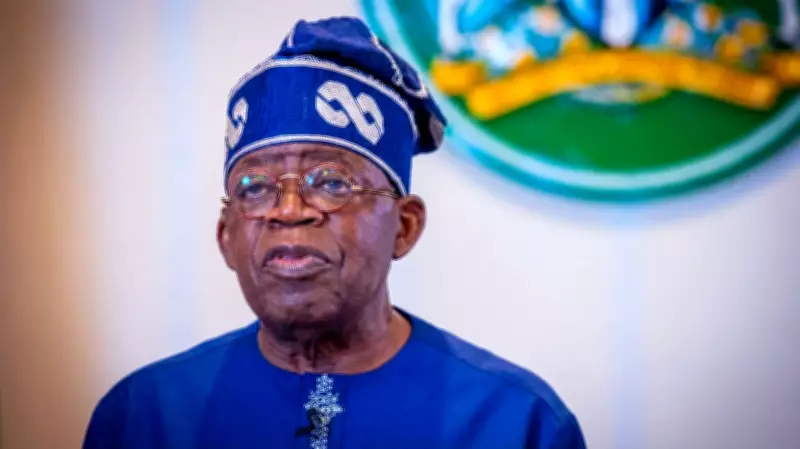
On Friday, the Eagles Square in Abuja, typically a venue for parades, became a platform for economic, social, and political disagreements between the Federal Government and organised labour during the 2026 Workers' Day celebration. President Bola Ahmed Tinubu used the occasion to highlight progress on job creation, wages, and social protection. However, his assurances were met with scepticism as workers face rising debt, increasing fuel costs, inflation, widespread poverty, and persistent insecurity that continue to erode their living standards.
President's Address and Labour's Response
President Tinubu acknowledged that insecurity and poverty remain significant obstacles to decent work. He outlined several interventions that he claimed are beginning to yield results. He described insecurity as a drag on farms, factories, and markets, insisting that his administration is treating the crisis as a national emergency through a combination of security deployments, infrastructure spending, and social safety nets. His address was read by the Minister of Labour and Employment, Mohammad Dingyadi.
However, workers were not impressed. They maintained that the headline numbers mask a harsher reality, including low wages that lag behind prices, a cost-of-living squeeze that has reduced real incomes, and insecurity that continues to disrupt production and trade corridors. The Guardian had reported on the harrowing experiences of Nigerian workers on Thursday.
Organised Labour has repeatedly warned that without stronger purchasing power and credible enforcement, wage gains risk being neutralised by inflation. While the government emphasises infrastructure-led job creation and targeted transfers, both the Nigeria Labour Congress (NLC) and the Trade Union Congress (TUC) argued that job quality, pay adequacy, and workplace safety remain uneven, particularly in the informal economy where most Nigerians earn a living.
Call for Dialogue Over Strikes
President Tinubu cautioned against the flippant use of strikes as the only viable option in industrial disagreements. He stated, “Strike should be the last resort, not the first. When we sit at the table, Nigerian workers win.” He called for deeper social dialogue and charged employers to uphold fair wages, safe workplaces, and collective bargaining.
Labour Launches 'Stop The Bleeding' Campaign
Labour leaders insisted that the entrenched system of kleptocracy and illicit financial flows (IFFs) is steadily draining the nation's resources and deepening the hardship faced by millions of workers. NLC President Joe Ajaero and TUC counterpart Festus Osifo described official kleptocracy as dangerous and launched the 'Stop The Bleeding' campaign to tackle it.
The labour movement noted that Nigeria's economic struggles, from weak wages to failing power and oil sectors, are directly tied to systemic financial leakages. According to labour leaders, Africa loses about $90 billion yearly to illicit financial flows, with Nigeria accounting for roughly 79 per cent of these flows in West Africa. Across developing countries, losses are estimated between $858.6 billion and $1.06 trillion over five years.
Historically, the continent has lost about $854 billion between 1970 and 2008, an amount exceeding total foreign aid received in the same period. Citing Nigeria's experience with fuel subsidy, labour revealed that more than N21 trillion is believed to have been spent on questionable fuel subsidy claims between 2006 and 2023. Additionally, over $2.2 billion has reportedly been lost through trade mis-invoicing, as the National Assembly raised alarm over an estimated N210 trillion in unaccounted funds linked to the Nigerian National Petroleum Company Limited (NNPCL).
Labour leaders insist these figures point not to isolated acts of corruption but to a deeply rooted system that continuously siphons public wealth. “Nigeria alone accounts for nearly 79 per cent of illicit financial flows in West Africa. Trade-related flows have been estimated at over $105 billion in a single year, with billions more lost annually in the extractive sector,” both Ajaero and Osifo said in a joint speech.
The effects of illicit financial flows are evident in deteriorating infrastructure, shrinking employment opportunities, and a growing exodus of skilled professionals. “At the heart of the crisis are weak institutions and compromised governance systems. At the same time, procurement leakages are estimated to account for between 10 and 25 per cent of GDP, and contract values are often inflated by 200 to 300 per cent,” they added.
Hope Amidst Challenges
Despite the grim outlook, labour leaders expressed hope, pointing to recent reform efforts such as the proposed Federal Audit Service Bill 2025. However, they stressed that stronger measures are urgently required, including enhanced whistleblower protections, full transparency in beneficial ownership structures, and digitalisation of public procurement systems to curb fraud. “The challenge before us is clear. Every stolen naira is a stolen future,” they urged citizens to demand accountability and transparency from public institutions.
Lagos State Salary Increase and Labour Demands
Meanwhile, Lagos State Governor Babajide Sanwo-Olu increased workers' salaries by N50,000 to cushion economic hardship. He announced this during his May Day speech, urging workers to remain calm as the state works to improve their welfare. However, the Lagos State Council of the NLC demanded a review of the minimum wage from N85,000 to N225,000, arguing that the current amount is no longer sufficient given the high cost of living in Lagos. NLC Chairperson Agnes Sessi noted that Lagos remains Nigeria's commercial nerve centre with exceptionally high transportation, housing, and feeding costs. She urged the Federal Government and sub-nationals to strengthen national security, warning that no nation can prosper when its citizens live in fear.
In his speech, Lagos TUC Chairman Abiodun Aladetan commended the new federal policy on gratuity payment to deserving workers and urged Sanwo-Olu to embrace and implement this progressive policy.