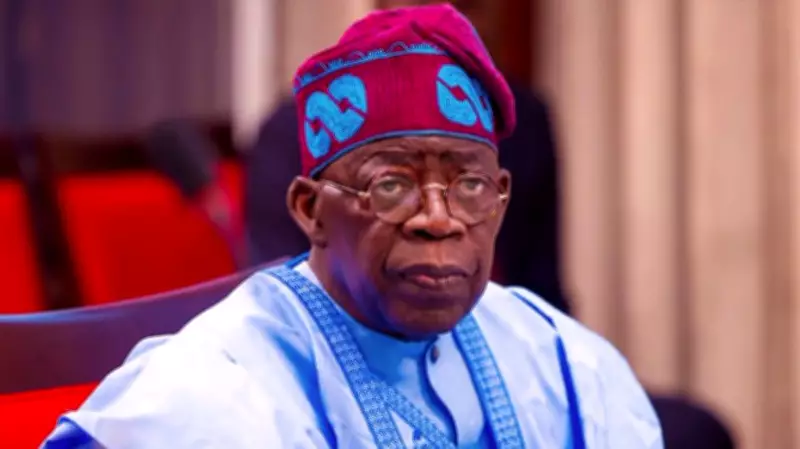
How ADC's Political Wave is Reshaping President Tinubu's South-West Stronghold
In Nigerian politics, when the South-West region experiences political shifts, the effects are felt all the way to Aso Rock, the seat of power. For President Bola Ahmed Tinubu, whose political identity is deeply rooted in Yoruba solidarity and South-West dominance, the current tremors in his home base are more than a minor disturbance—they represent a potential political earthquake. The African Democratic Congress (ADC), once considered a marginal platform, has transformed in recent months into a formidable force in Nigerian opposition politics.
The Rise of ADC as a National Opposition Force
Armed with the coalition-building expertise of former Vice President Atiku Abubakar and the mass-movement energy of former Labour Party presidential candidate Peter Obi, the ADC has become the primary vehicle for Nigeria's fractured anti-incumbency vote. The party's credibility was further bolstered in March 2026 when nine serving senators from the Labour Party, PDP, and APGA defected to its platform, making it the leading opposition bloc in the Senate. Additionally, six members from the House of Representatives have recently crossed over from the Labour Party and Young Progressives Party, signaling seismic shifts in the political landscape.
Focus on the South-West: Tinubu's Critical Battleground
While national momentum is significant, seasoned political analysts emphasize that presidential elections in Nigeria are ultimately decided at the state level. The South-West geopolitical zone, comprising six states, is both Tinubu's greatest strength and his most vulnerable flank. This region delivered decisive margins for Tinubu in the 2023 elections, with Lagos, Ogun, and Ekiti states showing strong support. However, Oyo State has consistently proven to be the region's most unpredictable variable, where Governor Seyi Makinde demonstrated in 2019 and 2023 that a well-organized opposition could overcome structural advantages.
Oyo State: The Fault Line in Tinubu's Political Fortress
To grasp the political significance of Oyo State, one must understand its role in Yoruba political culture. With approximately 7.8 million registered voters, Oyo is the most populous state in the South-West. Its large civil service forms the largest organized voting constituency in the zone, and its traditional institutions, including the Olubadan of Ibadanland and the Alaafin of Oyo, command deep respect that cannot be easily replicated by campaign machinery alone.
Moreover, Oyo harbors a longstanding political grievance: since Nigeria's return to democracy in 1999, power at the Government House in Agodi has been dominated by Ibadan-oriented leaders for 24 out of 28 years. This has fueled a growing sentiment among citizens from beyond Ibadan, encapsulated in the Yoruba phrase "Ibadan o to ge" (Ibadan has had enough), which expresses a demand for inclusion and rotation of power.
Chief Bisi Ilaka: The ADC's Strategic Weapon in Oyo
At the center of this political storm is Chief Bisi Ilaka, a figure whose quiet demeanor belies his significant influence. Hailing from Oyo town, the ancient capital of the Oyo Empire, Ilaka carries the symbolic weight of historical restoration, positioning him as a natural answer to the calls for change. His Muslim faith aligns with an informal tradition of Muslim-Christian rotation in the governorship, meeting a key equity test for many voters.
As former Chief of Staff to Governor Seyi Makinde, Ilaka operated at the nerve center of one of Nigeria's most effective state administrations. This experience has equipped him with deep relationships across Oyo State's government ministries, departments, and agencies—a crucial advantage in a state where the civil service is a major voting bloc.
Timing and Momentum: Why ADC's Strategy is Gaining Traction
The political context could not be more favorable for the ADC's ambitions. With national momentum building through Atiku's coalition-building, Obi's mobilization infrastructure, and a strong Senate presence, the party now offers a credible presidential coattail for governorship candidates in Oyo State. This provides a platform that previous opposition candidates lacked, enhancing Ilaka's potential appeal.
Although Ilaka has not yet formally declared his candidacy, timing itself is a strategic element in the calculus of power. Across Ibadan's tea rooms, the Oyo State Secretariat corridors, traditional palace forecourts, and WhatsApp groups where political discussions thrive, a consensus is quietly forming. The ADC appears to have found its South-West anchor, and Oyo State may be on the brink of a transformative political moment.
In conclusion, the ADC's careful positioning and strategic focus on Oyo State represent a direct challenge to President Tinubu's political base. As the 2027 elections approach, the party's ability to exploit regional grievances and leverage key figures like Chief Bisi Ilaka could redefine the political landscape in Nigeria's South-West, reminding observers that enduring power often lies with those who are perfectly positioned when opportunity arises.