Senate President Akpabio Sparks Church Uproar with Unusual Seating Choice
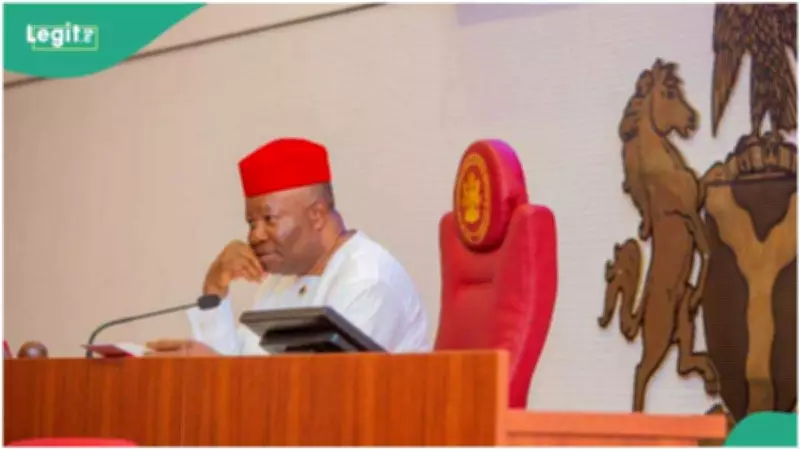
Senate President Godswill Akpabio has ignited a significant public discussion after his attendance at an Easter Monday church service in Akwa Ibom State resulted in an unexpected disruption. The incident, which occurred on April 6, 2026, saw Akpabio opting to take a seat at the back of the church in an apparent effort to avoid interrupting the ongoing worship. However, this move backfired dramatically when church members noticed his presence, leading to a sudden halt in the service as congregants rushed to capture photos of the high-profile politician.
Service Halted as Congregation Reacts to Akpabio's Arrival
Despite Akpabio's intentions to remain discreet, his arrival quickly became the center of attention. The church service was abruptly stopped, and members were seen abandoning their worship to take pictures with the Senate President. Eventually, he was asked to move to a front seat, a decision that highlighted the unusual nature of a figure of his stature choosing a back seat. This action, while seemingly humble, inadvertently caused a distraction that overshadowed the religious proceedings.
Nigerians have taken to social media to express a wide range of opinions on the incident. Many criticized the church members for prioritizing political figures over spiritual worship. For instance, one user, Zioni, commented, "See people way go worship, God don leave God carry phone de record, corrupt politicians. Na, why do I stop going to church because we are all deceiving ourselves." Others, like Donephi1, blamed the congregation for idolizing politicians, stating, "This is the problem, you worship them when they show up, that's why they do not value you."
Mixed Reactions Highlight Broader Societal Issues
The reactions extended beyond the immediate event, touching on themes of tribalism and corruption. Daveswift accused critics of tribalism, saying, "You guys will insult him because he is not a Yoruba man." Meanwhile, Jane linked the incident to broader political concerns, remarking, "The problem of Nigeria is Nigerians cause why is this reaction to such a corrupt individual who doesn't have our interest at heart." These comments reflect deep-seated frustrations with political leadership and societal values in Nigeria.
In contrast, some defended Akpabio's actions. Ibelong noted, "Even though he’s been a puppet to the president. He never planned to disrupt the church service." This perspective suggests that his initial intent was respectful, but the congregation's response led to the disruption. The incident has sparked a broader debate about the role of politicians in public spaces and the behavior of citizens during religious events.
Implications for Political and Religious Interactions
This event underscores the complex dynamics between Nigerian politicians and the public, especially in religious settings. Akpabio's attempt to avoid disruption ultimately caused more commotion, raising questions about protocol and public perception. As Nigerians continue to react online, the incident serves as a reminder of the heightened scrutiny faced by public figures and the sometimes conflicting expectations of humility and prominence.
The uproar in Akwa Ibom's church not only disrupted a sacred service but also fueled discussions on social media about integrity, worship priorities, and political accountability. It highlights how even well-intentioned actions by leaders can lead to unintended consequences in a society where political figures are often placed on a pedestal.