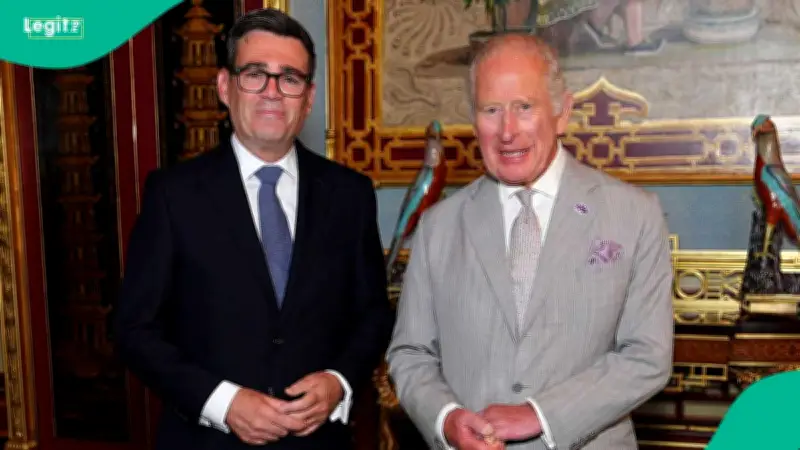
Andy Burnham officially became Britain's seventh prime minister since 2016 after an audience with King Charles III at Buckingham Palace on Monday. The King formally requested Burnham to form a government, marking the official transfer of power. Buckingham Palace confirmed the event in a statement, noting that Burnham accepted the offer and kissed hands upon his appointment as Prime Minister and First Lord of the Treasury. The palace released a photograph of the King and Burnham shaking hands to mark the occasion.
Burnham's First Address as Prime Minister
Following the audience, Burnham traveled to 10 Downing Street, where he delivered his first address as prime minister. He pledged to end rough sleeping among the homeless and to act as a "circuit breaker" for a political system he described as having gone in the wrong direction since the 1980s. "This is a moment for reflection and new resolution," Burnham said. "It requires my generation of politicians to raise our game and rise to the new challenge. Britain needs to show the world that we can regain our stability once again, and that is our challenge to make politics work, to make it work better." He acknowledged the weight of the moment, stating he was "acutely conscious" of how many times the country had seen a new leader walk through the same door.
Keir Starmer's Farewell
Earlier on Monday, outgoing Prime Minister Keir Starmer gave a brief farewell speech outside Downing Street before heading to the palace to tender his resignation. Starmer, who was forced out by his own Labour Party, told supporters that Britain is "stronger and fairer than it was two years ago." "I go with good grace, I go with a smile and I go proud of everything that we have achieved," Starmer said. Starmer had led Labour to a landslide general election victory in 2024 after taking over a party recovering from a heavy defeat in 2019. However, his time in government was cut short by a series of missteps and poor judgement calls that weakened his standing within the party and among the public.
Burnham's Path to Power
Burnham, who previously served as mayor of Greater Manchester, became Labour leader on Friday after winning nominations from 379 of the 403 Labour members of parliament in an uncontested leadership race. He has promised to make politics "less toxic," raise living standards, and "bring back the hope we have all been missing." As prime minister, he is expected to shake up the cabinet, particularly in the roles of Treasury chief, foreign secretary, and home secretary. Burnham is the seventh person to hold the office of prime minister since 2016. Under Britain's parliamentary system, governing parties can change their leader, and therefore the prime minister, without triggering a general election. The next scheduled national vote is not due until 2029.
Context and Analysis
According to the Associated Press, Burnham's appointment comes at a time of political turbulence in the UK. His pledge to end rough sleeping and restore stability reflects the challenges facing the new administration. Starmer's resignation under pressure from his own party highlights the internal divisions within Labour. Burnham's uncontested leadership victory indicates a desire for unity and a fresh start. The transition of power was seamless, with the King's role in the process underscoring the constitutional monarchy's function. Burnham's first address emphasized the need for generational change and a renewed focus on effective governance.