Atiku's Camp Condemns Onanuga Over 'Eight-Year' Presidency Claim
A fresh war of words has erupted in Nigeria's political landscape following sharp criticism directed at presidential aide Bayo Onanuga. The controversy stems from comments perceived as defending a rigid North-South power rotation arrangement ahead of the 2027 general elections.
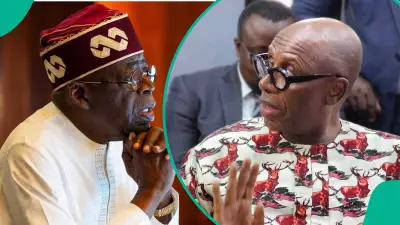
In a strongly worded response posted on X, formerly known as Twitter, Phrank Shaibu, Senior Special Assistant on Public Communication to Atiku Abubakar, accused the presidency of attempting to subvert democratic principles and silence opposition voices. The dispute was triggered by remarks from Onanuga, who reacted to a live interview granted by Atiku on Arise TV.
Onanuga's Assertion Sparks Backlash
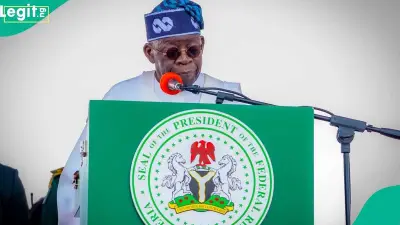
Onanuga insisted that President Bola Ahmed Tinubu must complete eight years in office, aligning with the North-South power rotation convention. He argued that, having succeeded a northern president who served two terms, it is now the South's turn to retain power until 2031. This assertion has ignited significant backlash from opposition figures, who describe it as unconstitutional and fundamentally anti-democratic.
In his detailed rebuttal, Shaibu wrote: "Dear @aonanuga1956, let me state clearly: no presidential aide, no matter how loud or reckless, has the authority to rewrite the Constitution of the Federal Republic of Nigeria or reduce democracy to a regional entitlement scheme." He emphasized that power rotation is a political convention, not a constitutional decree, and should not be used as a tool to silence credible opposition.
Key Points of Contention
Shaibu outlined several critical arguments in his response:
- Constitutional Integrity: He stressed that the notion of Tinubu 'must complete eight years' is anti-democratic, as presidents are elected and can be voted out, not crowned.
- Historical Context: Shaibu dismissed the invocation of Umaru Musa Yar'Adua's passing as a political excuse, calling it morally bankrupt and disingenuous.
- Performance Over Propaganda: He argued that if the administration had delivered on its promises, it would campaign on performance rather than hiding behind zoning narratives.
- Opposition Dynamics: Shaibu refuted claims about Peter Obi's political moves, stating that such comments reflect panic and fear of a united opposition.
Shaibu concluded by asserting that Atiku does not need permission to run and that Nigeria's future will be decided by the people, not by aides or propaganda. He highlighted the economic challenges facing Nigerians, including harsh policies and rising inflation, as key issues overshadowed by the political rhetoric.
Broader Political Implications
This exchange adds to intensifying political rhetoric ahead of the 2027 elections, with opposition figures increasingly pushing back against what they describe as attempts to weaponize zoning and undermine coalition efforts. Observers note that the clash underscores rising tensions between President Tinubu's camp and opposition forces seeking to reshape the political landscape.
The controversy also touches on broader themes of democratic governance, regional equity, and the role of political conventions in Nigeria's electoral system. As the debate continues, it highlights the deep divisions and strategic maneuvering within the country's political elite, setting the stage for a contentious election cycle.