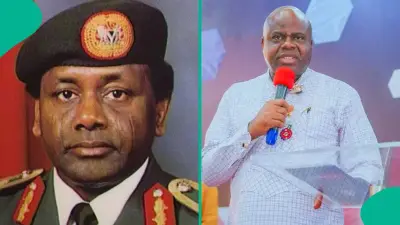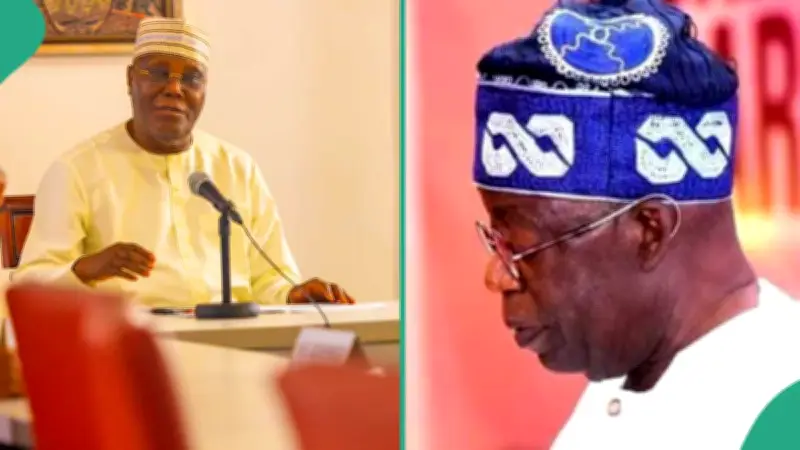
Former Vice President Atiku Abubakar has sharply criticized the Presidency's repeated celebration of Nigeria's GDP growth, arguing that such macroeconomic indicators are meaningless to citizens struggling with soaring costs of food, transport, and education. In a statement released on August 3, 2026, Atiku, now the African Democratic Congress (ADC) 2027 presidential candidate, said the government's focus on GDP figures reflects a dangerous disconnect from the everyday realities of ordinary Nigerians.
Atiku's remarks come in direct response to the administration of President Bola Tinubu, which has touted economic gains following the controversial exchange-rate adjustment. The former vice president questioned whether these gains have translated into tangible improvements for citizens, asking: "Has the purchasing power of the average Nigerian increased? Can civil servants buy more food today than they could three years ago? Are transport fares lower? Are manufacturers paying less for energy? Have small businesses become more profitable?" He answered his own questions with a stark: "The answer, tragically, is no."
IMF Data Contradicts Government's Optimism
Atiku, through his media aide Phrank Shaibu, pointed to International Monetary Fund (IMF) data that paints a far grimmer picture than the government's GDP narrative. The IMF estimates that 63 per cent of Nigerians now live below the national poverty line, and approximately 27 million Nigerians faced food insecurity in late 2025. Atiku emphasized that these figures come from the very institution the government often cites to justify its reform agenda, noting: "Those are not opposition figures. They are the findings of the same institution the government celebrates whenever it commends aspects of its reforms."
This reliance on IMF data underscores a growing rift between official economic narratives and on-the-ground realities. While the government points to GDP growth as evidence of progress, Atiku argues that such aggregate numbers fail to capture the suffering of households. He insisted that economic policy must be judged not by abstract data points but by whether citizens can afford basic necessities and improve their living standards.
Government's Own Plans Undermine Its Case
Atiku also highlighted a telling contradiction: the federal government recently announced plans to begin measuring poverty, household income, and inequality to demonstrate that its reforms are benefiting ordinary people. He argued that this admission effectively concedes that GDP figures alone are insufficient. "That announcement is itself an admission that macroeconomic stability alone is not enough. If GDP figures alone told the whole story, there would be no need for a new 'shared prosperity' scorecard. Even the government now recognises that the true test of economic policy is whether citizens are actually living better," the statement read.
This move by the government to develop a poverty measurement framework, while ostensibly positive, has been interpreted by critics as a tacit acknowledgment that current policies have not delivered the promised benefits to the masses. Atiku's camp views it as a validation of their long-standing argument that the government's economic strategy is out of touch with the needs of the people.
Political Context and 2027 Ambitions
The criticism comes amid Atiku's continued political maneuvering ahead of the 2027 general elections. After losing to Tinubu in the 2023 presidential election under the Peoples Democratic Party (PDP), Atiku left the party to lead a coalition that adopted the ADC, where he emerged as its presidential candidate. His attacks on the government's economic record are likely to intensify as the election cycle progresses, positioning him as a champion of the poor and marginalized.
Atiku's camp has also been vocal on other fronts. In related news, ADC chieftain Kenneth Okonkwo criticized President Tinubu for defending the Independent National Electoral Commission (INEC) against bias allegations, arguing that the electoral body has not earned public confidence. Okonkwo, who speaks for Atiku's 2027 campaign, cited security and governance concerns as reasons Tinubu may struggle to win re-election. He also accused the ruling All Progressives Congress (APC) of attempting to weaken opposition parties and undermine Nigeria's democratic process.
Economic Reality vs. Political Spin
The debate over GDP versus poverty metrics is not merely academic; it has profound implications for policy and public trust. Economists and analysts have noted that Nigeria's GDP growth, while positive on paper, has not translated into improved living conditions for the majority. High inflation, unemployment, and insecurity continue to plague the nation, eroding any gains from macroeconomic stability.
Atiku's critique taps into widespread public frustration, as many Nigerians feel left behind by the government's reform agenda. The former vice president's use of IMF data lends credibility to his arguments, as it comes from a neutral international body rather than opposition sources. By framing the issue as a matter of human welfare, Atiku seeks to broaden his appeal beyond partisan lines and position himself as a leader who understands and prioritizes the needs of ordinary citizens.
As the 2027 election approaches, the battle over economic narratives will likely intensify. The government will continue to tout GDP growth and reform achievements, while opposition figures like Atiku will highlight poverty and inequality. The outcome of this rhetorical contest may well shape the political landscape in the coming years, as voters decide which vision of Nigeria's future resonates most with their lived experiences.