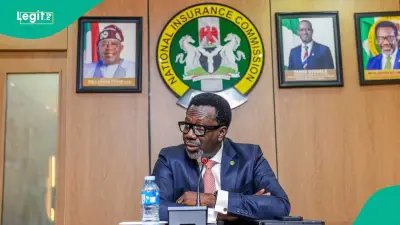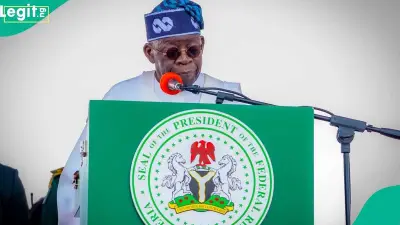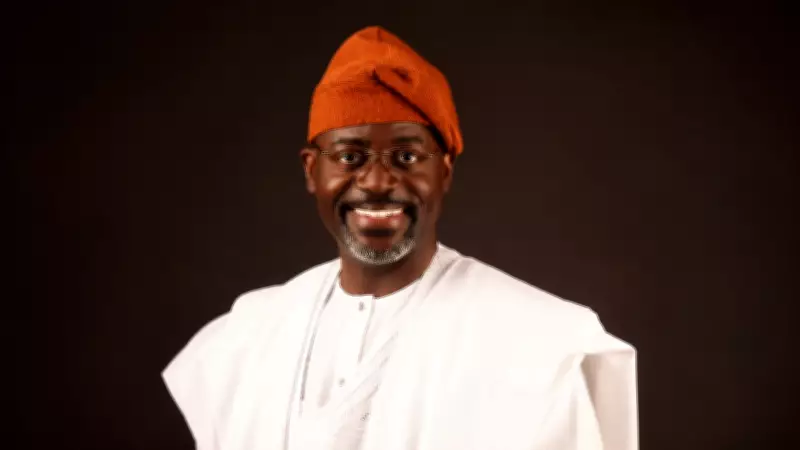
A politician, technocrat and founder of Barachel Realty Limited, Samuel Obafemi George, has stated that those who benefited from Nigeria's dysfunctional system are actively opposing President Bola Tinubu's reforms. He made this assertion during an interview with journalists, addressing concerns about the country's economy and the resistance to change.
Western Poverty Data Questioned
Responding to perceptions that the APC-led administration lacks policy direction to curb poverty, George argued that Western data on Africa is often biased. He noted that it is in the interest of the West to portray Africa negatively, citing examples during the COVID-19 and Ebola pandemics when predictions of mass casualties were proven wrong. According to him, a successful Nigerian economy would challenge Western economic dominance.
Infrastructure Investments as a Path Out of Poverty
George highlighted the Tinubu administration's massive investments in roads, airports, seaports, and tertiary education, drawing parallels with China's economic transformation. He explained that China's initial 10 years of infrastructure investment yielded modest growth, but sustained efforts led to a $44 trillion economy by 2019. He urged Nigerians to look beyond short-term poverty statistics and focus on long-term gains.
APC Achievements in Infrastructure
George listed several projects completed under APC governments, including the Second Niger Bridge, the Lagos-Ibadan Expressway, and major rail projects. He noted that these projects had been abandoned by previous administrations for decades. The Lagos-Calabar Coastal Highway and Sokoto-Badagry Expressway are also progressing, with funding approved.
Borrowing for Legacy Projects
Defending the government's borrowing, George referenced the US Federal-Aid Highway Act of 1956 and China's infrastructure-led growth. He argued that borrowing for infrastructure creates jobs and stimulates the economy, citing World Bank data that every $1 billion spent generates at least 150,000 direct jobs. He described current poverty as temporary, with long-term benefits ahead.
Global Shocks and Economic Pain
Acknowledging the hardship faced by Nigerians, George attributed recent economic challenges to global shocks, including the Israel-Iraq conflict and the Russia-Ukraine war. He noted that even Germany had to cut its economic projections. He insisted that the government's reforms are necessary for Nigeria to achieve continental leadership.
Fuel Subsidy Removal and Electricity Reforms
George praised Tinubu's decisive removal of fuel subsidies, a move previous presidents avoided. He also discussed the Electricity Act of 2023, which allows states to generate, transmit, and distribute power independently. He noted that 15 states have already established regulatory commissions to improve electricity supply.
Comparison with Peter Obi
When asked about Peter Obi's potential challenge in 2027, George dismissed the comparison, highlighting Lagos State's budget of N4.3 trillion compared to Anambra's N766 billion. He credited Tinubu with creating agencies and infrastructure in Lagos, including the BRT system, Lekki Free Trade Zone, and a deep seaport, which have spurred economic growth. He argued that Tinubu's political experience and strategic depth outweigh Obi's credentials.
Security Challenges
George acknowledged insecurity across Nigeria but attributed it to regional dynamics: illegal mining in the North-West, land disputes in the North-Central, and religious extremism in the North-East. He called for state policing and international cooperation to address these issues, noting that the government is formalizing mining and establishing factories in Nasarawa State.