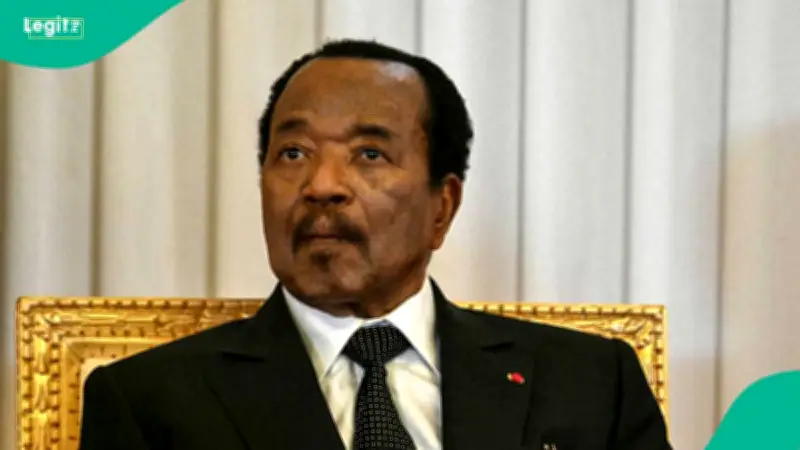
Cameroon's President Paul Biya has signed three presidential decrees overhauling the country's senior military leadership, even as he remains abroad after more than two months away from the country. The decrees, signed on Monday and broadcast on national radio, promoted the head of the Presidential Guard from colonel to brigadier general and replaced commanders in four of Cameroon's five joint military regions.
Military Reshuffle Details
According to Reuters, the appointments included a new commander for the Rapid Intervention Brigade, the elevation of Major General Ebaka Hippolyte to Major General of the Armed Forces General Staff, and the promotion of several colonels to brigadier general rank. Changes were also made to motorised infantry brigades.
The reshuffle signals that Biya remains engaged in state affairs, even as his physical presence in Yaoundé has been absent for weeks. The signing of military decrees from abroad underscores the continuity of his authority, but also raises questions about governance and succession.
Biya's Extended Absence
Biya, who at 93 is the world's oldest sitting head of state, left Cameroon on June 7. His civil cabinet described the trip as "a brief private stay in Europe," but he has not returned, making this one of his longest overseas stays since he came to power in 1982.
The 93-year-old leader is no stranger to lengthy periods abroad, but his advanced age has intensified speculation about his health and capacity to govern. Cameroon's ruling party convened a rare gathering of senior officials last month as pressure grew over his prolonged absence.
Government Response and Speculation
Government spokesperson Rene Emmanuel Sadi did not respond to requests for comment on the decrees. Speaking to French broadcaster RFI on Sunday, he said "the president is alive" and would return soon, without specifying a date. This has done little to quell speculation, as observers note the lack of a concrete timeline for his return.
Cameroon is a major producer of oil and cocoa, and political uncertainty around the presidency has drawn close attention from observers within and outside the country. The military reshuffle from abroad is seen as an attempt to project normalcy and control, but it also highlights the unusual situation of a head of state governing remotely.
Context and Historical Precedent
Biya's extended absence is not unprecedented, but it comes at a time of heightened concern due to his age. He has ruled Cameroon since 1982, making him one of the world's longest-serving leaders. In October 2024, at age 92, he won an eighth term in office, extending his rule by another seven years, according to Legit.ng reports.
The military reshuffle is likely to be scrutinized for clues about the balance of power within Cameroon's security establishment. The promotion of the Presidential Guard head, a key position, suggests Biya is reinforcing loyalty among his inner circle.
Looking Ahead
Observers will be watching for any further decrees or statements from Biya, as well as any indication of when he might return. The situation remains fluid, and the international community, particularly regional partners, will be monitoring developments closely.
For now, the decrees demonstrate that Biya's authority remains intact, at least on paper. But the longer his absence continues, the more questions will be raised about the future of Cameroon's leadership and the stability of the region.