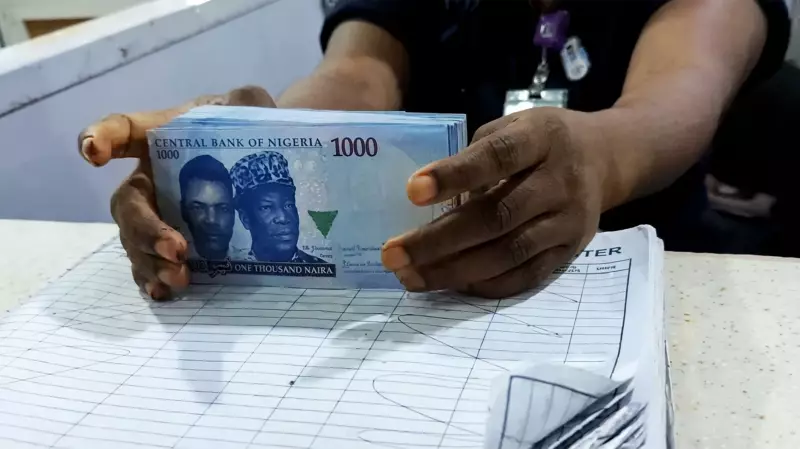
A newly unveiled biography of former President Muhammadu Buhari has fundamentally altered the public understanding of the 2022 naira redesign policy, exposing its true origins and the severe hardship it inflicted on millions of Nigerians.
The True Architects of the Cash Crisis
The biography, titled 'From Soldier to Statesman: The Legacy of Muhammadu Buhari', was presented at the Presidential Villa in Abuja on Monday, December 17, 2025. It definitively states that the proposal to redesign the naira did not come from the Central Bank of Nigeria (CBN) under its former Governor, Godwin Emefiele, as was widely assumed by the public and media.
Instead, the controversial policy was conceived within the Economic and Financial Crimes Commission (EFCC). The primary objective was to cut off the supply of cash to individuals planning to buy votes during the 2023 general elections.
A Policy with Painful Consequences
When launched in October 2022, the policy triggered an acute cash shortage across Nigeria. This scarcity plunged countless citizens into severe financial difficulty, creating what many observers termed a humanitarian crisis in the months leading up to the polls.
While the official justification promoted a move towards a cashless economy, stronger monetary policy, and the curbing of illicit funds for ransom and vote-buying, the execution was deeply disruptive. The biography, authored by Dr. Charles Omole, provides a more complex backstory.
It reveals that President Buhari had earlier approved a separate initiative to upgrade Nigeria's capacity to print its own currency locally, ending dependence on foreign printers. The redesign proposal later emerged within this broader context, aligned with the goal of sanitising cash flows and undermining money politics.
The Key Players and Unstoppable Momentum
The book explicitly identifies the then-Chairman of the EFCC, Abdulrasheed Bawa, as the originator of the naira redesign idea. The Director-General of the Department of State Services (DSS), Yusuf Bichi, is quoted confirming that Bawa proposed the policy "with the explicit goal of starving voter-buyers."
Bichi recounts that Buhari's long-standing aversion to money-driven politics made him receptive to the idea. The President believed it could help clean up the electoral process, even at a painful cost. By the time the escalating political and operational risks became clear to some security officials, the process had gained irreversible momentum—currency samples were already printed, and deadlines were fixed.
Amid fierce accusations that the policy was a plot to damage the ruling party's chances, Buhari reportedly ordered that related investigative reports be sent directly to him to prevent sabotage. The biography portrays a president who insisted on non-interference in law enforcement and transparency, refusing to use state machinery against political opponents.
A Glimpse into Buhari's Leadership Style
Beyond the policy revelation, the book offers personal insights from Buhari's former Chief Security Officer, Abubakar Idris. He describes a leader who delegated authority, demanded results without micromanaging, and avoided gossip.
Idris presents a picture of a disciplined president who refused to allow the public arrest of a relative, insisted his convoy obey traffic lights, and viewed personal dignity as a component of national security. "Trust was the red line," Idris explained. "Once the President trusted you, he gave you space to perform, but that space came with responsibility."
This account recasts one of the most traumatic economic policies of the Buhari administration, shifting the narrative from a purely monetary decision to a politically motivated anti-corruption strategy with profound unintended consequences for the Nigerian populace.