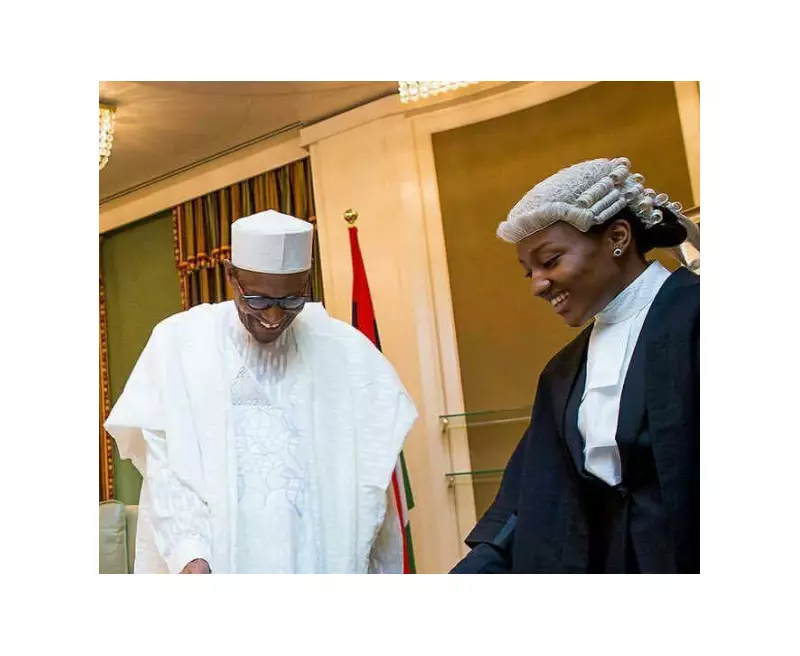
In a rare and personal revelation, Halima Buhari, the daughter of former President Muhammadu Buhari, has provided an intimate look into her father's awareness of the widespread criticism his administration faced. She stated that the late leader was fully conscious of the disappointment felt by many Nigerians who had placed high hopes in his ability to tackle pressing national issues.
A Glimpse Into Private Reflections
Halima Buhari made these disclosures on Wednesday, December 17, during the public presentation of a book authored by the former Minister of Information and Culture, Alhaji Lai Mohammed. The event was attended by a gathering of former ministers, ex-governors, traditional rulers, and chieftains of various political parties.
Addressing the audience, she revealed that her father knew Nigerians had nursed great expectations for his government, particularly in restoring sanity to all sectors, curbing insecurity, and fixing the bad shape of the economy. She acknowledged that many citizens were ultimately disappointed by the perceived performance gap.
The Man Behind the Office
Halima painted a picture of a leader deeply affected by the weight of his decisions. "Behind every soundbite, there was a human being; sometimes tired, sometimes determined, sometimes frustrated, always painfully aware that his decisions impacted millions of lives," she shared.
She described a side of him rarely seen by the public: "I saw the man who would sit quietly, listening more than he spoke. The man who worried about the security of ordinary people. The man who agonised over the gap between what was promised and what was possible." To his family, he was simply 'Baba,' a stark contrast to the public figure of President Buhari.
Acknowledging a Complex Legacy
Halima Buhari emphasized the complexities of governing a nation like Nigeria, noting the wide chasm between idealism and the grip of reality. She explained that leadership involves difficult trade-offs, compromises, and often imperfect choices.
"My father was not unaware of the criticism levelled against him," she stated firmly. "He knew that many Nigerians felt that more would have been done or done differently. He heard the voices of those who were disappointed, just as he heard the gratitude of those who felt their lives had improved."
She clarified that her family's presence was not an attempt to rewrite history or impose a single narrative. "Nigerians will continue to debate his legacy as they should in a vibrant democracy," she said, anticipating future books that will praise, criticise, and document his tenure.
She highlighted that Lai Mohammed's book, written from within the administration's inner circle of communication, offers a crucial perspective on how an administration must be shaped and sometimes challenged in the court of public opinion.