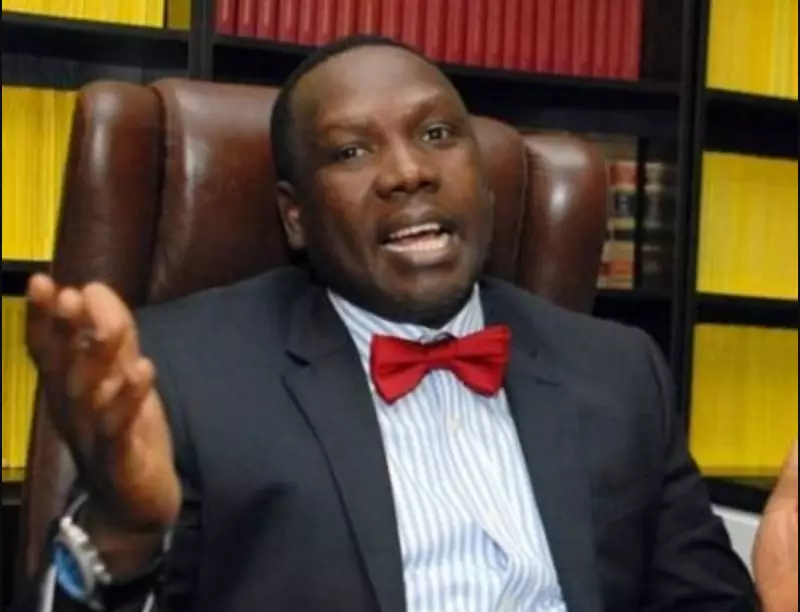
Daniel Bwala, the Special Adviser on Policy Communication to President Bola Tinubu, has publicly defended a controversial demand made by his principal over a decade ago.
Bwala Labels Tinubu's 2014 Demand as "Legitimate"
Speaking during an appearance on Channels Television's The Morning Brief on Wednesday, Bwala addressed the historical moment when Tinubu, then a prominent opposition figure, called for former President Goodluck Jonathan to step down from office. This call came in the tumultuous aftermath of the mass abduction of over 270 schoolgirls from Chibok in April 2014 by Boko Haram insurgents.
Bwala asserted that Tinubu's demand was a "legitimate call" given the circumstances. He criticized the Jonathan administration's initial response to the tragedy, stating they were "in denial" about the kidnapping and lacked a clear solution. "In the days of Jonathan, they didn't have an idea of the solution," Bwala claimed, framing the incident as a pivotal failure of leadership that justified strong political criticism.
Contrasting Security Eras: Denial vs. Zero-Tolerance
Bwala drew a sharp distinction between the security landscape under President Jonathan and the current situation under President Tinubu. He described a period where terrorist influence was so entrenched that they established control in some communities and were collecting taxes.
In defending the Tinubu administration's current strategy, Bwala highlighted a fundamental policy shift. He explained that while past governments, including the immediate past administration, sometimes engaged in negotiations with kidnappers to save lives, President Tinubu has instituted a strict zero-tolerance policy against such negotiations.
"President Tinubu came with this zero tolerance on negotiation because it didn't fit into the terrorism financing," Bwala stated. He argued that paying ransoms, even with the noble goal of securing hostages, ultimately empowers criminal and terrorist networks. "You are constructively financing terrorism without knowing it," he warned, emphasizing that the federal government now avoids any action that could provide financial support to these groups.
Renewed Scrutiny Amid Ongoing Security Challenges
Bwala's comments arrive at a time when Nigeria is grappling with a disturbing recurrence of mass school kidnappings and widespread security breaches across several states. These recent incidents have prompted fresh public and media scrutiny of the federal government's strategies for combating terrorism and protecting civilians, particularly vulnerable populations like schoolchildren.
The discussion revisits the Chibok abduction, which was a watershed moment that drew global outrage and spotlighted the severe deterioration of security in Nigeria at the time. Bwala's defense seeks to contextualize Tinubu's past criticism as a principled stance against perceived leadership failure, while positioning the current administration's non-negotiation policy as a tougher, more financially savvy approach to crippling terrorist operations.