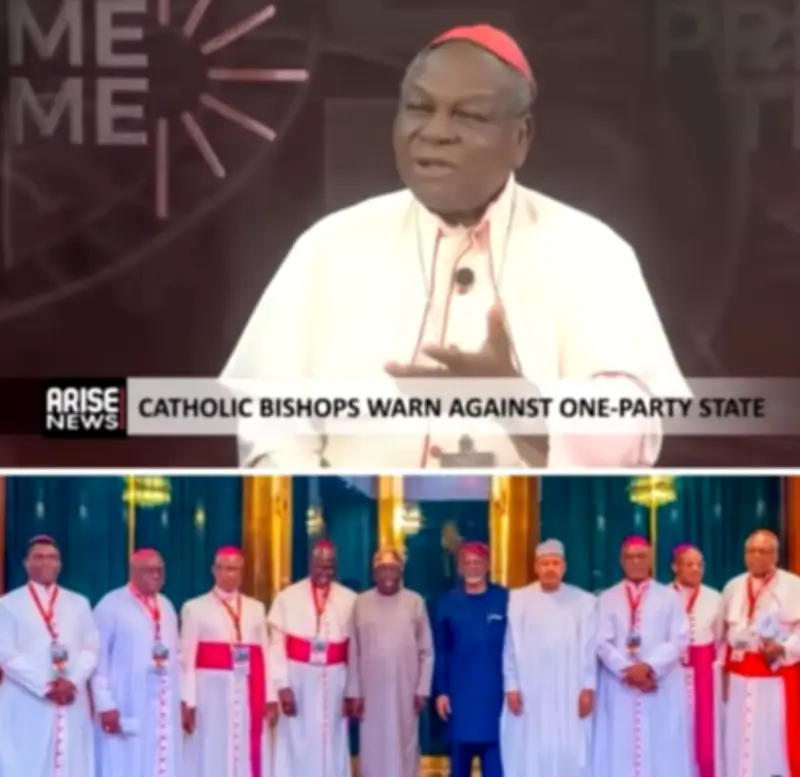
Speaking with Arise News on Friday, July 31, the Archbishop Emeritus of the Catholic Diocese of Abuja disclosed that the President's response to the bishops' presentation made it "quite clearly" known that he did not share their assessment of the nation's condition. The meeting, which held at the State House, Abuja, on July 28, 2026, saw the bishops raise concerns about the economy, insecurity, and the political climate.
"When the nation is bleeding, you cannot expect a polite meeting with the Head of State. We had to let him know. And his reply is that the nation is not bleeding. We told him the economy is not helping our poor people; he told us the economy is doing fine. Frankly speaking, he told us quite clearly that he did not agree with us," Onaiyekan said.
He further noted that the bishops were not surprised by the President's reaction. "We didn't expect him to agree with us. We have done our duty, we have delivered our message, and we have a feeling that somehow, along the line, somebody will show him a few of the things we said," he added.
A Carefully Considered Statement
Onaiyekan also stressed that the bishops' statement was the product of broad consultations within the Catholic Bishops' Conference of Nigeria (CBCN), reflecting the collective position of the conference rather than the views of a few individuals.
"Let me say first and foremost that that statement read by our president was not just put together at random. It was carefully considered and with wide consultation. The Bishops' Conference is bigger than the group of us that were there, but it is very representative of the Bishops' Conference. So, it is the Catholic Bishops' Conference that produced that document. It was written, rewritten, and corrected. So it was not done at random, nor did we deliver it with levity," he explained.
Bishops Not Politicians
The Cardinal also dismissed any suggestion that the bishops harboured political ambitions, insisting that their intervention was driven by a moral duty to speak truthfully about the realities facing Nigerians.
"I think I have an opportunity in this program to remind Nigerians that, as bishops, we have no ambitions to take Mr. Tinubu's job or anybody else's job. We are not politicians running for office. We are, first and foremost, religious leaders who feel we have a duty—not just to preach our religious doctrines, but also to address the lives of our people, both those who are our members and those who are not. You can see that from the content and the tone of our statement," he said.
President Unhappy With the Message
Onaiyekan said it was no surprise that President Tinubu appeared unhappy while listening to the bishops' statement, noting that the delegation deliberately presented what it believed was the country's reality rather than a favourable picture.
"You asked me what I saw on the face of the President in reaction. I was not surprised that he was not looking very happy, nor were his colleagues who were there. We knew that this is different from the kind of statements that our President keeps receiving from all kinds of people. That is one of the things that worries us: there are so many people hanging around Mr. President, giving him a rosy picture of what the country is, which it is not. We felt that we have a duty not to do that. Indeed, we have the obligation to help him appreciate the reality of the situation in which we find ourselves. That is the reality that we painted, which I know is not the kind of thing that he wanted to hear. And his reply showed that very clearly," he reiterated.
Hoping for Reflection
Despite the disagreement, Onaiyekan said the bishops left the meeting convinced that President Tinubu had heard their concerns because he responded directly to the issues they raised. He, however, expressed hope that those around the President would encourage him to reflect further on the bishops' message, adding that too few people within government were willing to tell him the truth.