The sudden departure of Nigeria's Minister of Defence, Mohammed Badaru Abubakar, has sent shockwaves through the Federal Executive Council, with strong indications that his exit may be the first in a series of high-level resignations or removals. The development comes as northern leaders make a historic, unified call for the creation of state police to tackle the region's escalating insecurity.
A Resignation That Signals Broader Changes
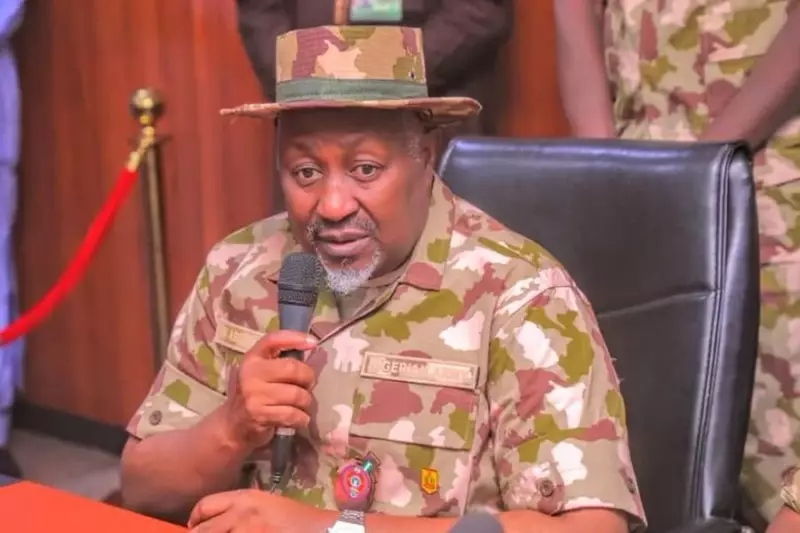
Mohammed Badaru Abubakar submitted his resignation letter to President Bola Tinubu on December 1, 2025, citing pressing health issues that require his immediate and sustained attention. President Tinubu has accepted the resignation, praising Badaru's service, particularly in defence coordination and security sector reforms. The President's Special Adviser on Information and Strategy, Bayo Onanuga, confirmed the minister's exit via social media.
Badaru, the 63-year-old former two-term Governor of Jigawa State who was appointed on August 21, 2023, resigned at a critical juncture. The nation is grappling with severe security threats, and President Tinubu recently declared a national security emergency. His tenure, which focused on procurement, joint operations, and strategy harmonisation with service chiefs, ended abruptly, fueling speculation about an impending cabinet reshuffle as the administration approaches the 2027 election cycle.
Presidency sources indicate that a replacement for the crucial Defence portfolio will be named within days, with a nominee sent to the Senate for confirmation before the week ends. The swift move underscores the ministry's centrality to the government's security agenda.
Northern Bloc Finds Unprecedented Unity on Security
In a significant political shift, northern governors and traditional rulers held a high-level meeting on Monday at the Sir Kashim Ibrahim House in Kaduna. The gathering produced a landmark consensus: a unanimous endorsement for the establishment of state police. This marks a dramatic reversal for a region where the proposal was once deeply divisive.
The joint session, which included governors from all 19 northern states and chairmen of their traditional councils, was chaired by Muhammadu Inuwa Yahaya, Governor of Gombe State and Chairman of the Northern States Governors' Forum (NSGF). In a communiqué, the leaders declared the north at a "critical moment" and emphasised that overcoming its challenges requires "unity, peer review, and cooperation."
Their demands go beyond state police. The forum also called for:
- A six-month suspension of all mining activities in the region, acknowledging the clear link between illegal mining and worsening insecurity.
- The establishment of a N1 billion monthly security fund for each northern state.
- Expedited constitutional amendments to facilitate these changes.
This unified stance represents a new collective assertiveness from northern power brokers, who appear ready to shape the national security conversation rather than wait for directives from Abuja.
Internal Recalibration and the Road to 2027
Within government circles, Badaru's resignation has heightened anxiety. Insiders suggest the move is part of a broader, strategic recalibration by President Tinubu. The administration is methodically preparing for the high-stakes 2027 elections, a process that may involve quietly offloading underperforming appointees while strengthening the inner circle.
This style—gradual, strategic, and calibrated to send subtle signals—is characteristic of President Tinubu's political approach. Some ministers are now scrambling to showcase tangible achievements, while others await their fate. The resignation has revived longstanding debates within the ruling party about performance benchmarks and loyalty expectations for cabinet members.
Military analysts note that while Badaru's exit did not surprise close observers, his prolonged tenure despite noted missteps was puzzling. There is a growing sentiment in defence circles that President Tinubu should now appoint a career military professional to lead the ministry—someone with operational experience who commands the loyalty of the armed forces and can more effectively counter insurgent groups.
The coming days will test the Tinubu administration's ability to navigate these overlapping pressures: internal cabinet restructuring, bold demands from a newly united northern bloc, and a volatile national security climate. The response will not only determine the fate of other ministers but could also redefine Nigeria's security architecture and political alliances ahead of 2027.