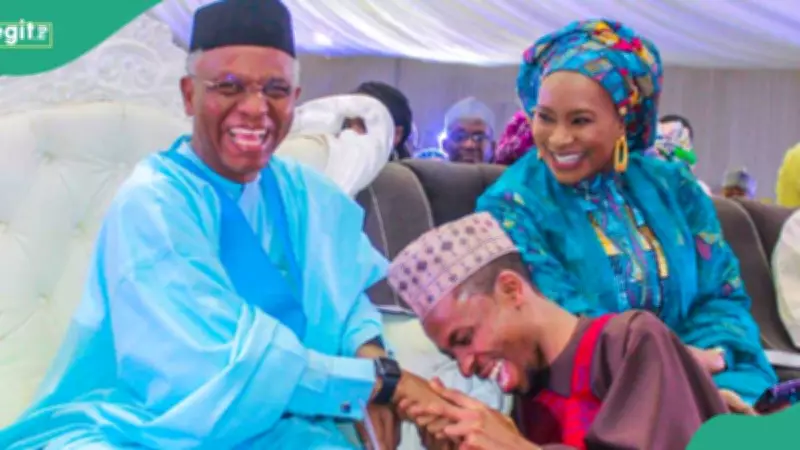
El-Rufai Addresses Son's Political Affiliation Amid Family Differences
Former Kaduna State governor Nasir El-Rufai has publicly addressed questions regarding his son's political alignment, clarifying that Mohammed Bello El-Rufai remains a member of the All Progressives Congress through personal conviction despite his own opposition to the ruling party. The elder El-Rufai emphasized that his son's political choices are independent and do not conflict with his stance as a leading figure in the African Democratic Congress.
Personal Conviction Over Family Pressure
During an interview on BBC Hausa Service on Thursday, February 12, El-Rufai stated that his son, who represents Kaduna North in the House of Representatives, is an adult capable of making his own political decisions. "My son Bello was elected under the platform of the APC and his electorate seem to be happy with the work he is doing, so since he is an adult of over 30 years, he can make his own choices. Politics is about personal preference," El-Rufai explained.
He rejected suggestions that Bello's continued membership in the APC undermines his own political opposition, noting that the younger El-Rufai's decisions are guided by personal values and upbringing. "If he wants to remain in the APC without getting involved in the party's wrongdoing because of the home training we gave him, then Alhamdulillah," the former governor added.
Airport Incident and Political Context
The interview occurred shortly after El-Rufai returned to Nigeria from Egypt, amid reports that operatives of the Department of State Services attempted to detain him at Nnamdi Azikiwe International Airport in Abuja. This allegation has generated significant public debate and added context to the political discussion surrounding the El-Rufai family.
Mohammed Bello El-Rufai was elected to the House of Representatives on the APC platform and continues to serve his constituency while maintaining his party membership. His father's clarification comes at a time when political alignments within prominent Nigerian families are under increased scrutiny.
Broader Political Implications
El-Rufai, who has emerged as a vocal critic of the APC-led federal government, used the interview to emphasize the distinction between family relationships and political affiliations. He stated that his son's political path does not reflect family pressure or alignment with his own opposition stance.
The former governor's remarks highlight the complex dynamics within Nigerian political families, where members may hold differing party affiliations while maintaining personal relationships. This situation underscores how political participation in Nigeria often involves balancing personal conviction with family connections and public expectations.
El-Rufai's clarification provides insight into how political families navigate differences in affiliation, particularly when prominent figures take opposing positions to ruling parties. The discussion around the El-Rufai family's political choices reflects broader conversations about independence, conviction, and family influence in Nigerian politics.